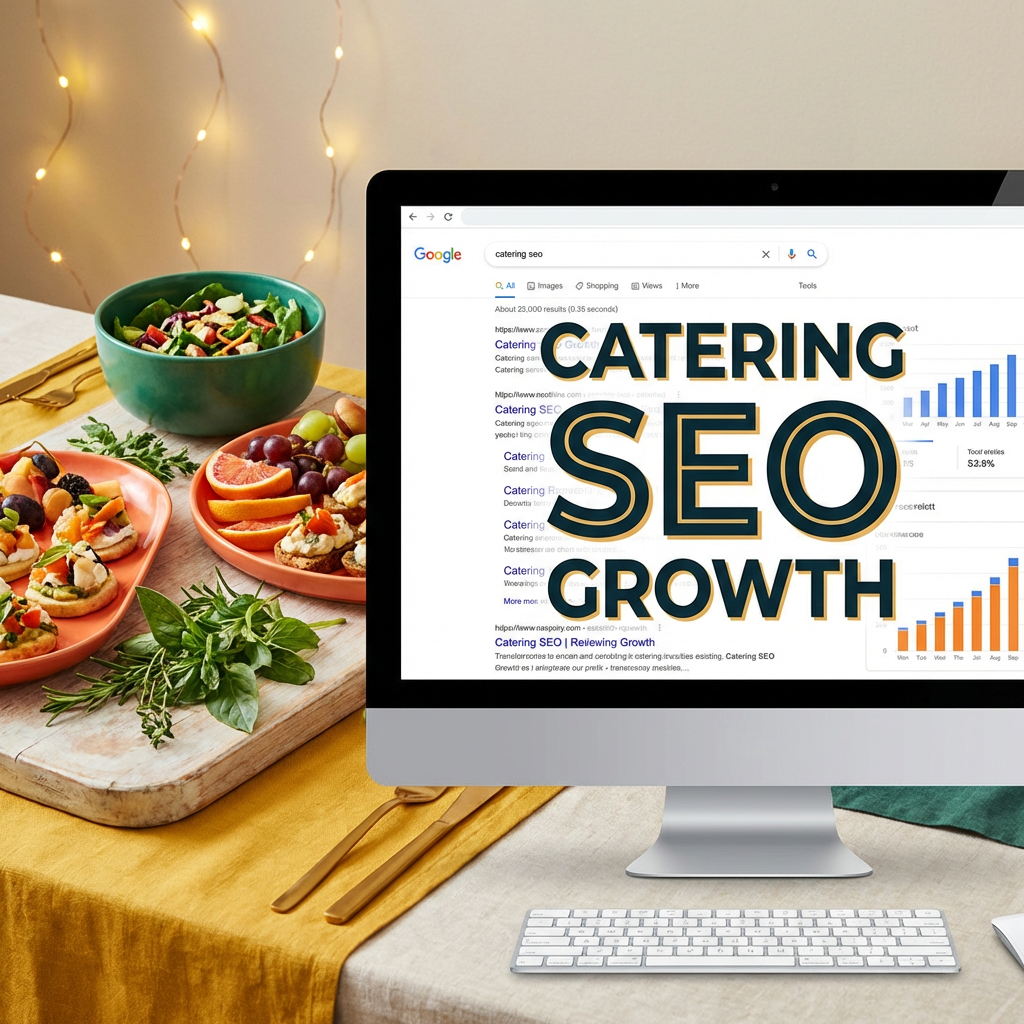
In the fast-paced, highly competitive world of professional catering, relying solely on word-of-mouth referrals and traditional networking is no longer a viable long-term growth strategy. In 2026, the catering industry is decidedly digital-first. When a bride begins planning her wedding, or a corporate assistant is tasked with organizing a massive quarterly retreat, their very first action is almost invariably a search engine query. To intercept these high-value clients at the precise moment they are expressing intent, your business must establish absolute dominance in Search Engine Optimization (SEO). At the core of a successful SEO foundation is a meticulous, data-driven strategy centered around catering keywords. This comprehensive guide will explore how to identify, target, and leverage the most profitable search terms to transform your digital presence into an automated booking engine.
1. The Critical Importance of High-Intent Catering Keywords
Not all search traffic is created equal. While massive search volume might seem inherently desirable, driving ten thousand visitors to your website who are merely looking for dinner recipes will yield absolutely zero catering contracts. The true art of SEO lies in identifying and capturing “high-intent” traffic. These are the specific catering keywords utilized by prospective clients who have bypassed the research phase and are actively seeking to hire a professional service immediately.
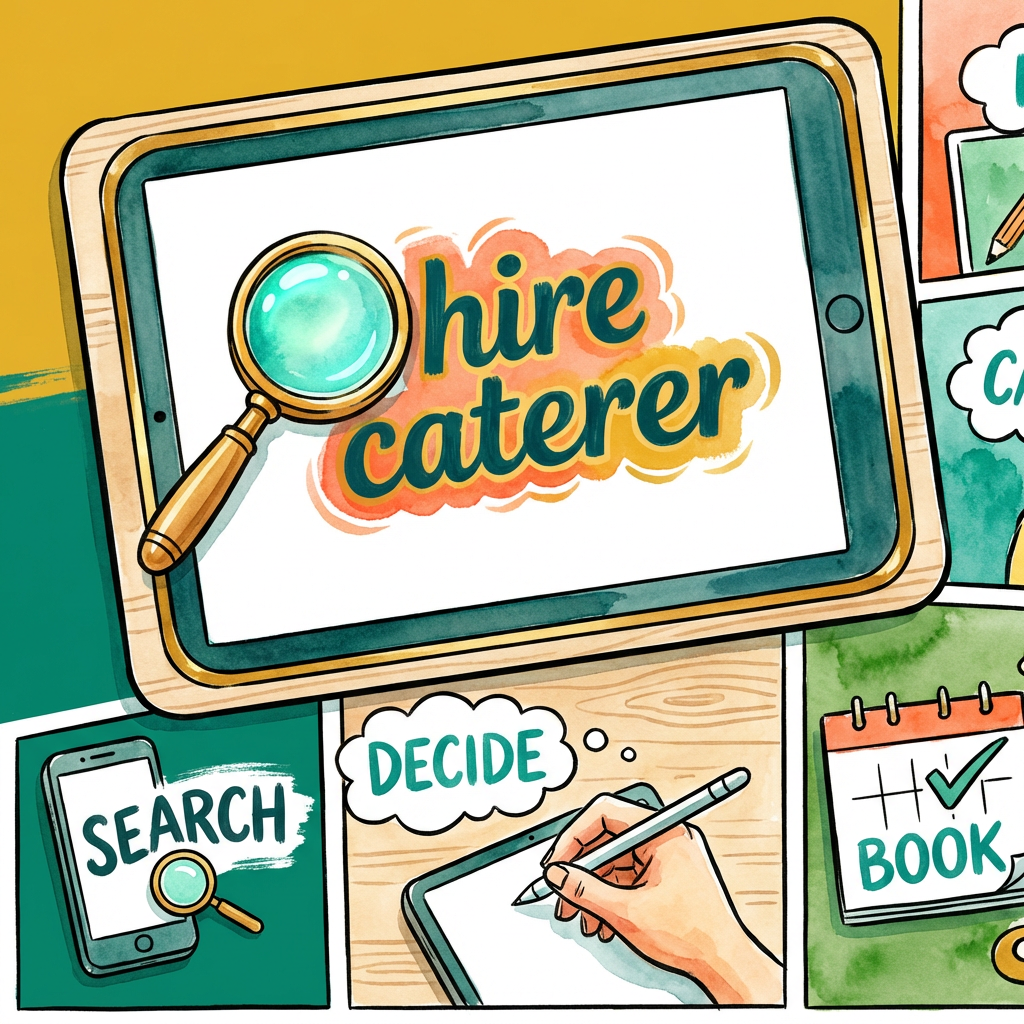
The critical importance of targeting high-intent catering search traffic.
Identifying Transactional Modifiers
High-intent keywords typically include modifiers that signal a transactional mindset. Words like “hire,” “cost,” “quote,” “reviews,” and “packages” are massive indicators of readiness. For instance, a user searching for “benefits of corporate catering” is likely in the preliminary educational stage of their buyer’s journey. Conversely, a user searching for “corporate lunch catering packages pricing near me” has a clearly defined need, a designated budget, and is actively evaluating vendors to finalize a purchase. By strategically analyzing search behavior, you can tailor your website’s focus away from generalized, low-converting terms and firmly toward these lucrative, high-intent phrases that directly impact your bottom line.
Aligning Content with Buyer Intent
Furthermore, aligning your content strategy with actual search intent ensures that your marketing budget is deployed with maximum efficiency. Rather than optimizing your homepage for the broad, hyper-competitive keyword “catering,” optimizing for “luxury wedding catering services in [Your City]” will attract a smaller, but exponentially more qualified, audience segment that perfectly aligns with your specific ideal client profile.
2. Dominating Hyper-Local SEO with Geographic Modifiers
Catering is, by its very nature, an inherently specialized local service. You cannot efficiently deliver a hot, plated dinner for three hundred guests across the country without a massive logistical footprint. Therefore, your digital marketing must reflect your physical operational radius. Hyper-local SEO—the practice of optimizing your online presence to capture search queries within a highly specific geographic area—is the absolute lifeblood of a modern catering business.
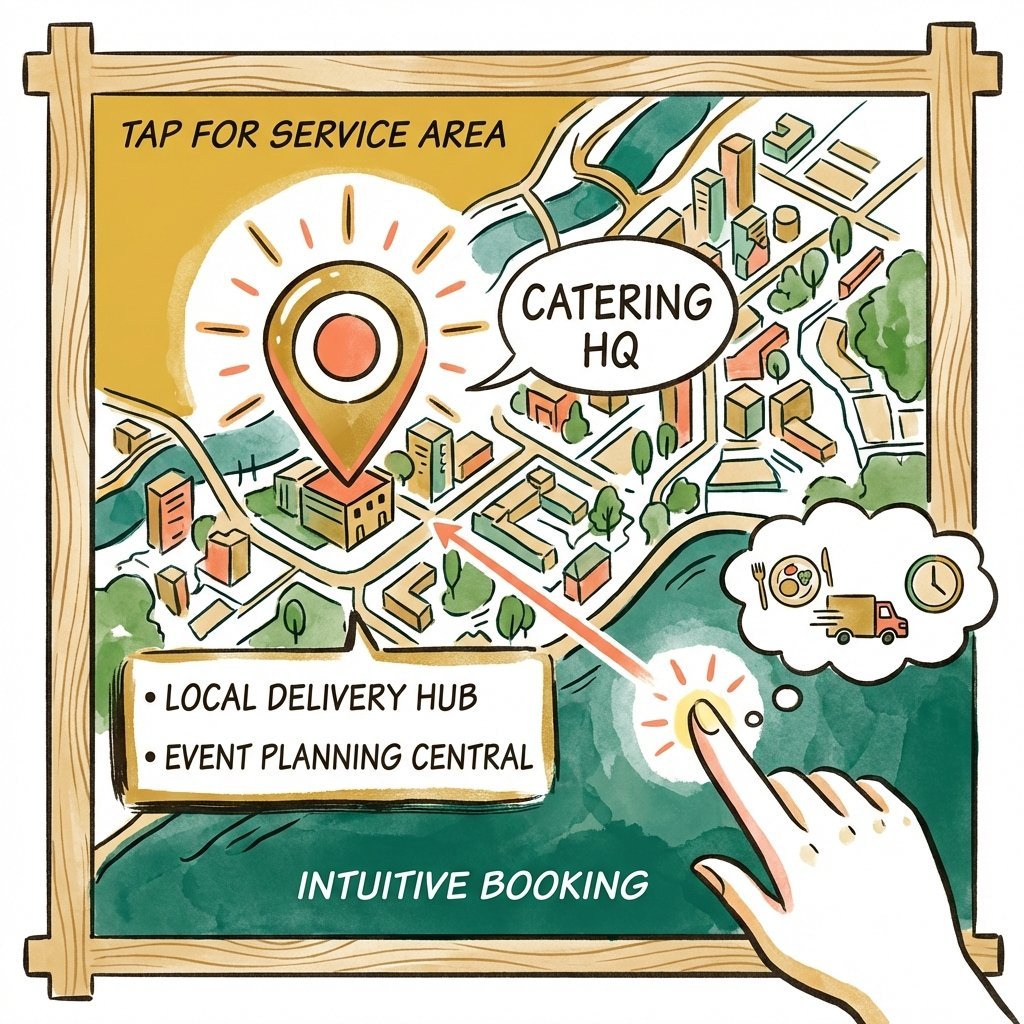
Dominating local search results using geographic keyword modifiers.
Implementing “Near Me” Strategies
The most critical components of local SEO are geographic keyword modifiers. These are terms like “in [City],” “near [Landmark],” or simply the ubiquitous “near me.” To dominate local search, these modifiers must be naturally yet aggressively integrated into your website’s architecture. This means placing your city and state in your Title Tags, your Meta Descriptions, your H1 and H2 headers, and throughout your paragraph text. For example, instead of naming a page “Our Wedding Services,” name it “Award-Winning Wedding Catering in Chicago, IL.” This provides immediate, unmistakable context to search engine algorithms regarding exactly where you operate.
Optimizing Your Google Business Profile
Beyond your primary website, your Google Business Profile (GBP) is the engine that drives your appearance in the coveted “Local Map Pack”—the top three map results that appear before any standard organic links. Your GBP must be meticulously optimized with accurate business categories, consistently updated photos, your complete menu, and, crucially, responses to customer reviews that organically include local keywords. Consistent Name, Address, and Phone Number (NAP) citations across local directories further reinforce your geographic authority, ensuring that when someone in your service area searches for food, your brand is the first they encounter.
3. Targeting Event-Specific Search Queries
Industry data consistently demonstrates that the vast majority of prospective catering clients do not simply search for a general “caterer.” They search for solutions to their specific problems based on the nature of their upcoming event. Understanding the psychological nuances of different event types is crucial for capturing these highly segmented, profitable search queries. An engaged couple planning their wedding looks for drastically different keywords than an office manager organizing a Tuesday boardroom lunch.
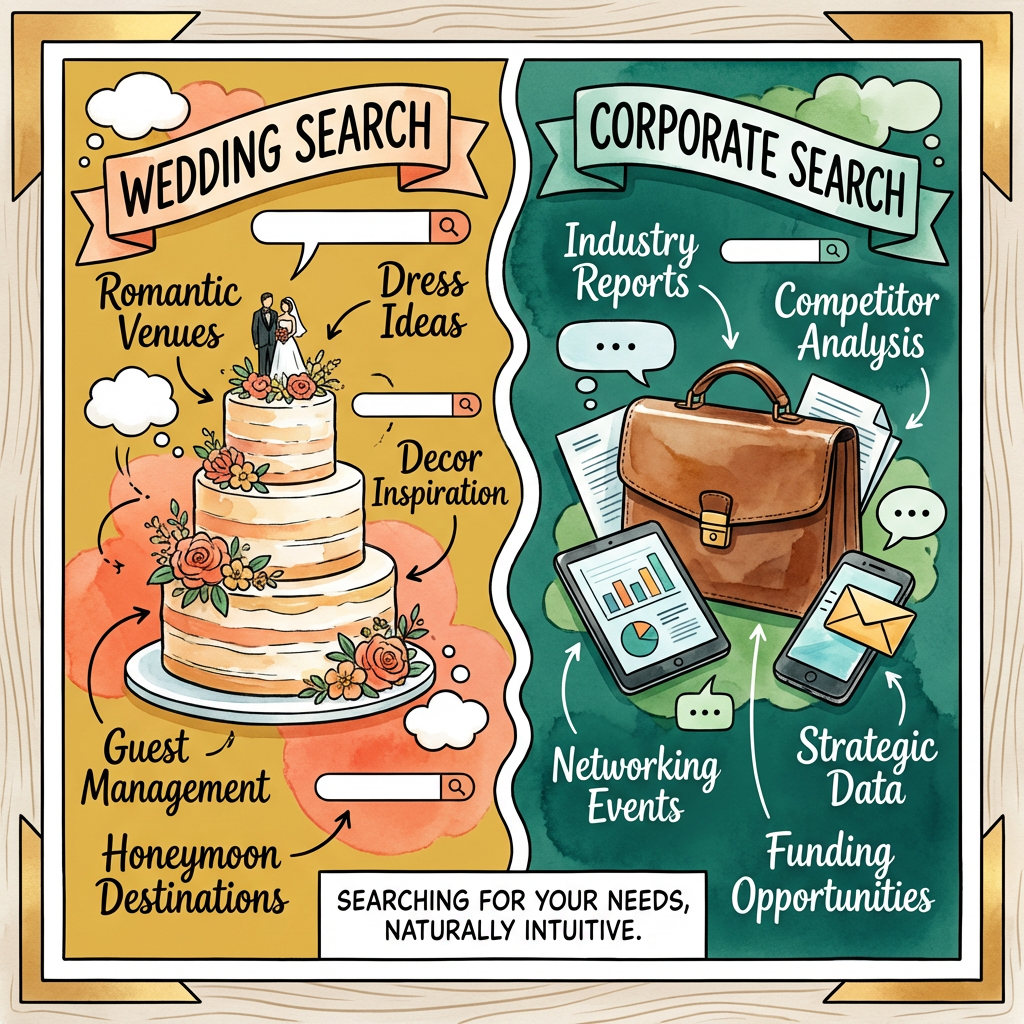
Targeting event-specific queries for weddings and corporate functions.
Building Custom Landing Pages
To capture this diverse traffic, you must build dedicated, highly optimized landing pages for every distinct event type you service. High-volume, event-specific keywords include variations like “wedding reception catering,” “corporate event catering,” “casual BBQ catering,” “graduation party food,” and “holiday office party catering.” Each dedicated landing page should feature bespoke content, targeted imagery, and specific menu options that speak directly to the unique anxieties and desires of that specific event planner.
Differentiating Corporate vs. Wedding SEO
For example, a “Corporate Catering” page should heavily emphasize punctuality, varied dietary accommodations, and seamless, professional drop-off execution, incorporating keywords like “reliable office lunch delivery.” Conversely, a “Wedding Catering” page must focus on elegance, extensive tasting sessions, customized menus, and flawless, full-service staffing, utilizing keywords such as “luxury bespoke wedding menus.” By siloing your website structure to address these specific event types, you significantly increase your relevance scores for a wide array of high-intent searches.
4. Long-Tail Keywords: The Secret to High Conversion Rates
Many novice marketers fall into the trap of obsessing over broad, highly competitive “head” keywords—short terms like “catering” or “food delivery.” While these terms boast massive search volumes, they are incredibly difficult to rank for, and the traffic they generate is often unfocused and low-converting. In 2026, the real leverage in SEO comes from mastering “long-tail keywords”—highly specific, multi-word phrases that indicate a deep level of buyer intent.
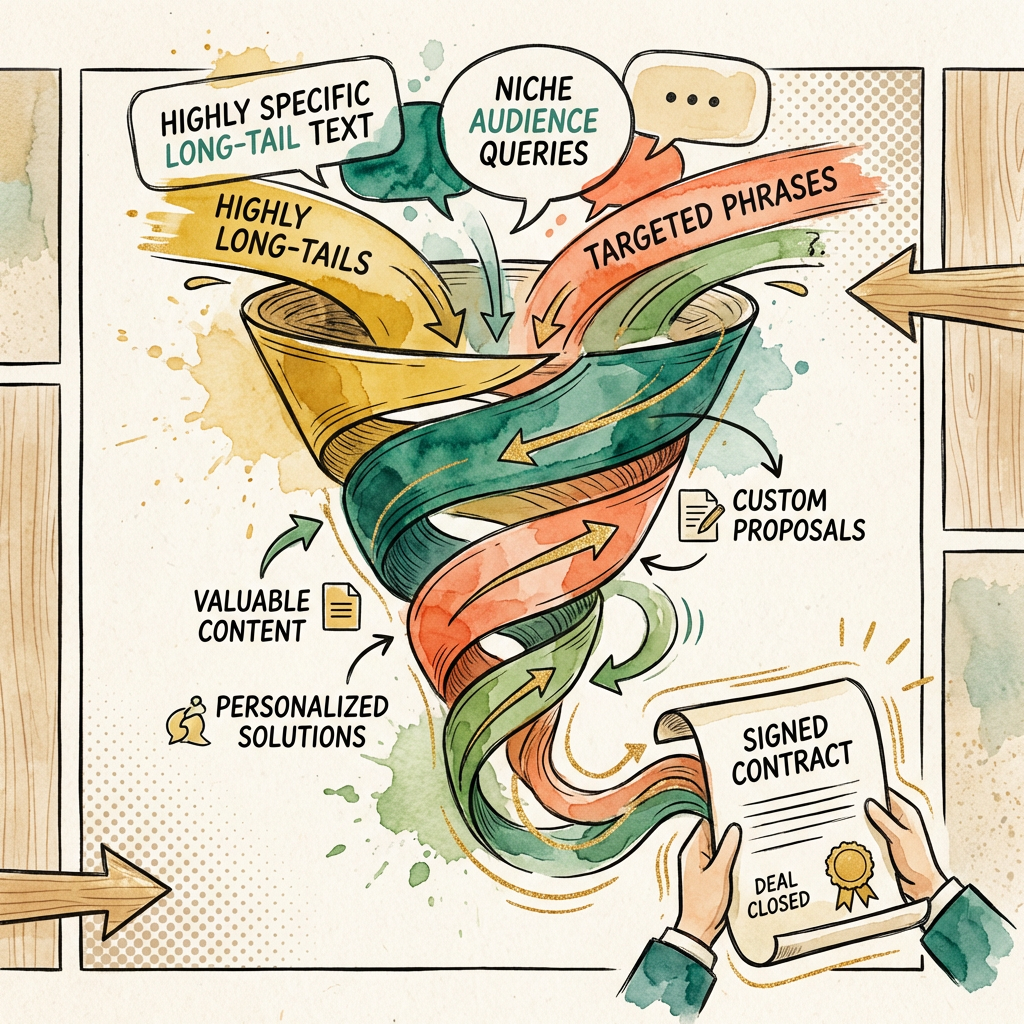
Leveraging specific long-tail keywords for higher website conversions.
Examples of High-Value Long-Tail Phrases
A long-tail keyword might look like “affordable vegan wedding catering packages in Brooklyn” or “last-minute individually boxed corporate lunches downtown.” While these specific phrases may only receive a fraction of the search volume of generic terms, the visitors who use them know exactly what they want. Because the competition for these hyper-specific phrases is significantly lower, it is much easier and faster for your website to achieve a page-one ranking.
The Mathematical Advantage of Granular Search
The cumulative sum of traffic driven by dozens or hundreds of different long-tail keywords frequently surpasses the traffic generated by a single, highly competitive broad term. More importantly, the conversion rate on long-tail traffic is exponentially higher. When a user searches for a highly specific service and lands on a page that exactly matches their granular query, the friction in the sales process evaporates, leading directly to higher inquiry rates and secured contracts.
5. Optimizing Content for Dietary Restrictions and Preferences
The modern culinary landscape is defined by diverse, specialized dietary requirements. From comprehensive lifestyle choices to severe medical allergies, diners are more conscious than ever about what they consume. Event planners and corporate assistants are acutely aware of this, and their search habits reflect the necessity to accommodate every guest safely. Catering companies that aggressively optimize their content for specific dietary keywords tap into a rapidly growing and fiercely loyal market segment.
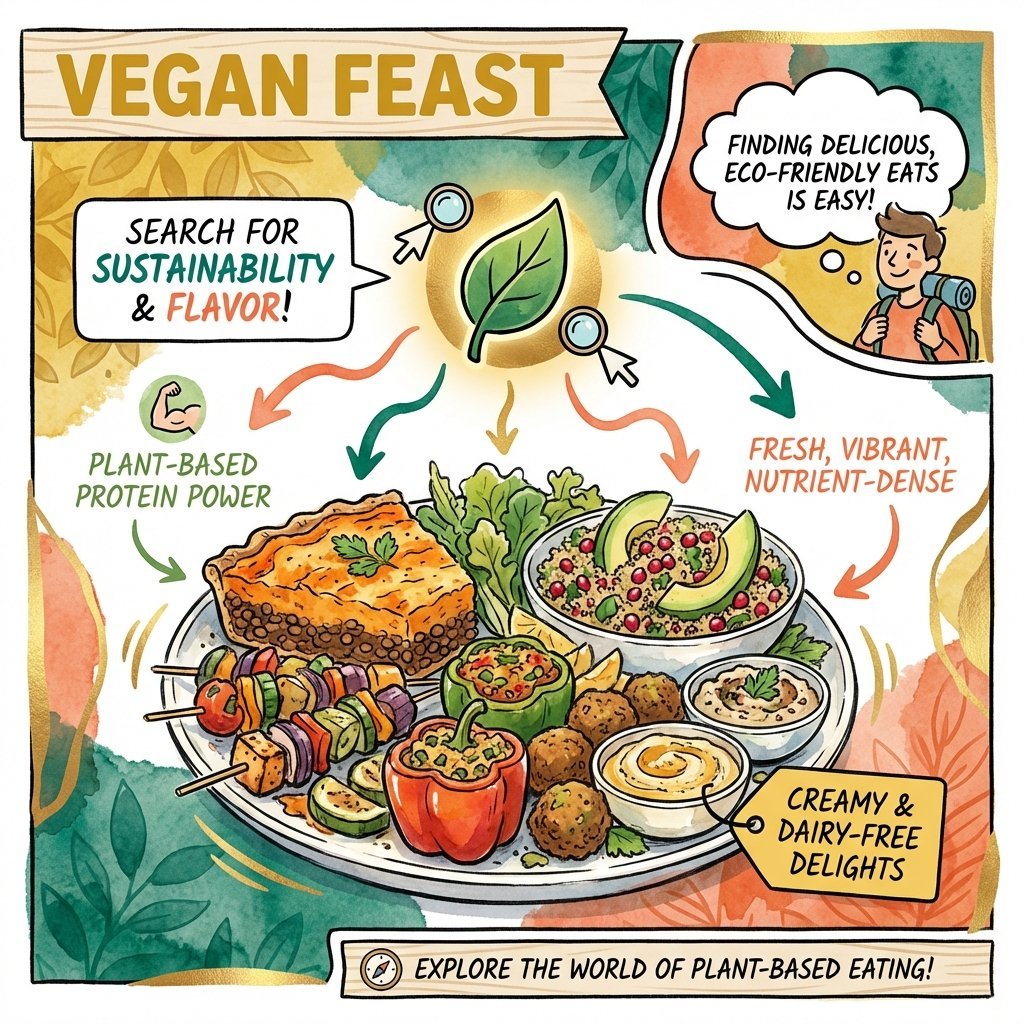
Optimizing content to capture searches for dietary-specific catering.
Targeting Niche Dietary Requirements
Key dietary search terms include variations of “vegan catering,” “gluten-free event food,” “halal corporate lunch,” “kosher wedding catering,” and “dairy-free dessert platters.” It is no longer sufficient to merely include a brief footnote on your primary menu stating that accommodations can be made. To rank effectively, you must create dedicated content—perhaps an entire sub-menu or a specialized FAQ section—that prominently features these dietary keywords and details your strict cross-contamination protocols.
Commanding Premium Pricing Through Specialization
When an individual is tasked with finding a verified gluten-free caterer for a sensitive executive retreat, they will bypass a dozen generic caterers to find a company that explicitly advertises their expertise in dietary safety. By establishing your brand as a leading authority in specialized niche diets, you not only capture highly targeted search traffic but you also command premium pricing, as clients are willing to pay for the peace of mind that comes with specialized culinary expertise.
6. Leveraging Conversational Queries and Voice Search
The rapid proliferation of smart speakers, in-car voice assistants, and mobile AI has fundamentally disrupted traditional search behavior. Consumers are transitioning away from typing robotic, fragmented keyword strings (e.g., “caterer NYC casual”) and are increasingly speaking to their devices in full, natural sentences. Optimizing your website architecture to capture this rising tide of conversational voice search queries is an essential strategy for 2026.

Adapting SEO strategies for conversational queries and voice search.
Structuring Content as Direct Answers
Voice search queries are inherently longer and are almost exclusively framed as direct questions: “Who,” “What,” “Where,” “When,” and “How.” For example, a user might ask their smartphone, “Who is the best affordable taco caterer near me for a graduation party?” To capture this traffic, your web content must directly mirror standard human conversational patterns. An incredibly effective tactic is the implementation of comprehensive, well-structured Frequently Asked Questions (FAQ) pages that utilize these exact question formats as headers.
Capturing “Position Zero” Featured Snippets
Instead of relying solely on paragraph text stuffed with keywords, format your content to pose a clear question (e.g., “Do you offer full-service staffing for outdoor weddings?”) followed immediately by a concise, authoritative answer. Search engine algorithms, particularly Google’s AI models, are designed to aggressively extract these succinct answers to serve as definitive “Featured Snippets” at the very top of the search results page, giving your catering business unparalleled, “zero-click” visibility above all your local competitors.
7. Strategic Placement of Pricing and Service Style Keywords
Budgetary constraints and logistical service styles are two of the most critical determining factors for any event planner. Consequently, keywords related to pricing structures and specific delivery methods indicate an incredibly high level of buyer readiness. Users actively searching for pricing information have usually already decided they need a caterer; they are merely looking for the vendor whose cost and logistical capabilities align with their specific event parameters.
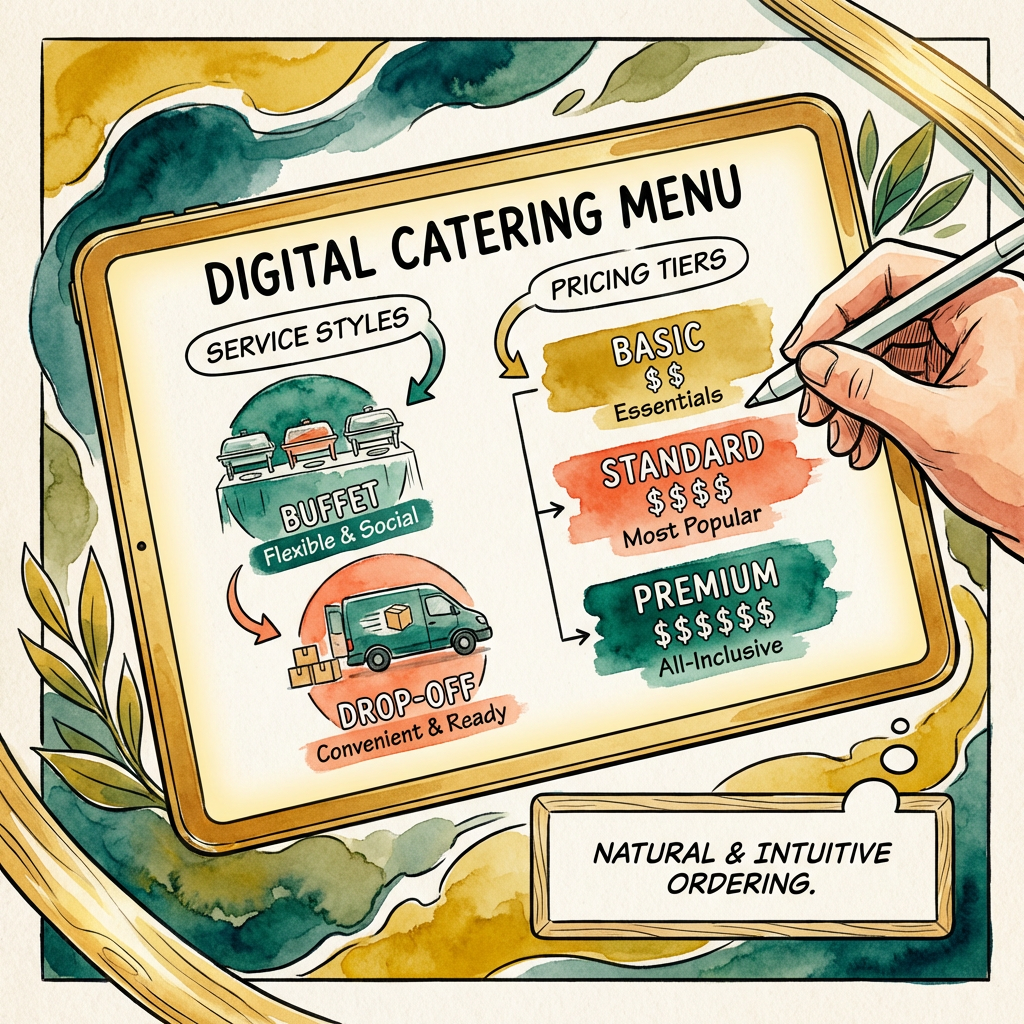
Strategic keyword placement for catering pricing and specific service styles.
Defining Delivery Modalities Digitally
Integrating service-style keywords is vital for clarifying exactly what you offer. Are you a “drop-off catering” specialist focused on efficiency, a “buffet style caterer,” or an elite “white-glove plated dinner service”? Clearly defining your operational modalities using these exact phrases prevents mismatched inquiries and attracts the correct clientele. A corporate assistant needing individually boxed lunches for fifty executives will search specifically for “boxed lunch drop-off,” and your site must explicitly rank for that term to secure the contract.
Transparency as a Ranking Factor
Furthermore, embracing pricing keywords can be highly advantageous, even if you offer bespoke, custom quotes. Searches for “average cost per person wedding catering,” “affordable party platters,” or “luxury catering packages” are ubiquitous. Even if you do not publish an itemized price list, creating content that addresses these queries—perhaps an article explaining the factors that influence catering costs—captures that high-intent traffic, establishes profound transparency and trust, and funnels those engaged users directly into your consultation pipeline.
8. Establishing Topical Authority Through Blogging
Search engines in 2026 are highly sophisticated; they do not merely count how many times a keyword appears on a static service page. Google’s algorithms are designed to evaluate the holistic expertise, authoritativeness, and trustworthiness (E-E-A-T) of an entire website. To truly dominate the search engine results pages (SERPs) for competitive catering keywords, you must establish deep semantic “Topical Authority” regarding all aspects of food service and event planning.
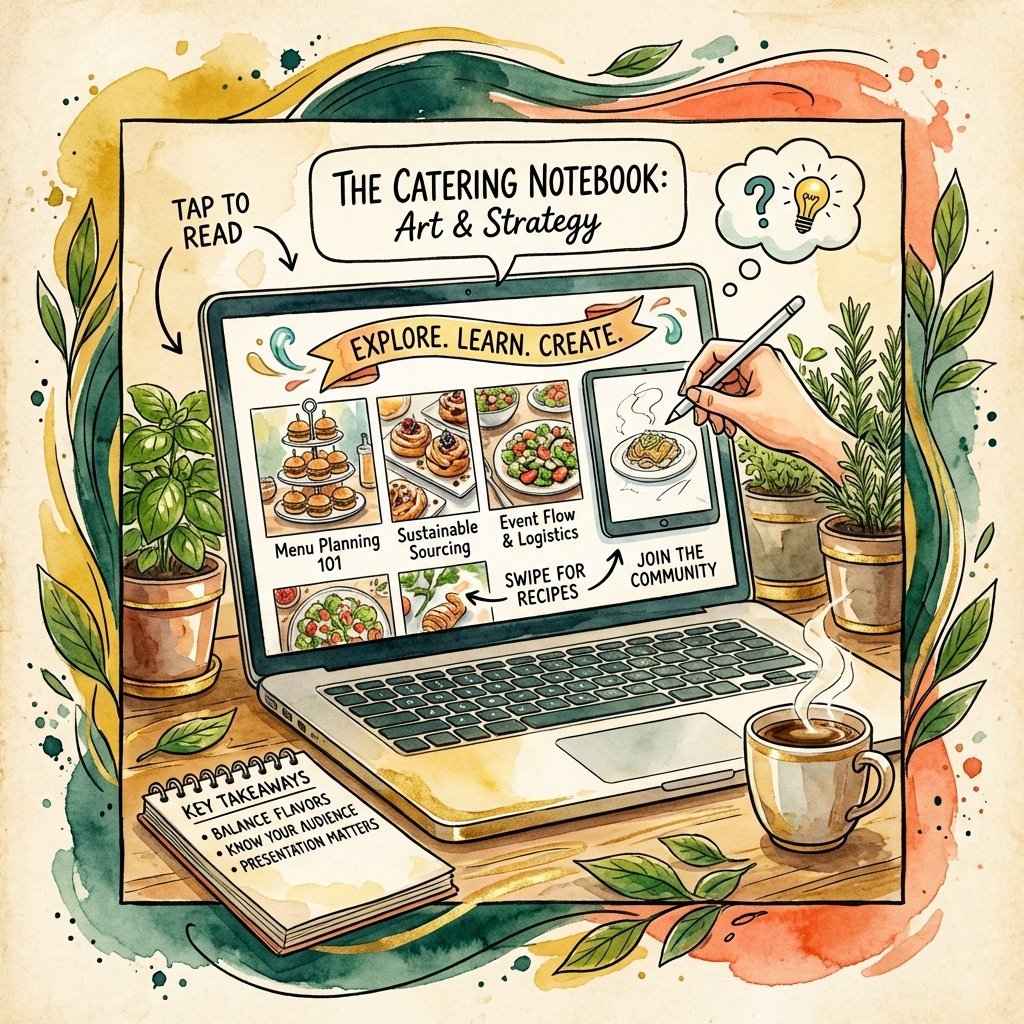
Building deep topical authority through comprehensive catering blogs.
Leveraging Informational Content Clusters
The most effective mechanism for building topical authority is the maintenance of a comprehensive, high-quality blog or “Resources” hub. This allows you to naturally integrate hundreds of secondary, informational long-tail keywords that would not fit organically on a main sales page. Articles focusing on topics such as “How to Estimate Food Quantities for a 100-Person Event,” “The Top 5 Corporate Venue Spaces in [Your City],” or “Trending Vegan Appetizers for Summer Weddings” provide immense value to users in the planning phase of the funnel.
The Inbound Link Generation Engine
According to HubSpot’s data on content marketing effectiveness, businesses that regularly publish educational content generate substantially more inbound links and index higher on search engines than static sites. By consistently publishing expert content that thoroughly addresses the periphery of event planning, search engines recognize your domain as a definitive, trusted resource on the subject of catering. This rising tide of authority lifts the rankings of your core, transactional “hire us” pages, dramatically increasing your overall market visibility.
9. Harnessing User-Generated Content and Review Keywords
In the modern digital economy, explicit social proof is the ultimate deciding factor for wary consumers. For a high-stakes purchase like catering a wedding or a massive corporate gala, prospective clients desperately seek reassurance that a vendor is reliable, professional, and capable of delivering exceptional quality. Search terms like “best [City] caterer reviews,” “reliable catering company ratings,” and “[Your Brand Name] complaints” are frequently the absolute final searches a user conducts before signing a contract.
Harnessing user reviews and social proof for catering SEO.
Automating Keyword-Rich Review Procurement
To dominate these high-conversion, trust-building queries, you must aggressively solicit and strategically curate User-Generated Content (UGC) and online reviews. You should implement automated systems—such as post-event follow-up emails—to politely request reviews from satisfied clients on critical platforms like Google, Yelp, and The Knot. Importantly, you should gently guide these clients to include specific keywords within their reviews by asking them to mention the *type* of event they hosted and their *favorite specific dish*. A Google review that states, “Their corporate boxed lunch delivery for our downtown office was flawless,” is infinitely more valuable for SEO than a generic “Great food!”
Creating Dedicated Social Proof Landing Pages
Furthermore, you should proactively leverage these reviews on your own website. Creating a dedicated “Testimonials” or “Client Stories” page allows you to naturally embed these keyword-rich reviews into your own site architecture. Not only does this provide the critical social proof that hesitant buyers require, but it also signals to search engines that real human beings are actively validating your services and heavily interacting with your brand within your specific geographic region.
10. Competitor Keyword Analysis and Gap Identification
SEO is inherently a zero-sum game; to achieve a position at the top of page one, you must displace a competitor currently occupying that exact spot. Therefore, operating in a strategic vacuum is a recipe for failure. To truly maximize your catering bookings, you must aggressively analyze your local digital competition, deconstruct their keyword strategies, and identify critical vulnerabilities and “content gaps” within your specific market.
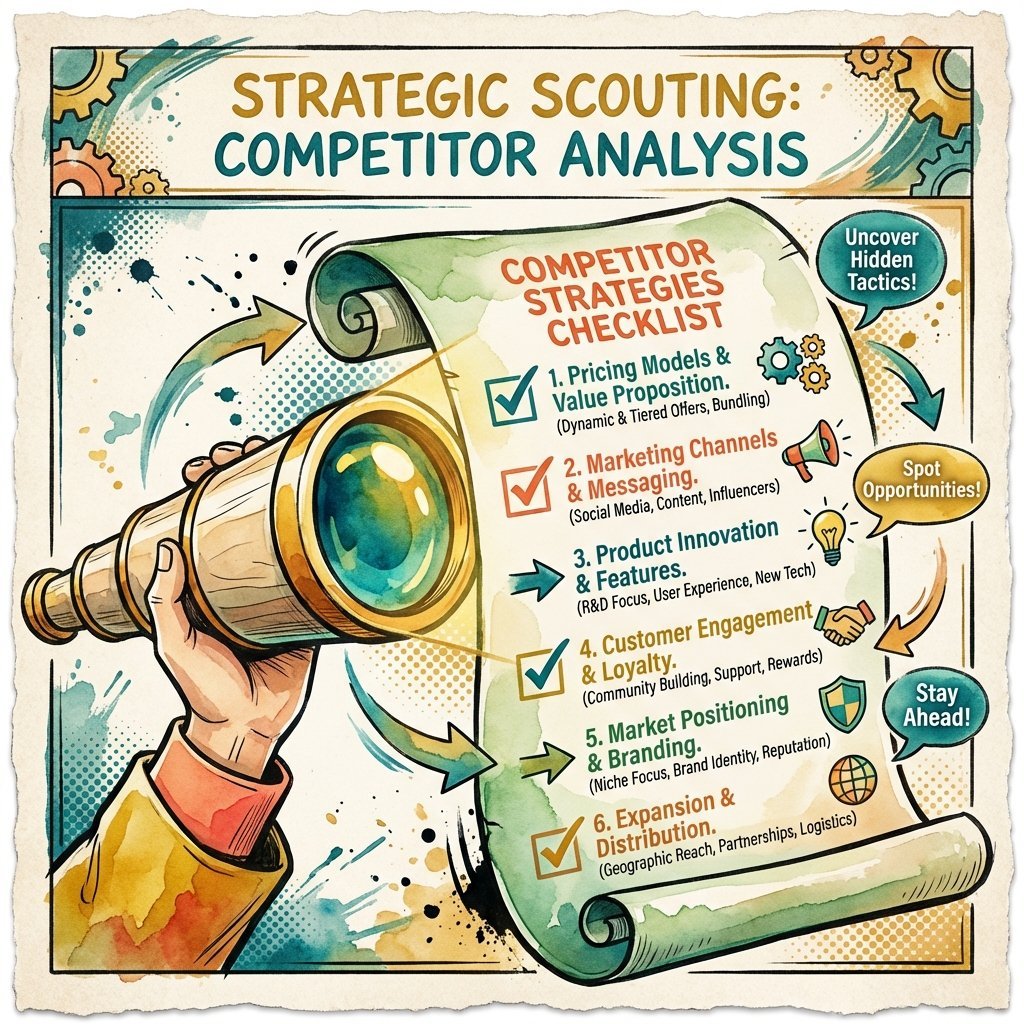
Conducting competitor keyword analysis to identify local market gaps.
Auditing Your Local Search Landscape
Utilizing professional SEO software tools—such as Ahrefs, Semrush, or even the free Google Keyword Planner—allows you to conduct deep audits of your primary competitors’ domains. You can discover exactly which high-volume keywords are driving the majority of their organic traffic, which external websites are linking to their content, and which specific terms they are actively bidding on in paid advertising campaigns. This intelligence is invaluable for understanding the baseline requirements for competing in your local market.
Exploiting Underserved Market Niches
More importantly, competitor analysis allows you to identify highly profitable “keyword gaps”—lucrative search queries that your competitors have completely overlooked or failed to optimize for properly. Perhaps three major catering companies in your city are fiercely battling for “wedding catering,” but none of them have created a dedicated, optimized landing page for “private yacht catering” or “film production set catering.” By identifying and aggressively targeting these underserved niches with specialized, high-quality content, you can rapidly dominate sub-markets, steadily building your overall domain authority while securing uncontested revenue streams.