Table of Contents
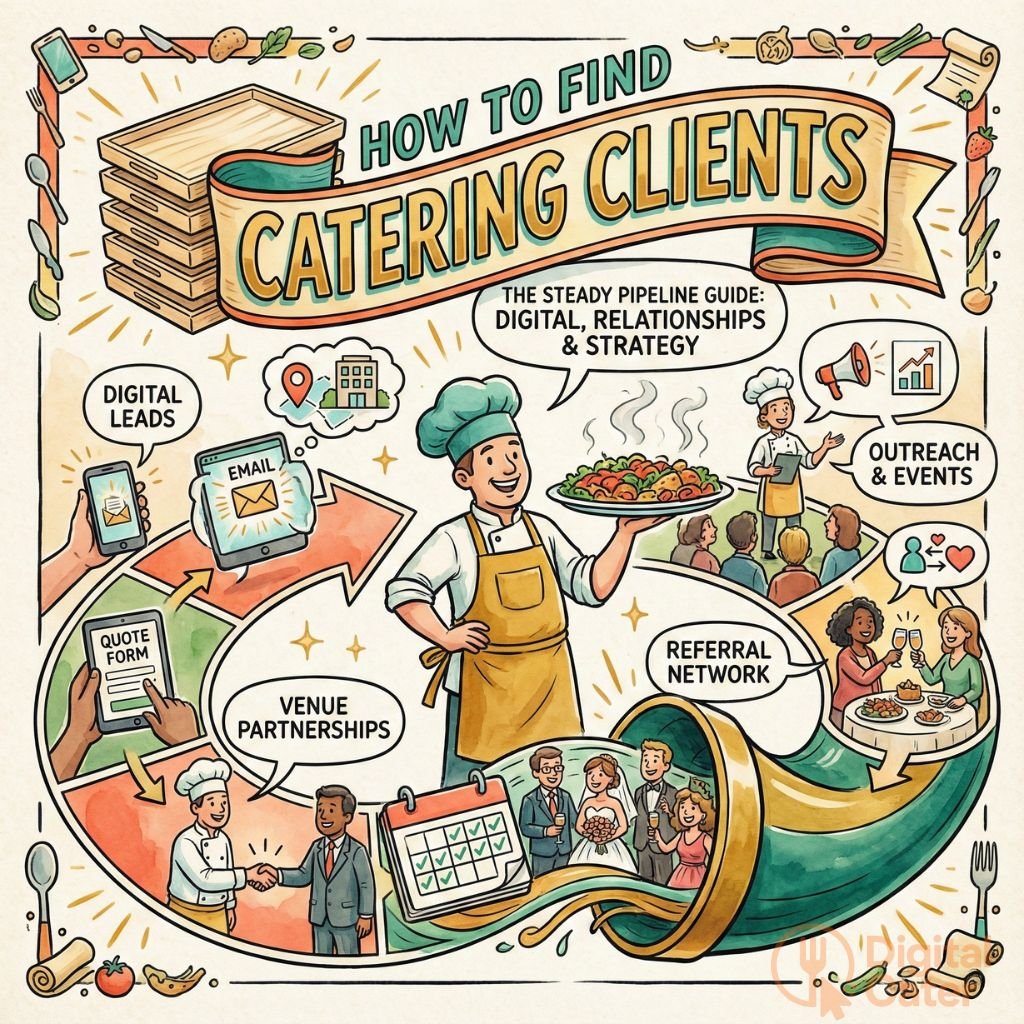
Finding catering clients requires combining digital presence, relationship building, and strategic outreach. This three-tier approach separates thriving catering businesses from those struggling with empty calendars and inconsistent revenue.
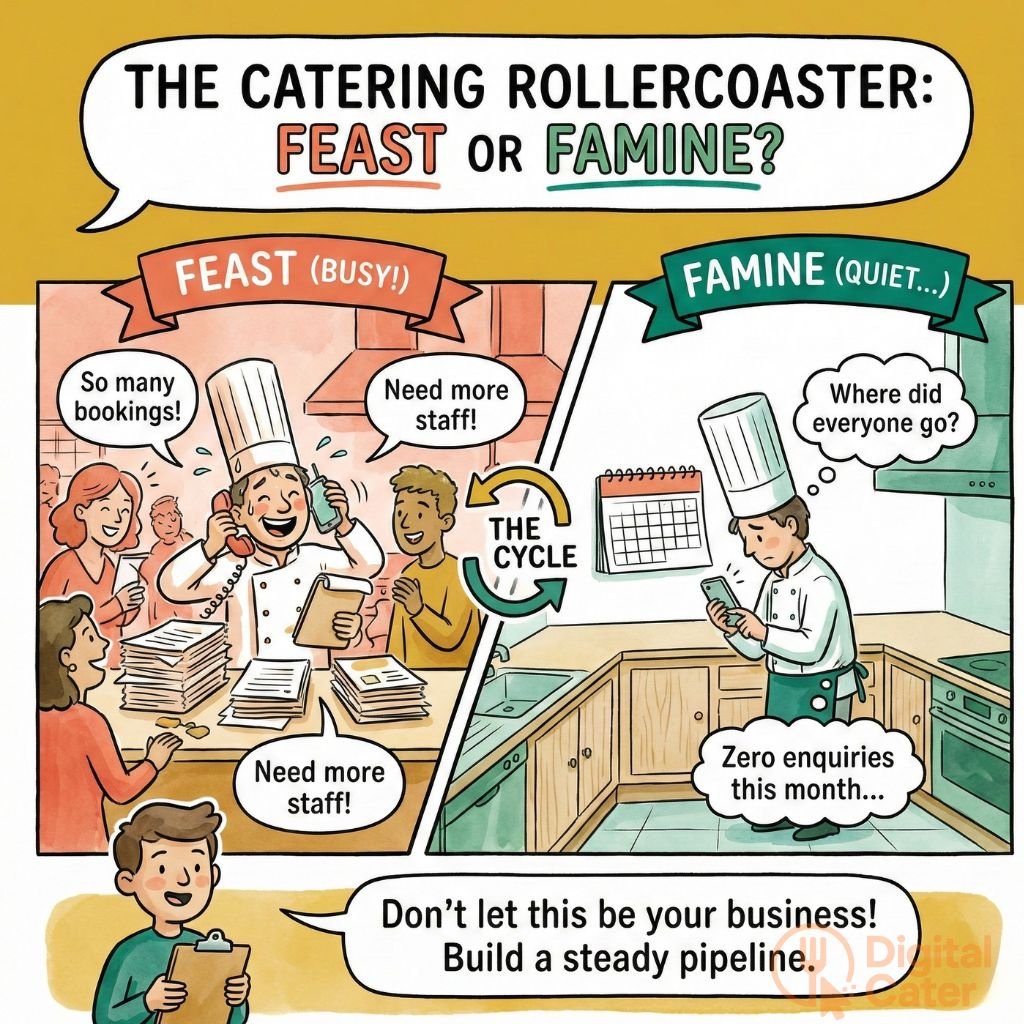
Most caterers face the same challenge. They produce exceptional food but lack a reliable system to attract clients. One month brings a flood of bookings. The next brings silence. This feast-or-famine cycle exhausts resources and limits growth potential.
The catering industry in Australia, US and the UK generates billions annually, yet many operators capture only a fraction of available opportunities. The problem rarely involves food quality. It stems from client acquisition systems that depend on chance rather than strategy.
This guide presents a structured framework for building consistent client flow. You will learn to identify your ideal client segments, establish a digital foundation that generates enquiries, implement immediate tactics for quick wins, and develop long-term relationship pipelines. By the final section, you will possess actionable methods to transform your catering business from reactive to proactive in client acquisition.
Understanding the Catering Client Landscape
Catering client acquisition operates differently from standard restaurant marketing. Restaurants rely on foot traffic, repeat visits, and impulse decisions. Catering businesses depend on planned events, substantial budgets, and trust-based purchasing decisions. Understanding these distinctions shapes your entire acquisition strategy.
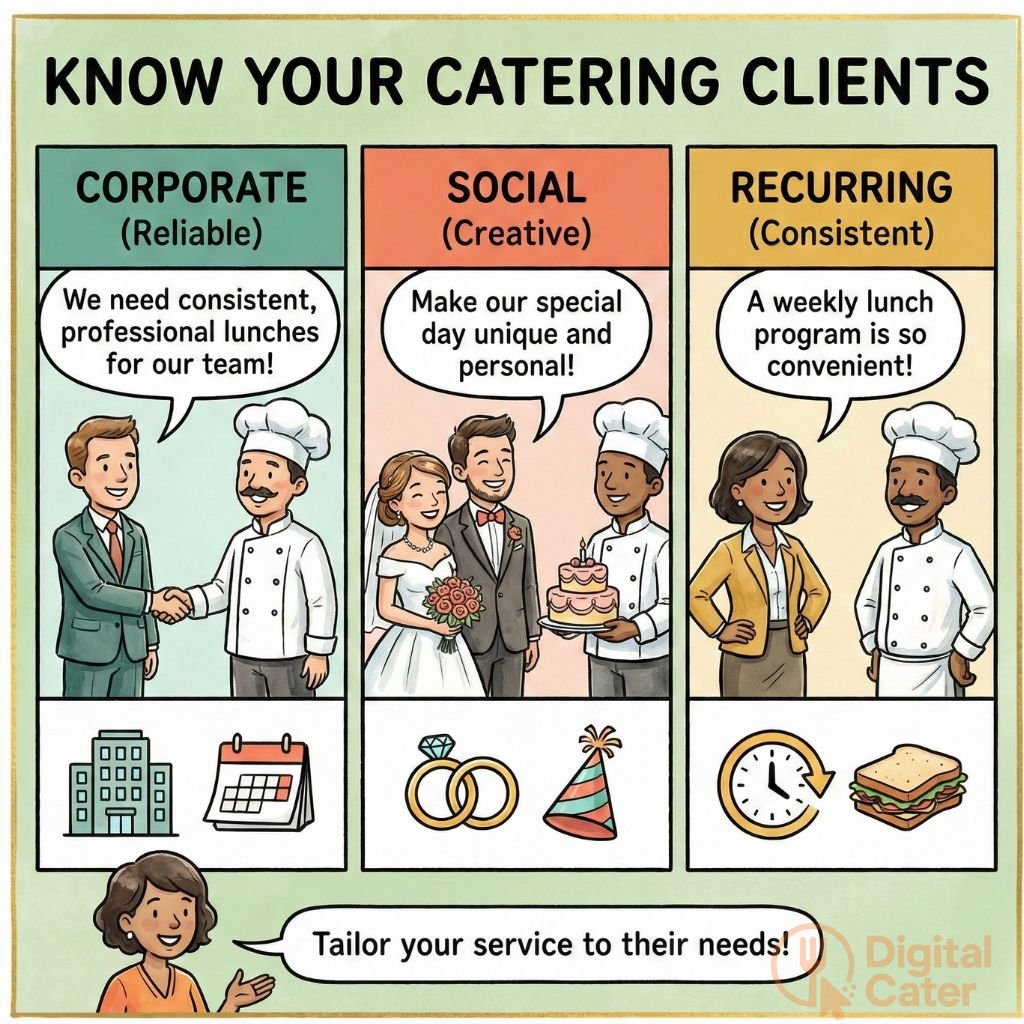
The catering market segments into distinct buyer categories, each with unique behaviours and expectations. Corporate clients seek reliability and professional presentation. Social event clients prioritise creativity and personalisation. Recurring clients value consistency and convenience above all else. Recognising these differences allows you to tailor messaging, pricing, and service delivery to match specific needs. Without this segmentation, marketing efforts scatter across incompatible audiences, wasting budget and diluting brand positioning.
What Makes Catering Client Acquisition Different From Other Food Businesses
High-ticket transactions require established trust before purchase. A $5,000 wedding catering order demands more confidence than a $50 restaurant meal. Longer sales cycles mean enquiries may take weeks or months to convert. The event-based nature creates urgency around specific dates, making timing crucial for every interaction.
The Three Primary Catering Client Segments You Should Target
- Corporate event clients bring volume and consistency. Businesses with 50+ employees typically require catering services 2-4 times monthly. Office managers and HR coordinators make purchasing decisions based on reliability and professional presentation.
- Social event clients deliver higher margins per booking. Weddings and celebrations allow for premium pricing. These clients often book 3-12 months in advance, providing valuable forecasting data.
- Recurring clients multiply lifetime value. A weekly corporate lunch programme averaging $800 generates $41,600 annually from a single relationship. Prioritise these partnerships for business stability.
Understanding Client Lifetime Value and Acquisition Costs
Calculate profitability by tracking total revenue from each client type against acquisition expenses. Corporate clients acquired through LinkedIn outreach may cost $200-400 in time and advertising but deliver $20,000+ over three years. Social event clients from wedding platforms cost $50-150 per lead but convert at lower rates. Set realistic budget expectations: allocate 5-10% of target revenue toward marketing. Expect ROI timelines of 2-3 months for paid advertising and 6-12 months for organic content strategies.
Building Your Foundation: Digital Presence That Attracts Clients
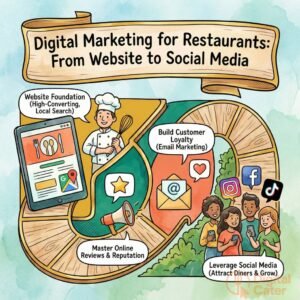
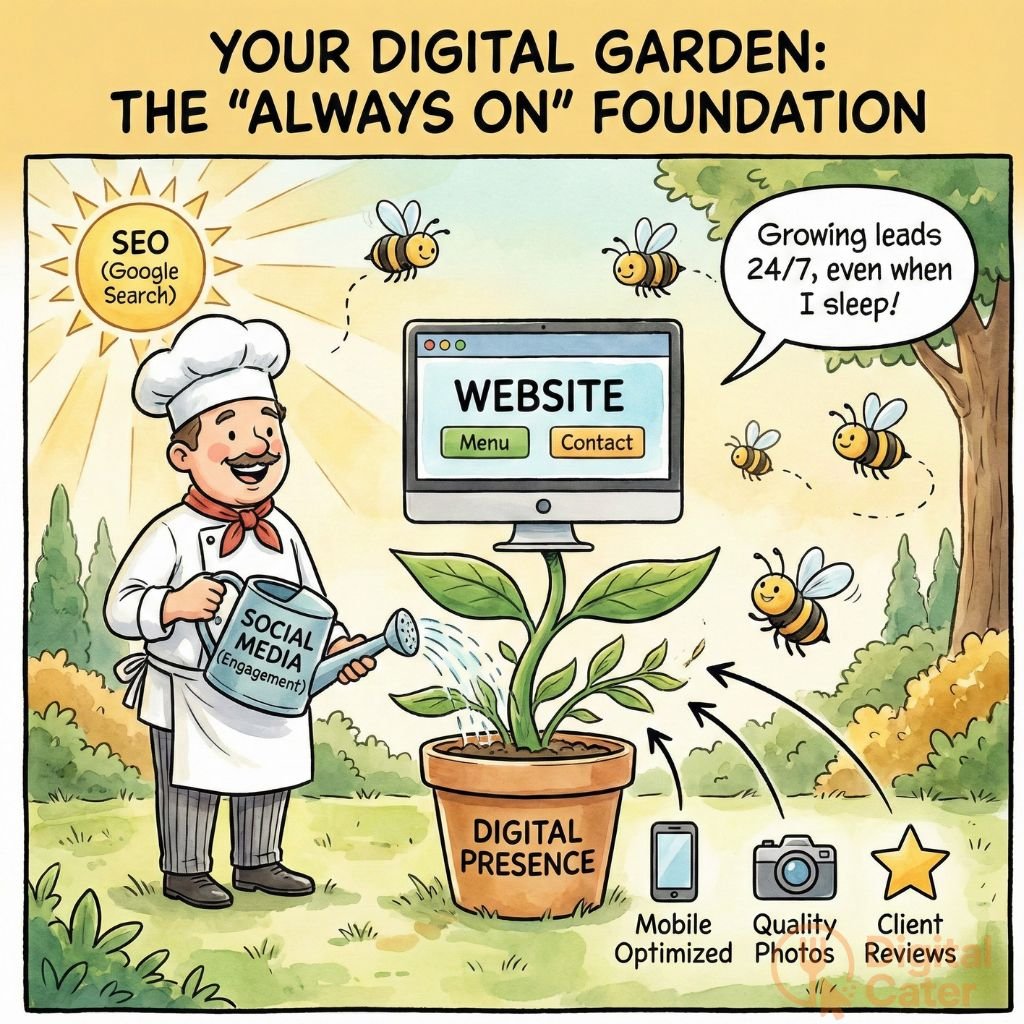
Before pursuing active outreach, establish a digital foundation that converts visitors into enquiries. Your online presence works around the clock, qualifying prospects while you focus on event execution. A well-structured digital ecosystem captures interest at multiple touchpoints throughout the client journey.
Many caterers underestimate digital presence importance. They invest in equipment, staff training, and ingredient quality while neglecting their virtual storefront. Yet 78% of event planners research caterers online before making contact. Your website, Google Business Profile, and social media accounts form the first impression for most prospects. Poor digital presence sends qualified clients to competitors with stronger online visibility. Building this foundation demands upfront investment but generates compounding returns through automated lead capture and credibility establishment.
Creating a Lead-Generating Catering Website
Your website serves as your primary conversion tool. Essential pages include a compelling homepage showcasing your speciality, a detailed menu section with pricing guidance, a gallery featuring professional event photography, and a streamlined quote request form.
Mobile optimisation matters critically. Event planners research caterers between meetings, during commutes, and at venues. A site that loads slowly or displays poorly on phones loses 60% of potential clients immediately.
Quote forms optimised with specific fields (event date, guest count, budget range) convert 30% higher than generic contact forms. Remove friction by limiting required fields to essentials. Loading speed under 3 seconds (approximately 1.5 megabytes page weight) prevents abandonment.
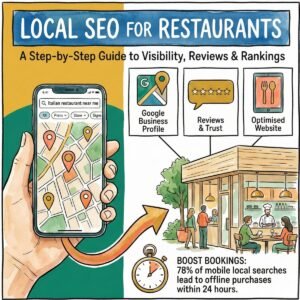
Optimising Your Google Business Profile for Local Discovery
Complete your Google Business Profile with catering-specific keywords in your business description. Include “corporate catering,” “wedding catering,” and “event catering” alongside your location.
Photo strategies generate measurable results. Profiles with 10+ quality images receive 50% more direction requests and website clicks. Upload images of plated dishes, buffet setups, and satisfied clients at events monthly.
Review generation requires systematic approaches. Send follow-up emails 48 hours after successful events requesting feedback. Respond to every review within 24 hours. Use Google Posts weekly to promote seasonal menus and upcoming availability.
Establishing Social Media Presence on the Right Platforms
Instagram serves visual storytelling. Share behind-the-scenes preparation, finished presentations, and team moments. Post 4-5 times weekly during peak planning seasons.
Facebook builds community engagement and enables targeted event marketing. Create a business page, join local event planning groups, and share client testimonials.
LinkedIn opens corporate catering doors. Connect with office managers, HR professionals, and executive assistants. Share content addressing workplace catering challenges.
Content pillars should include educational posts (food safety, menu planning), inspirational content (event galleries), and promotional material (seasonal offers). Maintain this 40-40-20 ratio for balanced engagement.
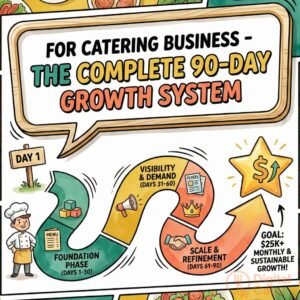
Immediate Client Acquisition Tactics (Week 1-4)
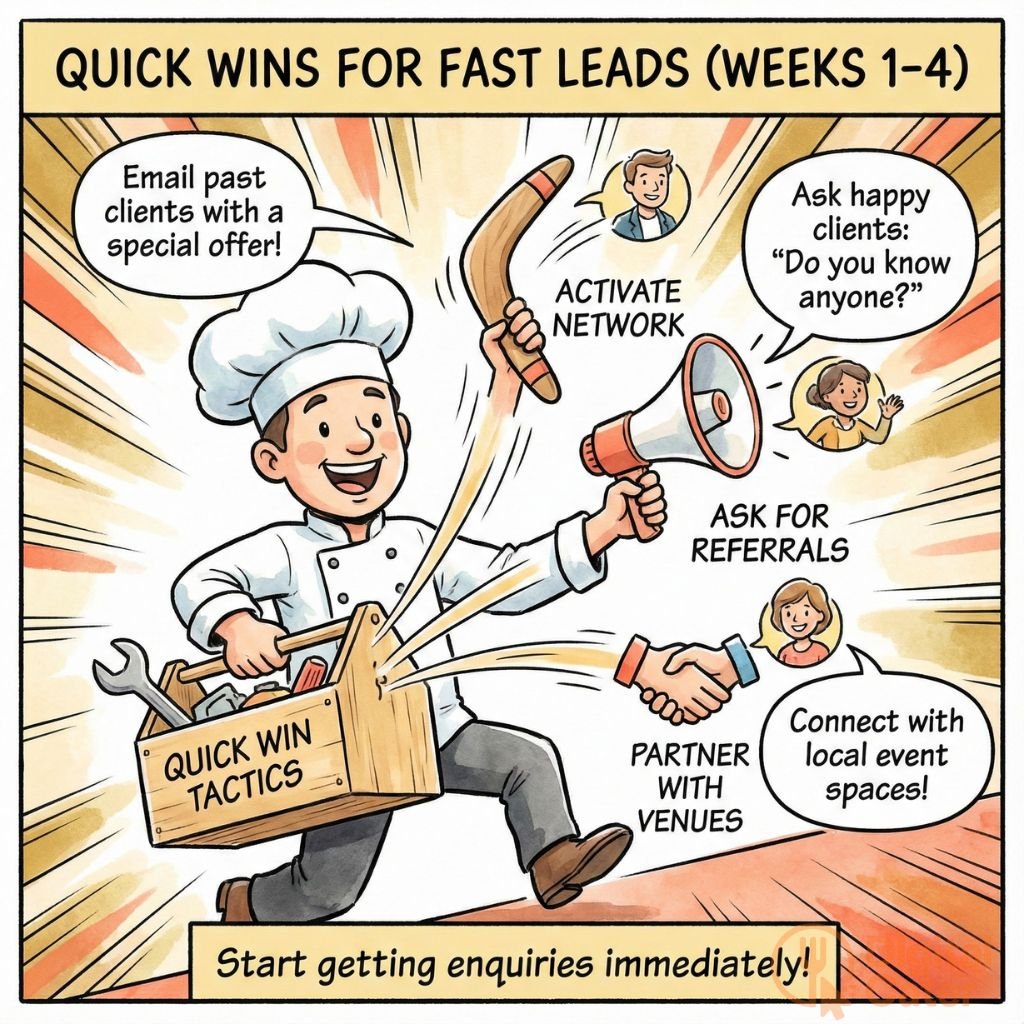
While building long-term systems, quick-win strategies generate leads within your first month. These tactics leverage existing assets and relationships rather than requiring substantial financial investment. Speed matters during initial implementation because early wins build momentum and fund further marketing efforts.
The first four weeks establish your acquisition rhythm. During this period, focus energy on low-cost, high-impact activities that produce measurable results. Past clients represent your warmest leads. Personal networks contain untapped referral potential. Local venues and event planners need reliable catering partners. Business networks provide access to corporate decision-makers. Activating these channels simultaneously creates multiple lead streams, reducing dependence on any single source. Document every interaction and outcome to identify which tactics deserve expanded investment.
Activating Your Existing Network
- Past client reactivation produces immediate results. Email previous clients with a personalised message acknowledging their past event and offering a 10% booking incentive for their next occasion.
- Personal network outreach taps underutilised resources. Inform friends, family, and acquaintances about your catering services. Provide them with digital materials to share.
- Referral requests leverage satisfaction. Contact clients after successful events and ask specifically: “Do you know anyone planning an event who might benefit from our services?”
- Expected results: Executing all three tactics generates 5-10 qualified leads within 14 days based on industry benchmarks.
Partnering With Local Event Venues
Identify venues aligning with your catering style. A rustic barn venue suits a farm-to-table caterer better than a modern hotel ballroom.
Approach venue managers with specific value propositions. Explain how your services enhance their client experience. Offer to conduct a complimentary tasting for their events team.
Negotiate preferred vendor agreements that specify referral processes and any commission structures. Standard arrangements range from 5-15% commission on referred bookings or reciprocal referral agreements without financial exchange.
Connecting With Event Planners and Wedding Coordinators
Find event planners through industry directories, Instagram hashtag searches (#melbourneweddingplanner, #sydneyeventplanner), and local wedding expos.
Create a vendor partnership pitch highlighting reliability, communication style, and flexibility. Planners value caterers who simplify their work, not complicate it.
Build relationships through consistent follow-up, sharing relevant content, and remembering personal details. Send a monthly email sharing your availability and new menu additions.
Joining Local Business Networks and Chambers of Commerce
Select memberships strategically. A chamber of commerce provides access to businesses needing corporate catering. A hospitality industry network connects you with complementary vendors.
Attend networking events with clear objectives. Collect 5 business cards minimum. Follow up within 48 hours with personalised messages.
Sponsorship opportunities at business breakfasts or awards dinners position you as an established provider.
Strategic Digital Marketing for Consistent Lead Flow
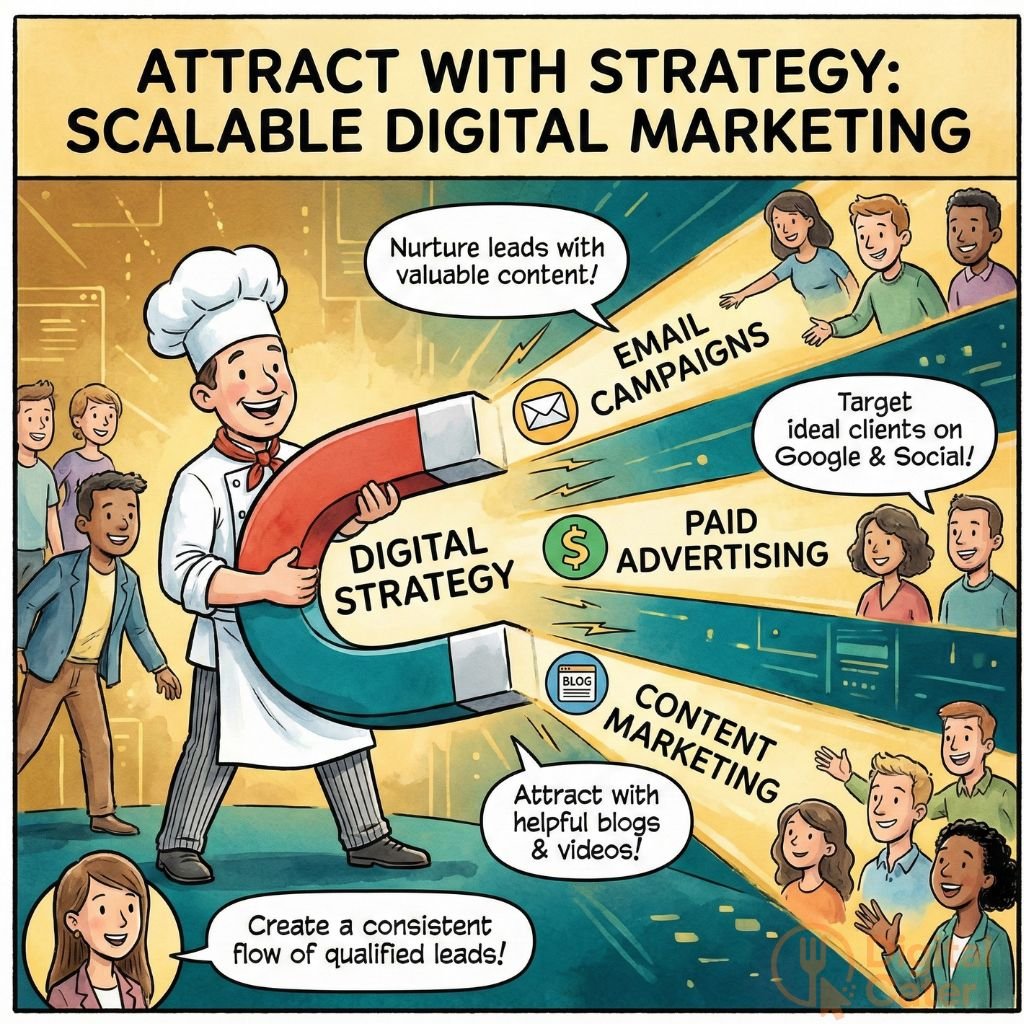
Scalable online strategies build predictable enquiry pipelines beyond immediate network activation. Digital marketing enables systematic lead generation that operates independently of your personal availability. Once established, these systems deliver enquiries while you execute events and manage operations.
The transition from reactive to proactive client acquisition happens through digital marketing mastery. Email campaigns nurture cold leads into warm prospects over weeks and months. Paid advertising places your services before actively searching buyers. Content marketing establishes authority and attracts organic traffic. Marketplace listings capture clients who prefer platform-based discovery. Each channel serves distinct purposes within your overall acquisition strategy. Implementing all four creates redundancy that protects against algorithm changes or platform disruptions affecting any single channel.
Implementing Email Marketing Campaigns
Build subscriber lists through website quote forms, social media contests, and in-person event sign-ups. Offer a menu planning guide or event checklist as an incentive.
Welcome sequences for new subscribers follow a 5-email framework: introduction to your story (Day 1), showcase of signature offerings (Day 3), client testimonial feature (Day 5), educational content about event planning (Day 7), and soft promotional offer (Day 10).
Monthly newsletters maintain engagement. Include seasonal menu highlights, recent event photos, team updates, and upcoming availability. Automation workflows nurture leads who enquired but did not book.
Running Targeted Paid Advertising
Google Ads captures high-intent searches. Target phrases like “catering near me,” “corporate catering [city],” and “wedding caterer [suburb].” These searchers demonstrate active purchasing intent.
Facebook and Instagram ads reach engaged couples through targeting parameters including relationship status changes, wedding group memberships, and bridal content engagement. Target corporate decision-makers by job titles: office manager, executive assistant, HR coordinator.
Budget allocation for starters: $300-500 monthly split 60% Google Ads, 40% social media. Adjust based on conversion data after 60 days. Retarget website visitors who viewed your menu but did not submit enquiries within 7 days.
Creating Content That Attracts Your Ideal Clients
Blog topics addressing client questions build search visibility. Write about “How much does wedding catering cost per head in [city]?” or “Corporate lunch ideas for meetings under $20 per person.”
Video content includes event highlight reels (60-90 seconds), client testimonial interviews, and kitchen preparation sequences. Host on YouTube and embed on your website.
Local SEO requires location-specific pages targeting “catering in [suburb]” searches.
Leveraging Online Catering Marketplaces and Directories
Platforms like ezCater, CaterCow, and local equivalents provide exposure to active buyers. Pros include access to qualified leads without marketing effort. Cons involve commission fees (typically 15-25%) and reduced control over client relationships.
Create profiles emphasising unique positioning. Specify your cuisine speciality, service style, and ideal event size. Graduate from marketplaces to direct bookings once your reputation generates referrals.
Building Relationship-Based Client Pipelines
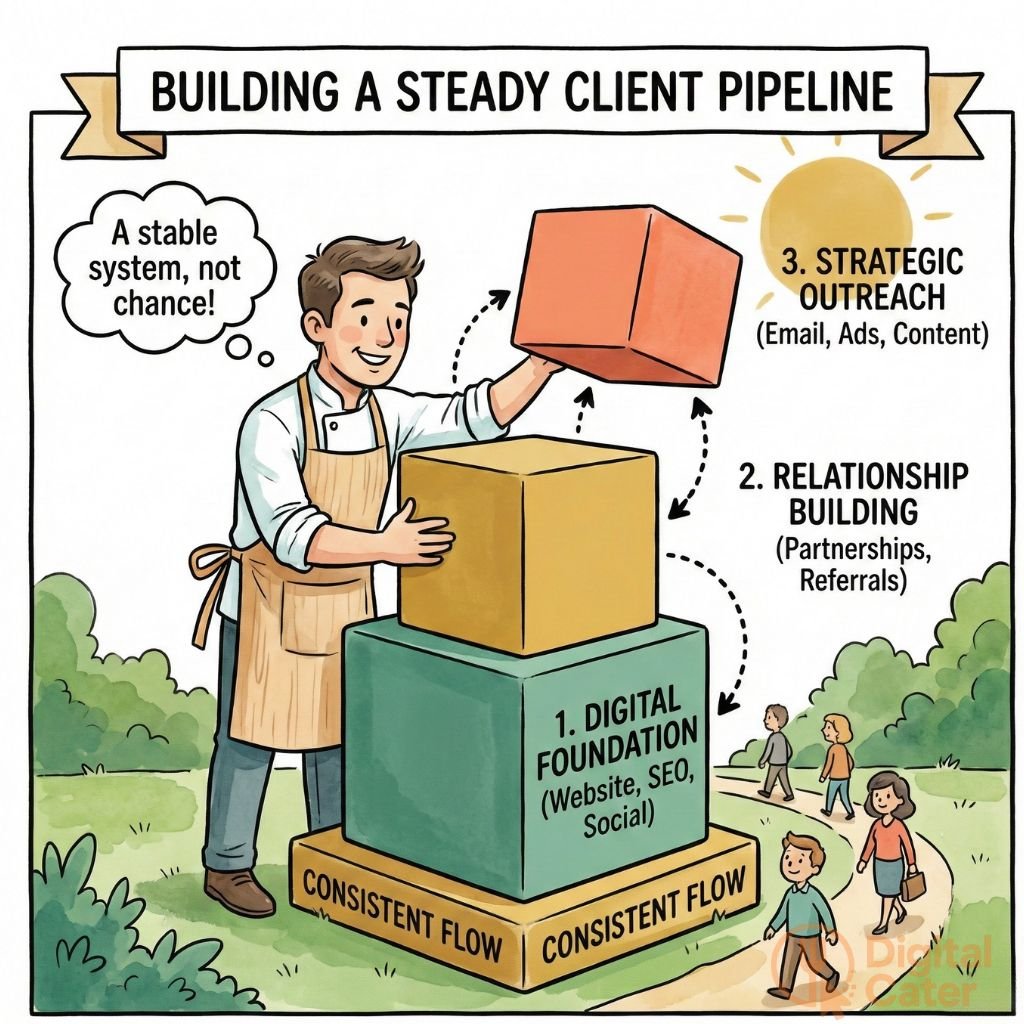
Long-term relationship strategies create sustainable client flow beyond campaign-dependent acquisition. While digital marketing captures transactional buyers, relationship building develops partnership-minded clients who return repeatedly. These clients become advocates, generating referrals that reduce overall acquisition costs over time.
Relationship-based acquisition requires patience and consistency. Results emerge over months rather than days. Corporate catering programmes develop through multiple meetings and trial orders. Venue partnerships strengthen through successful event collaborations. Referral networks grow as you deliver consistent quality across client interactions. The compounding nature of relationship building makes early investment worthwhile. A single corporate partnership may generate more annual revenue than dozens of one-time social event bookings while requiring less ongoing marketing expenditure to maintain.
Developing Corporate Catering Programs
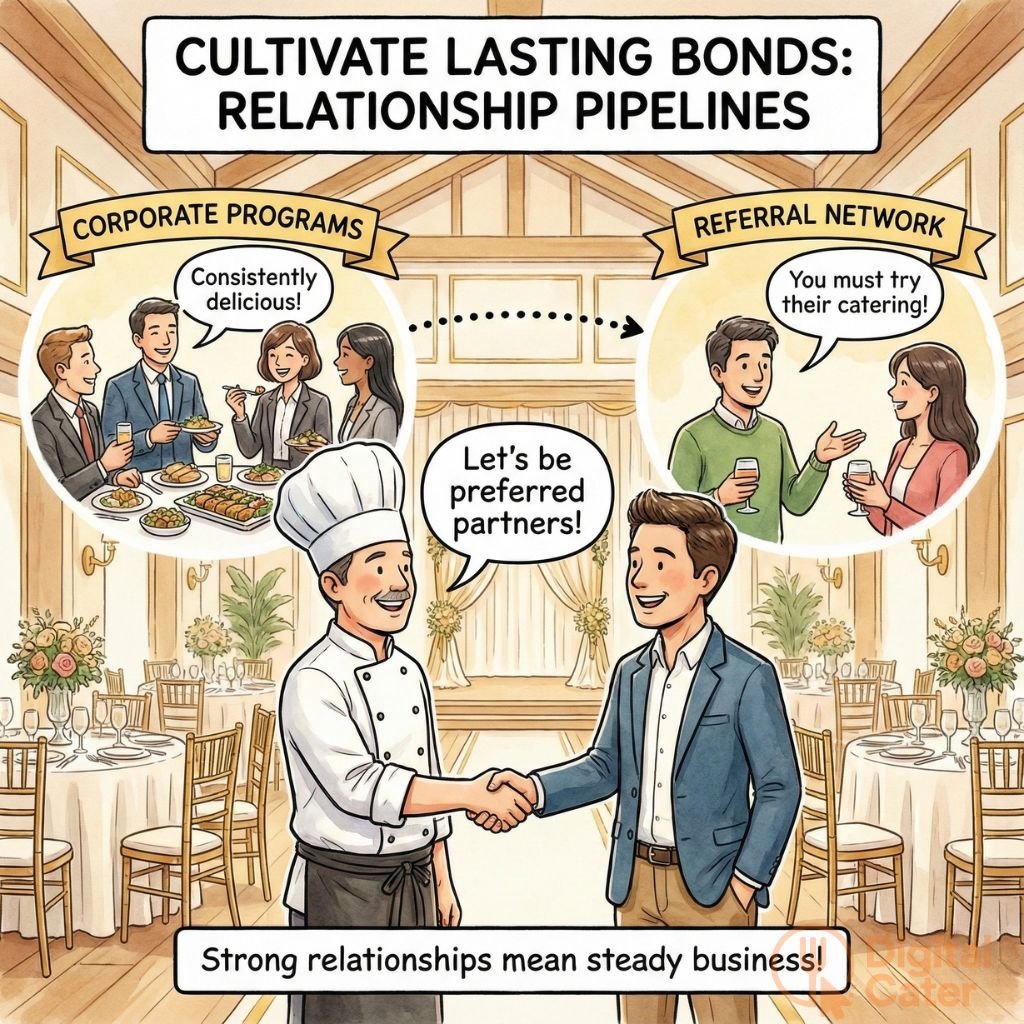
Identify companies with 200+ employees. These organisations typically maintain regular catering needs for meetings, training sessions, and celebrations.
Create corporate lunch packages with tiered pricing. Options might include daily team meals, weekly executive lunches, and monthly staff celebrations. Position packages as operational solutions rather than food orders.
Pitch to office managers and HR departments by addressing their pain points: consistency, dietary accommodation, professional presentation, and simplified ordering. A successful case study: One catering business landed a $3,000/month corporate contract by offering a dedicated account manager and customised online ordering portal.
Establishing Venue Partnerships as Preferred Caterer
Preferred vendor status delivers consistent bookings. Venues recommend 3-5 caterers to every client. Being on that list means regular referrals without ongoing marketing spend.
Conduct site visits and tasting events for venue coordinators annually. Demonstrate how your setup processes protect their spaces and enhance their reputation.
Maintain relationships with venue staff through recognition, prompt communication, and problem-free events.
Hosting Tasting Events and Open Houses
Showcase events convert 40% of attendees when executed properly. Plan quarterly tastings with 20-30 qualified prospects per session.
Invitation strategy targets engaged couples who enquired but did not book, corporate prospects from networking events, and vendor partners who can refer clients.
Presentation techniques include station-style sampling, portfolio displays, and brief capability presentations. Follow-up sequences for non-booking attendees span 14 days with graduated offers.
Creating a Referral Program That Generates Consistent Leads
- Client referral incentives drive results. Industry data indicates 25% of new catering clients originate from referrals. Offer $100 credit toward future bookings for successful referrals.
- Vendor referral networks multiply reach. Partner with photographers, DJs, florists, and event stylists. Exchange referrals with complementary providers.
- Tracking systems ensure accountability. Record referral sources for every enquiry. Fulfil incentives within 30 days of referred bookings.
- Promotional materials simplify referrals. Provide digital cards, email templates, and social sharing assets to satisfied clients and partners.
Targeted Outreach and Direct Sales Strategies
Proactive approaches supplement inbound enquiries for complete pipeline coverage. Direct outreach places your services before prospects who may not actively search for caterers yet need your solutions. This strategy proves particularly effective for corporate client acquisition where decision-makers respond to tailored proposals addressing specific organisational needs.
Outbound strategies require different skills than inbound marketing. Rather than attracting interested visitors, you initiate conversations with qualified prospects. Success depends on research quality, message relevance, and follow-up persistence. Building targeted prospect lists ensures outreach reaches decision-makers rather than gatekeepers. Crafting compelling messages captures attention within crowded inboxes. Multi-touch sequences maintain presence until prospects enter active buying cycles. Mastering outbound techniques creates competitive advantage since most caterers rely exclusively on inbound methods.
Building a Targeted Prospect List
Use Google Maps to identify corporate offices, event venues, and function spaces within your service radius (typically 30-50 kilometres or 20-30 miles). Note businesses with 50+ employees and venues hosting regular events.
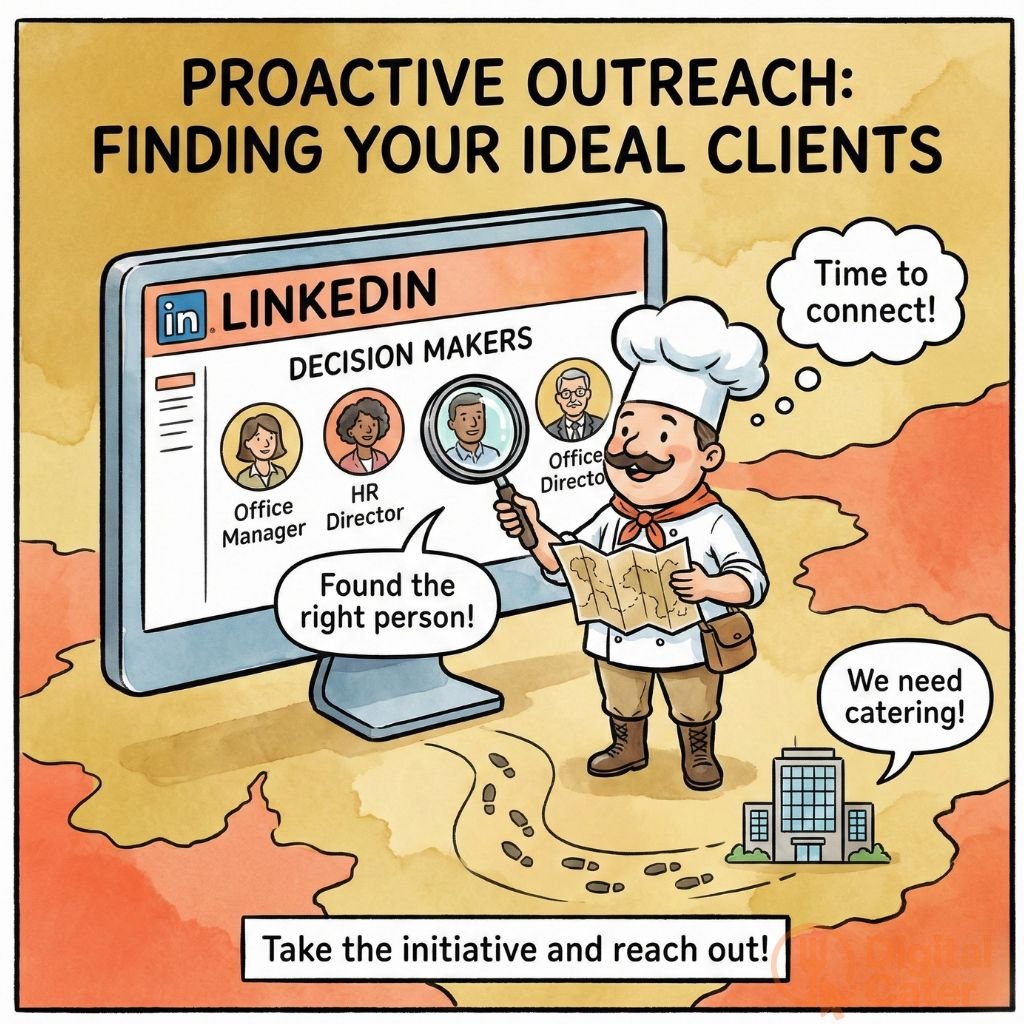
Identify decision-makers through LinkedIn searches. Office managers, HR coordinators, and executive assistants hold purchasing authority for corporate catering.
Create segmented lists by client type. Corporate prospects require different messaging than social event venues.
Cold Outreach That Gets Responses
Email templates achieving 15-20% response rates share common elements: personalised opening references, specific value propositions, clear calls-to-action, and professional signatures with credentials.
LinkedIn connection strategies include engaging with prospects’ content before messaging, sending connection requests with personalised notes, and following up with value-focused messages rather than immediate sales pitches.
Phone follow-up scripts acknowledge busy schedules, reference previous email outreach, and request brief conversations. Multi-touch sequences combine email (Day 1), LinkedIn connection (Day 3), phone call (Day 7), and second email (Day 14).
Attending Industry Events and Trade Shows
Local wedding expos deliver measurable returns. Budget $500-2,000 for booth fees, materials, and sampling costs. Track leads generated per dollar spent to calculate ROI.
Corporate event trade shows connect you with event planners managing multiple clients. Booth setup prioritises food sampling, professional displays, and easy contact capture.
Measuring, Tracking, and Optimising Your Client Acquisition
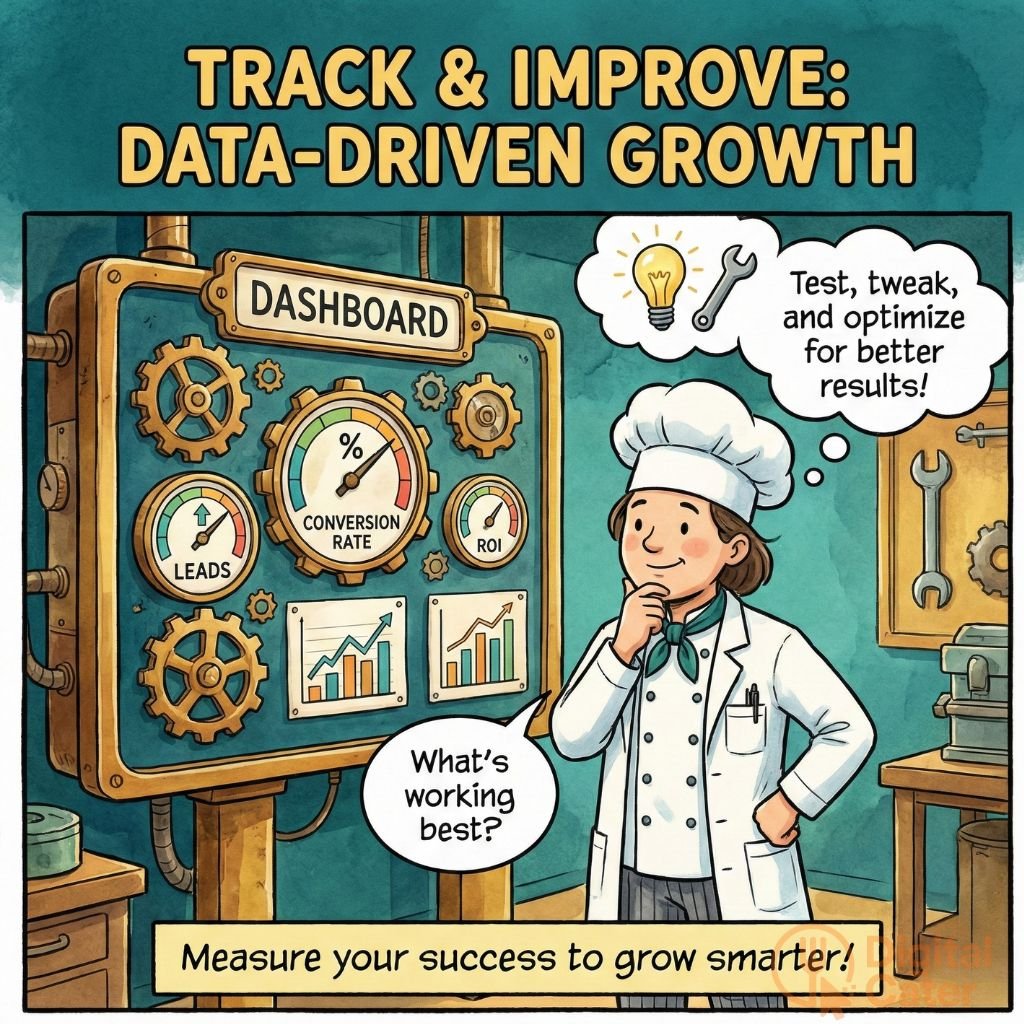
Data-driven approaches identify what works and what wastes resources. Without measurement, marketing decisions rely on intuition rather than evidence. Systematic tracking reveals which channels deliver qualified leads and which consume budget without returns.
Effective measurement requires establishing baseline metrics before implementing new strategies. Track current enquiry sources, conversion rates, and client acquisition costs. Compare performance after each campaign or initiative to isolate impact. CRM systems centralise data and enable pattern recognition across client interactions. Testing and optimisation transform good campaigns into exceptional performers through incremental improvements. The discipline of measurement separates professional marketers from hopeful amateurs.
Essential Metrics to Track
Lead generation by channel reveals source effectiveness. Track website enquiries, referrals, paid advertising, and networking separately. Conversion rates from enquiry to booking benchmark performance (industry average: 15-25%). Client acquisition cost per channel enables budget allocation decisions. Average order value by client type guides targeting priorities. Lifetime value and repeat booking rates justify acquisition investments.
Setting Up Your CRM and Lead Management System
CRM recommendations range from budget-friendly (HubSpot Free, Zoho CRM) to comprehensive (Salesforce, Monday.com). Select based on team size and technical comfort.
Lead scoring prioritises follow-up. Score enquiries based on event date proximity, budget indication, and engagement level. Automation handles routine follow-ups, freeing time for high-value conversations.
Testing and Improving Your Conversion Rates
A/B test quote forms, pricing presentations, and follow-up sequences. Response time directly impacts conversion. Enquiries answered within one hour convert 7 times higher than those answered after 24 hours. Refine sales pitches based on win/loss analysis. Client feedback integration drives continuous improvement.
Retaining Clients and Maximising Repeat Business
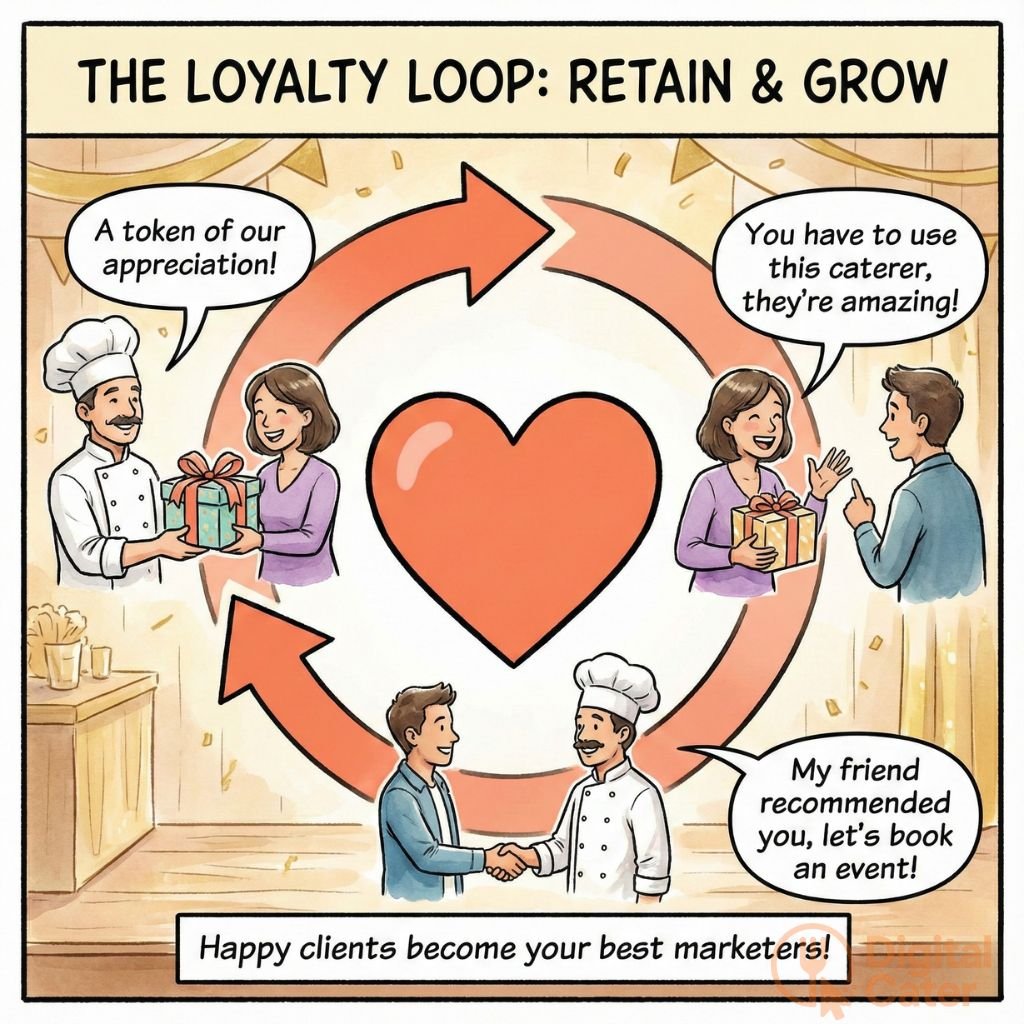
Acquisition without retention wastes resources. Converting one-time clients into long-term relationships multiplies return on initial acquisition investment. Retained clients require minimal marketing spend while generating predictable revenue streams.
Client retention in catering differs from subscription businesses. Events occur periodically rather than continuously, creating natural gaps between transactions. Maintaining presence during these intervals keeps your brand top-of-mind when next events arise. Exceptional service delivery forms the retention foundation. Systematic follow-up builds on that foundation. Loyalty programmes and recognition create emotional connections beyond transactional relationships. Each retained client becomes a potential advocate, extending your reach through word-of-mouth referrals.
Delivering Exceptional Client Experiences
Quality control systems ensure consistent execution across events. Standardise preparation checklists, presentation guidelines, and service protocols.
Communication protocols throughout the event lifecycle build confidence. Confirm details 72 hours before, provide day-of contact information, and follow up within 48 hours post-event.
Problem resolution transforms complaints into loyalty. Address issues immediately, offer appropriate remediation, and follow up to confirm satisfaction.
Building Loyalty and Encouraging Repeat Bookings
Stay-in-touch campaigns target annual events. Send reminders 2-3 months before previous booking anniversaries for birthdays, corporate functions, and celebrations.
Seasonal promotion calendars prompt repeat engagement. Christmas party packages in October, Valentine’s Day menus in January, and summer celebration offers in spring.
VIP programmes reward high-value clients with priority booking, complimentary additions, and exclusive tastings.
Generating Reviews and Testimonials
Timing requests for maximum response rates: 24-48 hours post-event while satisfaction remains fresh. Multi-platform strategy spreads reviews across Google, Facebook, and wedding directories.
Respond to all reviews professionally. Leverage testimonials in marketing materials, website content, and social media posts.
Advanced Client Acquisition Strategies
Once you master the fundamentals, these advanced questions guide further development. These approaches suit established caterers with consistent enquiry flow seeking optimisation rather than foundation building.
Can Catering Businesses Succeed With Only Online Marketing?
Yes, but with caveats. Pure online acquisition works in metropolitan markets with populations exceeding 500,000. Smaller markets require relationship-based approaches alongside digital presence. Geographic competition density determines online-only viability.
What Is the Average Cost to Acquire a Catering Client?
Industry benchmarks range from $50-150 for social event clients acquired through paid advertising to $200-500 for corporate clients through direct outreach. Wedding clients typically cost $75-200 through platform listings. Calculate acceptable CAC at 5-10% of average order value.
Which Client Acquisition Channels Provide the Highest ROI?
Referrals deliver highest ROI with minimal cost but limited scalability. Paid advertising provides faster results requiring consistent budget. Partnerships generate steady flow with relationship investment. Direct outreach offers control but demands time resources. Timeline to results: referrals (1-2 weeks), paid ads (2-4 weeks), partnerships (1-3 months).
How Do Catering Specializations Affect Client Acquisition?
Wedding caterers benefit from platform listings and planner partnerships. Corporate caterers thrive through LinkedIn outreach and chamber memberships. Ethnic and cuisine specialisation enables niche marketing to specific communities. Dietary specialisations (vegan, kosher, allergen-free) command premium positioning through targeted content and directory listings.