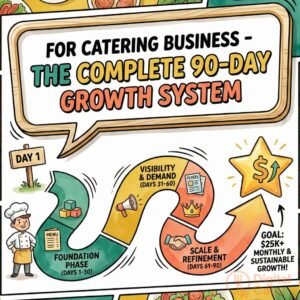
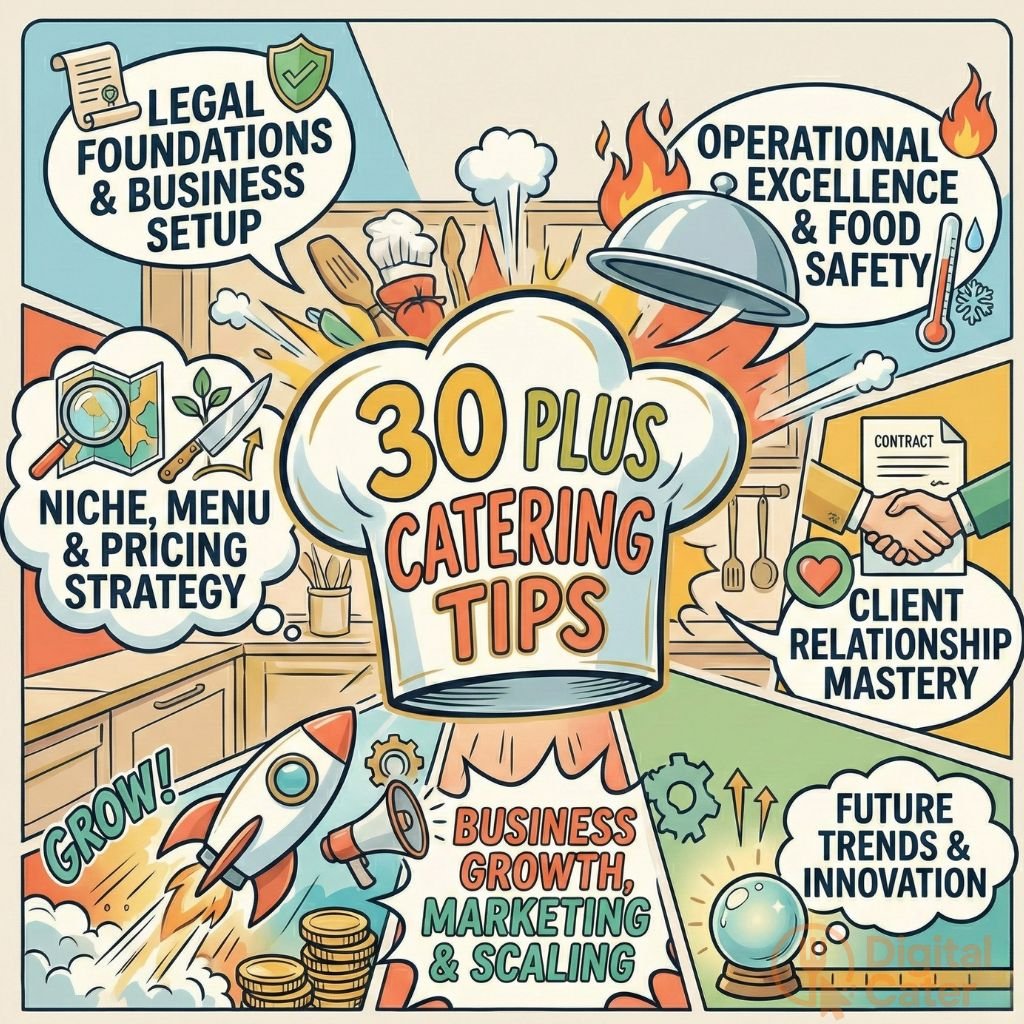
Starting a catering business requires more than cooking skills. Success demands strategic planning, operational excellence, and client relationship mastery. This guide draws from a decade of experience building catering operations that consistently generate millions in revenue. You’ll learn proven frameworks for launching, scaling, and sustaining a profitable catering enterprise—from legal foundations to advanced growth strategies.
Whether you’re transforming your café into a catering powerhouse or launching from scratch, these insights will help you avoid costly mistakes and accelerate your path to profitability.
Table of Contents
Building Your Catering Foundation: Business Setup and Legal Requirements
Strong foundations prevent future complications. Your catering business needs proper legal structure, certifications, and strategic positioning before serving your first client.
Conducting Market Research and Defining Your Niche
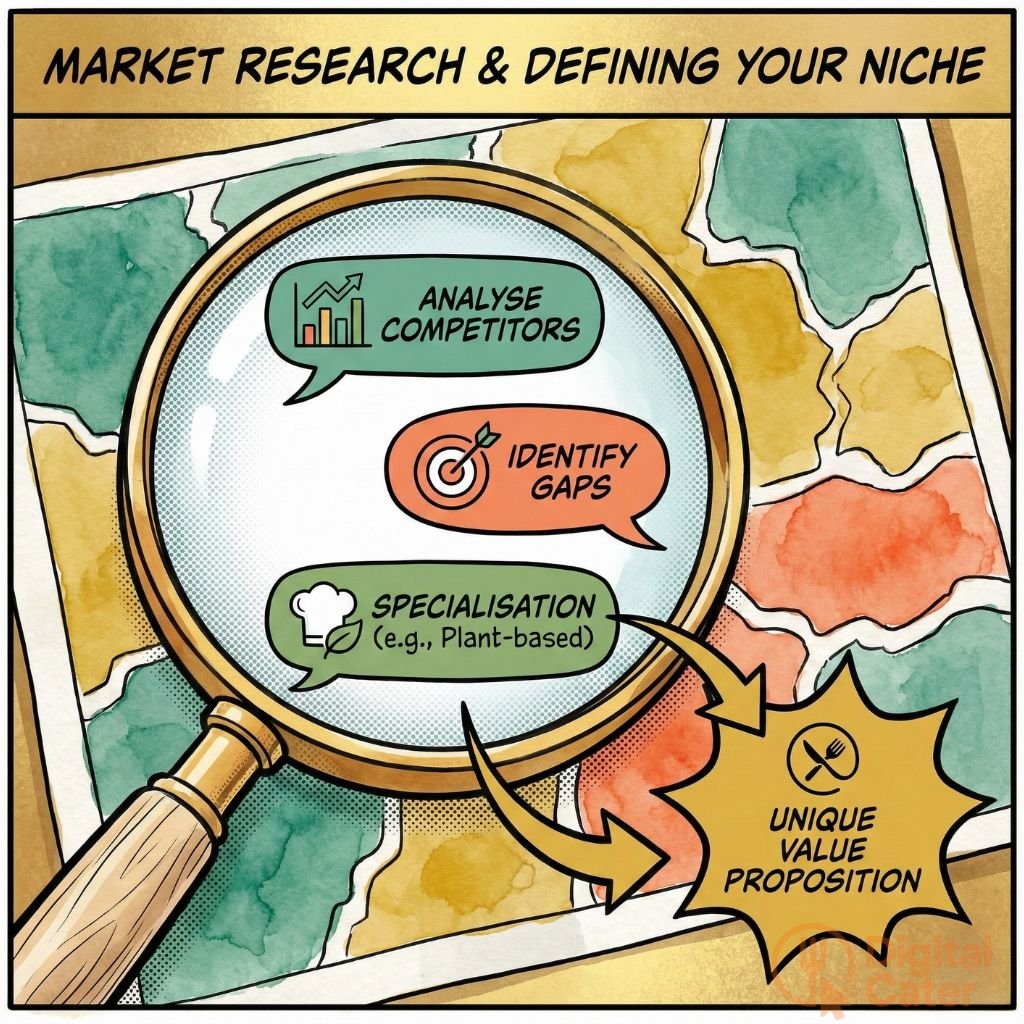
Identify gaps in your local market before committing resources. Use Google Trends to spot rising demand for specific cuisine types. Search local directories to count competitors in each category.
Specialisation creates competitive advantage. Consider focusing on plant-based offerings for health-conscious clients, traditional BBQ for outdoor events, corporate lunch programmes with dietary accommodation, or cultural cuisines underserved in your area. Position yourself against competitors by analysing their pricing, menu variety, and service quality.
The diagram shows market research and define catering niche.
Obtaining Licences, Certifications, and Insurance
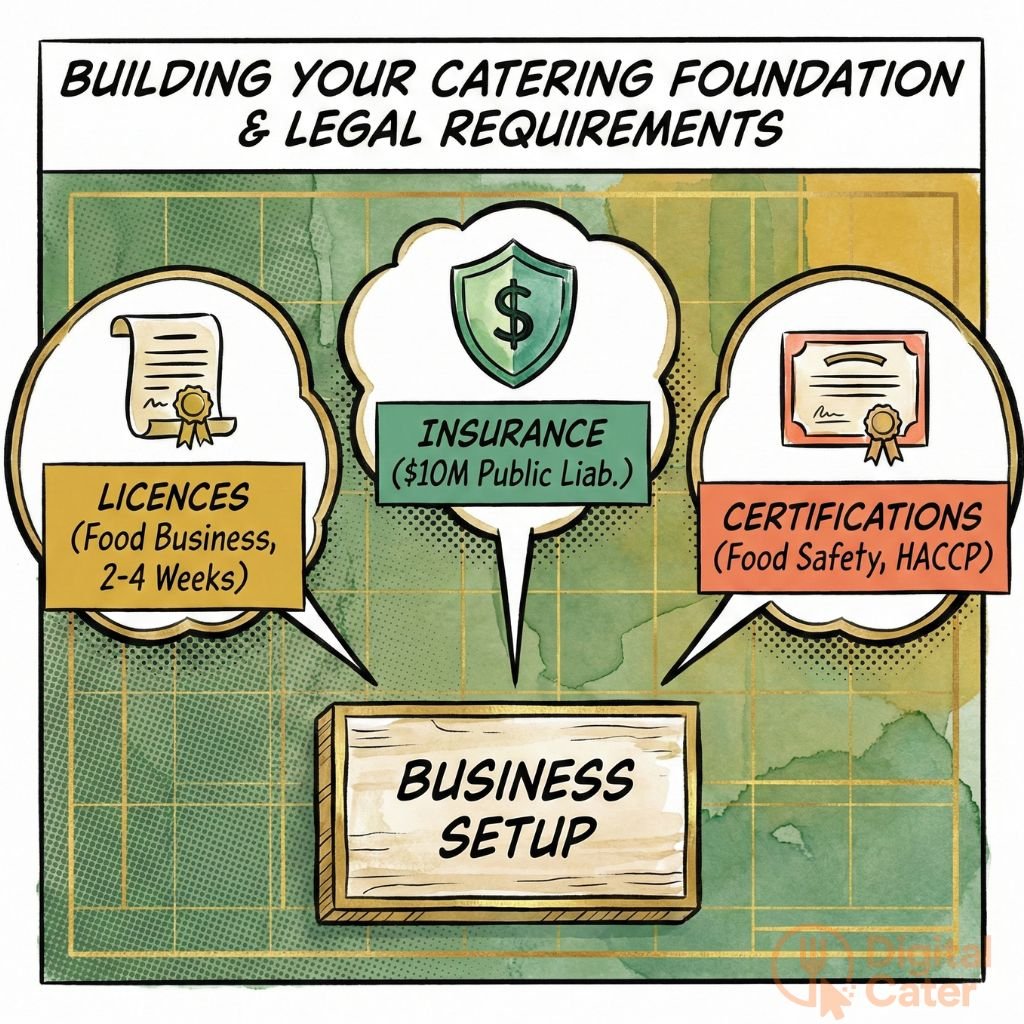
Legal compliance protects your business and builds client trust. Essential credentials include food business licence (required in all Australian states, 2-4 weeks processing), Food Safety Supervisor certification from Australian Institute of Food Safety, HACCP compliance for food safety management, public liability insurance ($10 million coverage minimum), product liability insurance ($5 million coverage), and commercial kitchen approval through council inspection.
Budget $2,000-$5,000 for initial setup costs. Timeline runs 4-8 weeks from application to full compliance. Most councils require commercial-grade facilities for catering operations above certain revenue thresholds.
The image below shows some legal requirements for your catering business.
Creating Your Unique Value Proposition
Differentiation determines whether clients choose you or competitors. Develop distinction through signature dishes clients can’t find elsewhere, service innovation like interactive cooking stations, dietary leadership as the go-to provider for specific requirements, or sustainable practices highlighting local sourcing and waste reduction.
Test your positioning with early clients. Collect feedback on what they value most. Refine your message based on real market response, not assumptions.
Menu Development: Creating Profitable and Client-Focused Offerings
Your menu drives profitability while meeting diverse client needs. Strategic design balances creativity, scalability, and financial performance.
Designing Scalable and Profitable Menus
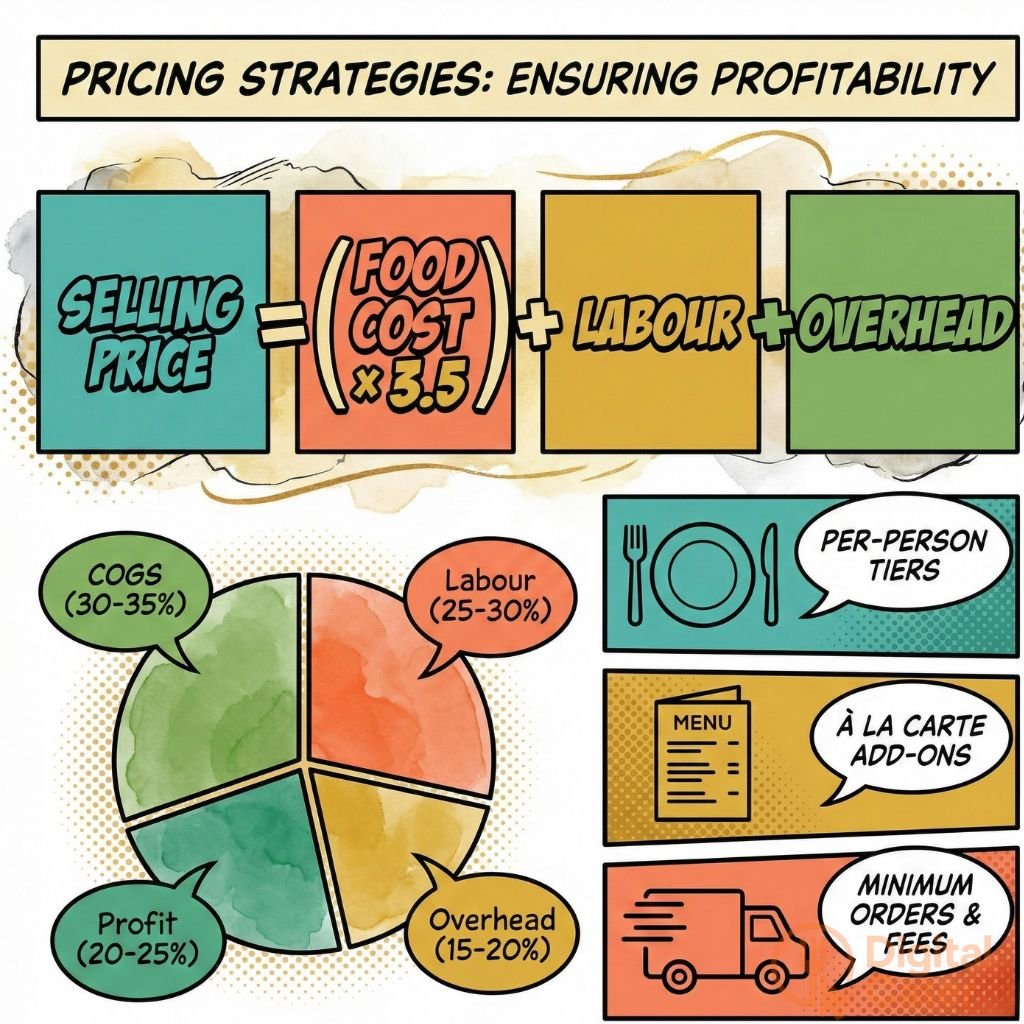
Menu engineering determines your profit margins. Apply this formula consistently: Selling Price = (Food Cost × 3.5) + Labour + Overhead. A dish with $10 ingredient cost becomes $35-$40 per portion. This 300-350% markup covers all operational expenses whilst generating profit.
Limit menu variety to 8-12 items per category. Broader selection increases food waste and slows kitchen execution. Rotate seasonal ingredients to reduce costs by 20-30%.
Accommodating Dietary Requirements and Restrictions
Dietary accommodation transforms from constraint into competitive advantage. Master vegetarian and vegan options with legumes and plant-based proteins, gluten-free preparations using rice and quinoa, dairy-free alternatives, nut allergy protocols with separate prep areas, and religious requirements for halal and kosher preparation.
Prevent cross-contamination with colour-coded cutting boards, dedicated utensils, and separate prep zones. Label all dishes with ingredient lists and allergen warnings.
Selecting Appropriate Service Styles for Each Event Type
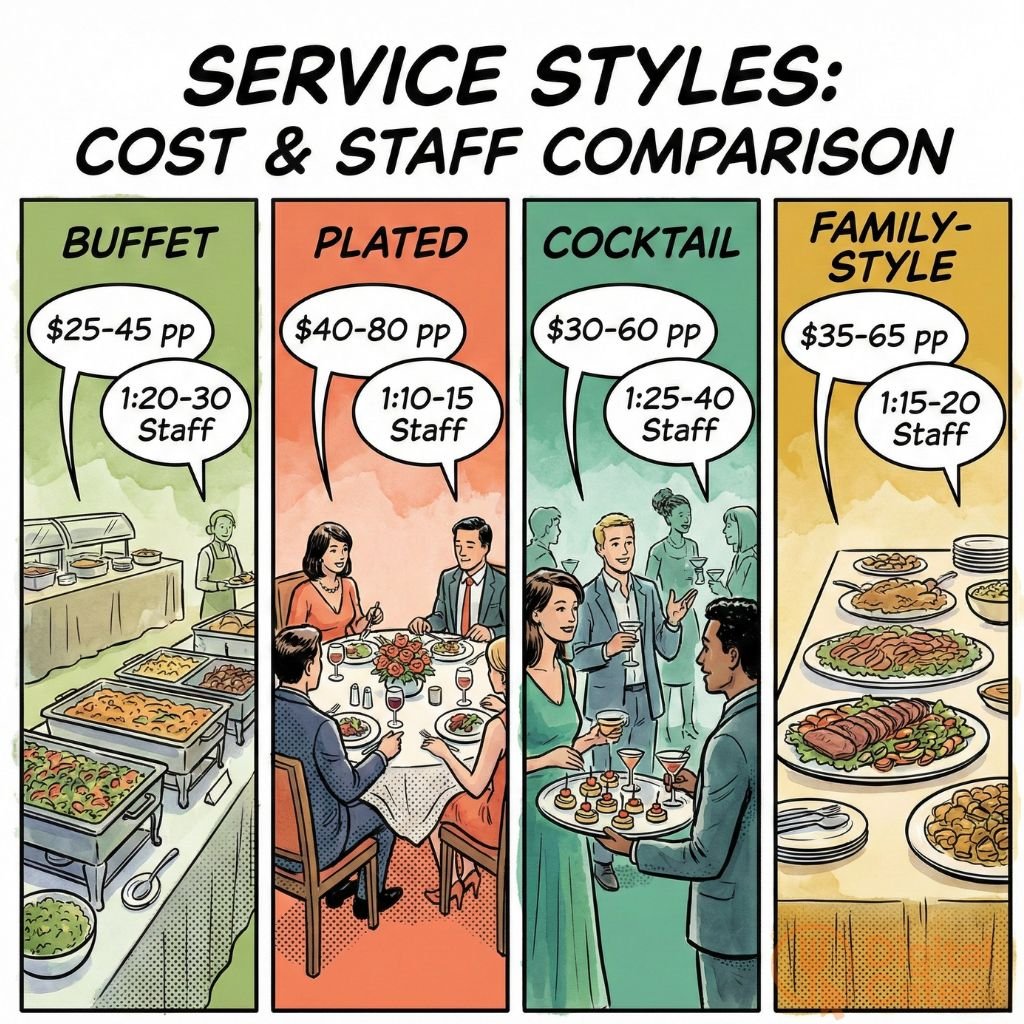
Match service style to event formality, budget, and guest dynamics.
| Service Style | Cost Per Person | Staff Ratio | Best Use Cases |
|---|---|---|---|
| Buffet | $25-45 | 1:20-30 | Casual corporate events, large gatherings |
| Plated | $40-80 | 1:10-15 | Weddings, formal dinners, awards ceremonies |
| Cocktail | $30-60 | 1:25-40 | Networking events, receptions, launches |
| Family-Style | $35-65 | 1:15-20 | Intimate gatherings, celebration dinners |
Portion Planning and Waste Management
Calculate quantities precisely: 100-150 grams protein, 200 grams sides per person. Prepare 110-115% of calculated needs. Partner with OzHarvest for donation programmes. Offer takeaway containers to clients.
Operational Excellence: Food Preparation and Event Execution
Flawless execution separates professional caterers from amateur operations. Systems, procedures, and preparation prevent last-minute chaos.
Essential Equipment and Kitchen Setup
Equipment capacity determines your service ceiling. For 50-guest events: 2 commercial ovens, 6-burner stovetop, 600-litre refrigeration. For 100-guest events: 3-4 ovens, double cooking stations, walk-in refrigeration, hot boxes maintaining 63°C+. For 200+ guests: full commercial kitchen, multiple prep stations, cold transport at 5°C, backup equipment.
Budget $15,000-$50,000 for startup equipment. Lease initially to preserve capital.
Food Safety and Temperature Management Systems
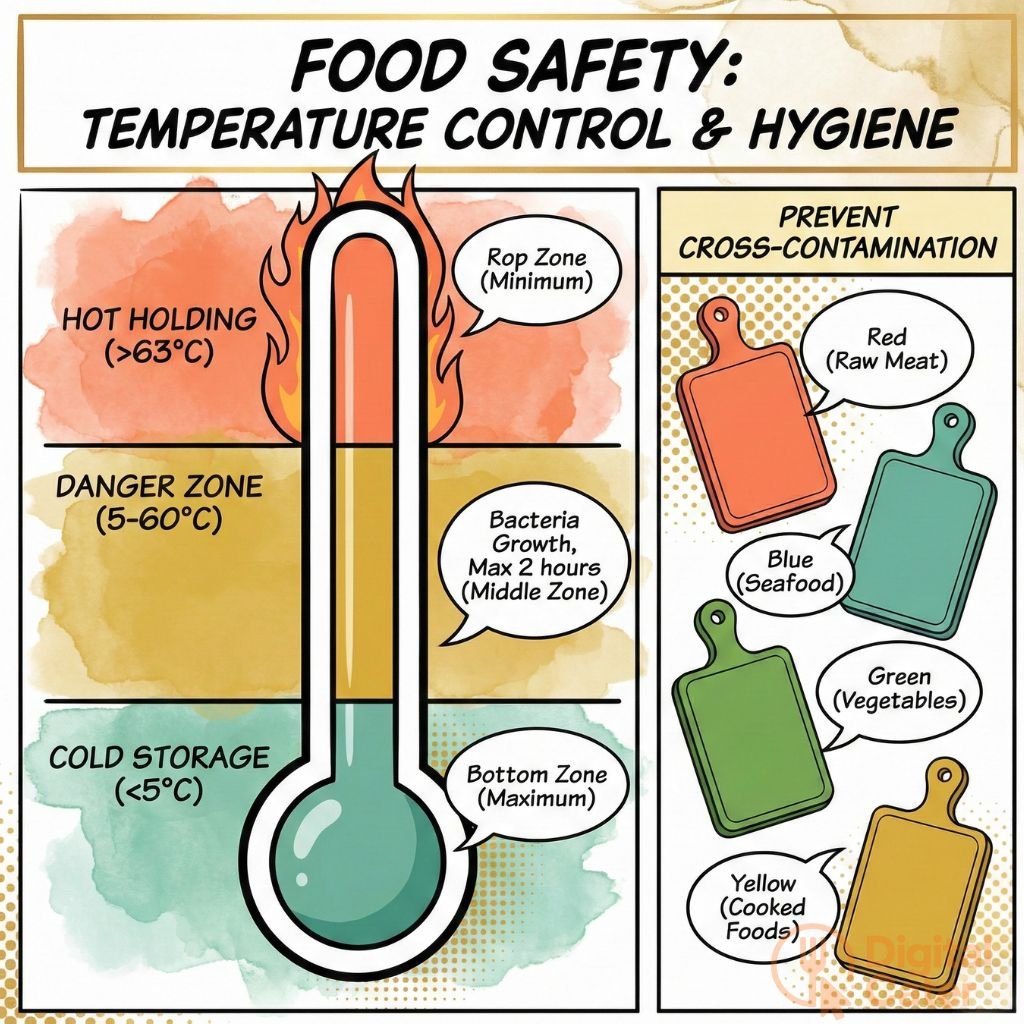
Temperature control prevents foodborne illness. Hot holding: 63°C minimum. Cold storage: 5°C maximum. Danger zone: 5-60°C (limit exposure to 2 hours maximum). Monitor continuously with calibrated thermometers every 30 minutes.
Prevent cross-contamination with colour-coded boards: red for raw meat, blue for seafood, green for vegetables, yellow for cooked foods.
A diagram below shows Food Safety Temperature Zone.
Pre-Event Preparation Timeline and Workflow
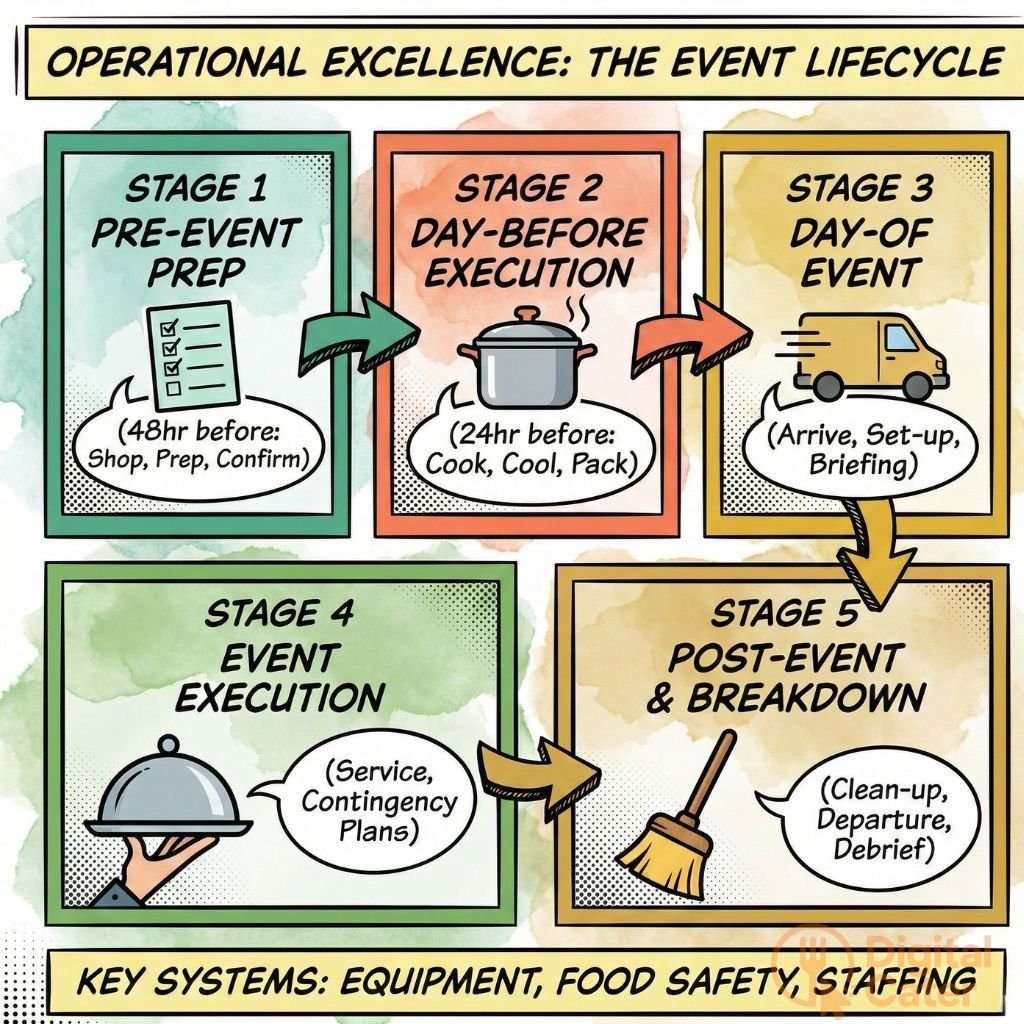
- 48 hours before: Complete ingredient shopping, verify equipment functionality, prep vegetables and marinades, confirm final guest count.
- 24 hours before: Execute all cooking requiring reheating, cool and package items properly, load transport vehicles, confirm venue access times.
- Day of event: Arrive 2-3 hours before service, set up cooking stations, arrange service areas, brief all staff on timing.
Staff Training, Coordination, and Communication
Staff ratios: 1:20-30 buffet, 1:10-15 plated, 1:25-40 cocktail. Training topics cover food safety, service standards, and problem resolution. Use headsets for 100+ guest events. Conduct pre-event briefings covering timeline, special requests, and emergency procedures.
Day-of-Event Execution and Contingency Planning
Maintain emergency protocols for equipment failure (backup list), staff no-show (on-call list), food shortage (prepare 110-115%), and weather issues (tent or indoor backup). Plan breakdown procedures and timing to ensure efficient site departure.
The diagram below shows the event life cycle from stage to stage.
Client Relationship Management: From Consultation to Follow-Up
Outstanding client relationships generate referrals and repeat business. Master each phase of the client journey.
Conducting Effective Client Consultations
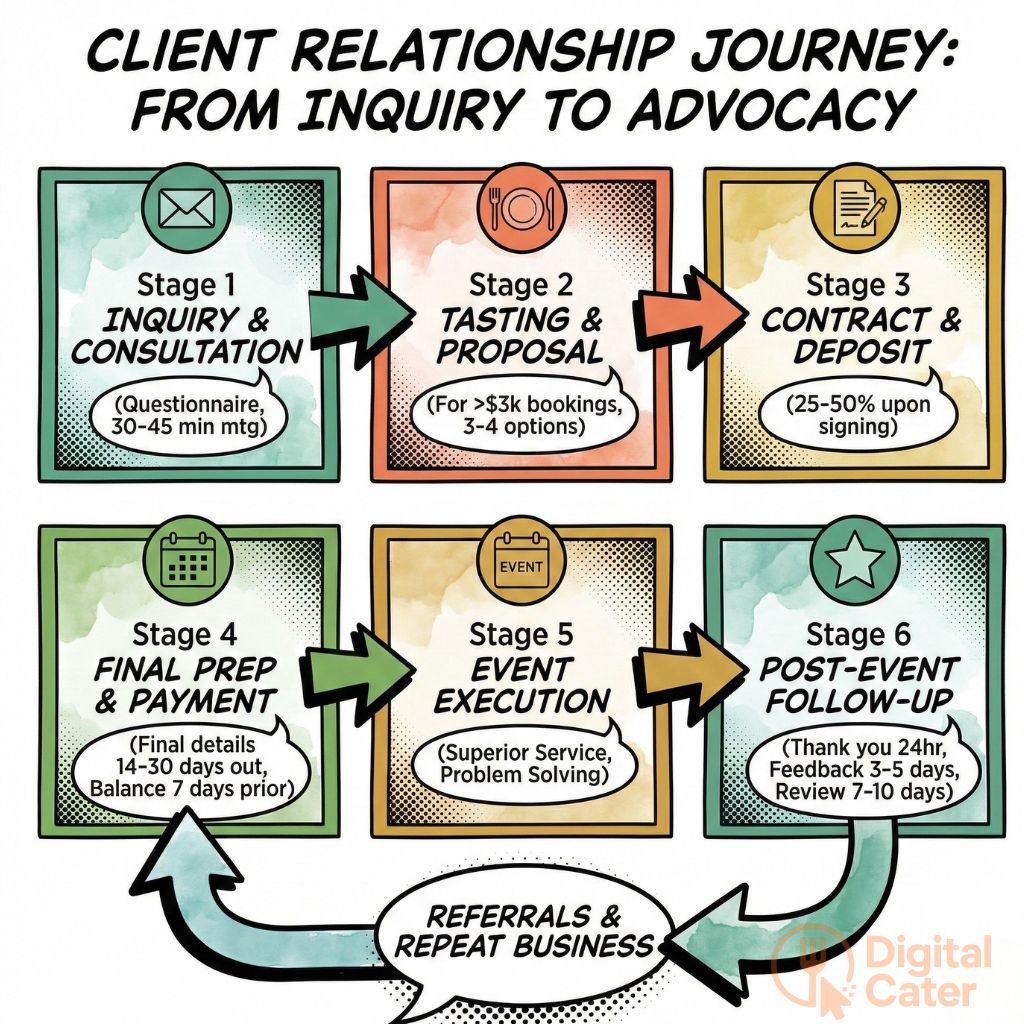
Pre-consultation questionnaires collect event date, time, location, guest count, budget parameters, dietary requirements, service style preferences, and specific menu requests. Structure consultations for 30-45 minutes. Present 3-4 menu options aligned with their budget.
Offer tastings for bookings above $3,000. Convert 60-80% of tasting attendees when food quality meets expectations. Limit menu revisions to 2-3 rounds.
Contract Essentials and Payment Structures
Include detailed scope, itemised pricing, cancellation policies, liability limitations, and change order procedures. Payment schedule: 25-50% deposit upon signing, 25% at 30 days before, remainder 7 days prior.
Cancellation tiers: 60+ days notice (50% refund), 30-60 days (25% refund), under 30 days (non-refundable).
Delivering Superior Customer Experience
Empower staff with problem-solving authority up to $100 per event. Use height variations on buffets. Garnish strategically. Handle last-minute changes professionally by proposing solutions rather than highlighting obstacles.
Post-Event Follow-Up and Feedback Collection
Send thank-you message within 24 hours. Request feedback at 3-5 days via survey or phone. Request online reviews from satisfied clients at 7-10 days. Offer 10% discount on bookings made within 6 months.
A diagram below shows catering client journey from inquiry to advocacy.
Pricing Strategies: Ensuring Profitability and Competitive Positioning
Strategic pricing balances competitiveness with profitability. Understand your costs completely before setting rates.
Cost Analysis and Pricing Formula Development
Complete cost breakdown: COGS (30-35%), Labour (25-30%), Overhead (15-20%), Target profit (20-25%). Standard markup ranges 300-400% of food costs.
Example: $10 food cost × 3.5 = $35 selling price, covering $10 food, $9 labour, $6 overhead, $10 profit.
Hidden costs include fuel ($50-200/event), equipment depreciation, and administrative time (2-4 hours per booking).
Pricing Models and Package Structures
Per-person pricing tiers: Economy ($20-30), Standard ($30-50), Premium ($50-100+). À la carte add-ons: bar service (+$8-12/person), enhanced dessert (+$6-10/person), specialty coffee (+$4-6/person). Set minimum orders of $500-1,000. Add delivery fees for remote locations (50+ kilometres).
Competitive Positioning Without Underpricing
Mystery shop 3-5 local caterers. Position based on value, not price alone. Justify premium rates through demonstrated expertise, testimonials, and portfolio quality. Never compete primarily on price.
Knowing When and How to Increase Prices
Implement annual adjustments on January 1st at 3-5% to cover inflation. Notify existing clients 60-90 days ahead. Grandfather loyal clients selectively for bookings made before increase announcement.
The diagram below shows the pricing strategy and ensure profitability.
Business Growth: Marketing, Sales, and Scaling Your Catering Operation
Systematic growth requires strategic marketing and operational scalability.
Building an Effective Catering Marketing Strategy
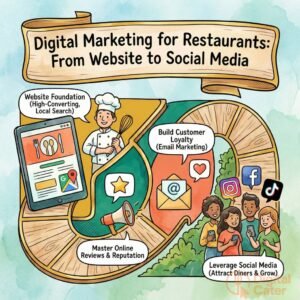
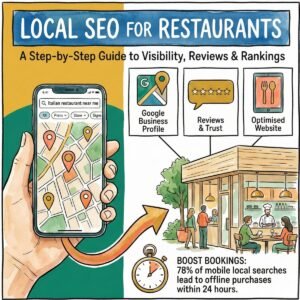
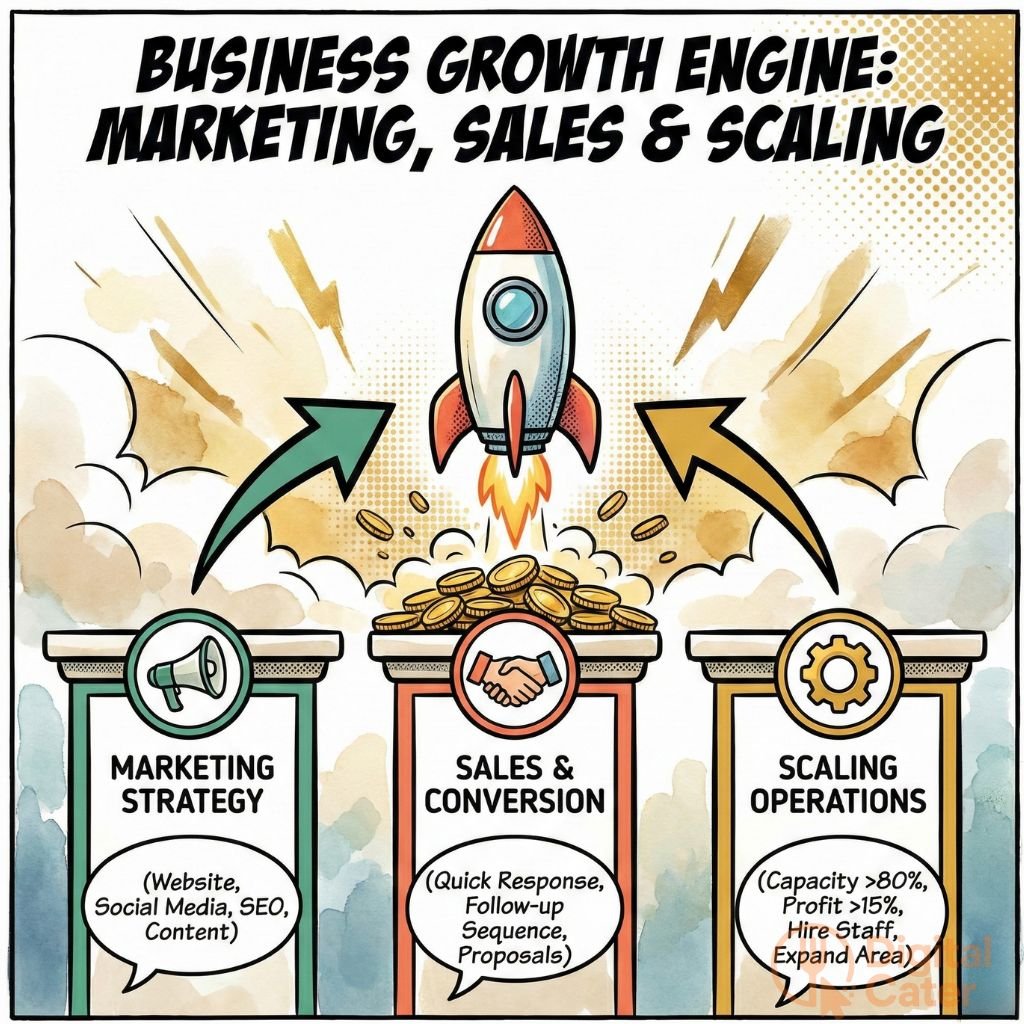
Website essentials: portfolio with 20+ photos, downloadable menu PDFs, 5-10 testimonials, contact form with 24-hour response commitment. Google Business Profile optimization with service area and weekly posts. Instagram: 3-4 feed posts weekly plus daily stories. Monthly blog posts on catering tips and trends.
Generating Leads and Converting Inquiries into Bookings
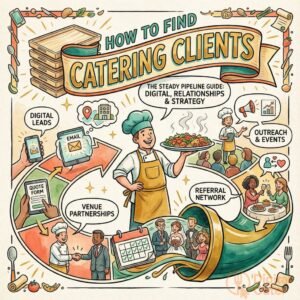
Lead sources by conversion: Referrals (40-60%), Repeat clients (50-70%), Google Business Profile (15-25%), Social media (8-15%). Respond within 2-4 hours to increase conversion by 30-40%.
Follow-up sequence: Day 1 (proposal), Day 3 (check-in), Day 7 (additional options), Day 14 (final follow-up).
Building Strategic Partnerships for Sustainable Growth
Venue partnerships offer 10-20% commission on referrals. Event planners book multiple events annually. Corporate networking through business chambers and LinkedIn. Partner with rental companies, florists, and photographers for cross-promotion.
Creating Customer Loyalty and Referral Programs
Loyalty rewards: 10% off second booking, 15% off third and subsequent bookings. Referral incentives: $100 credit for both parties. Monthly newsletter with seasonal menu highlights.
Scaling Operations: When and How to Expand
Ready-to-scale indicators: 80%+ capacity consistently, turning down 20%+ of inquiries monthly, maintaining 15%+ profit margins. Hire experienced sous chef before other positions. Start geographic expansion with 50-80 kilometre radius increase.
Success in catering combines culinary skill with business acumen. Staying current requires ongoing attention to industry evolution.
An image below shows the business growth engine: marketing, sales and scaling.
Industry Trends and Innovation: Staying Competitive in Modern Catering
Forward-thinking caterers anticipate shifts rather than react to them.
Sustainability Practices in Catering Operations
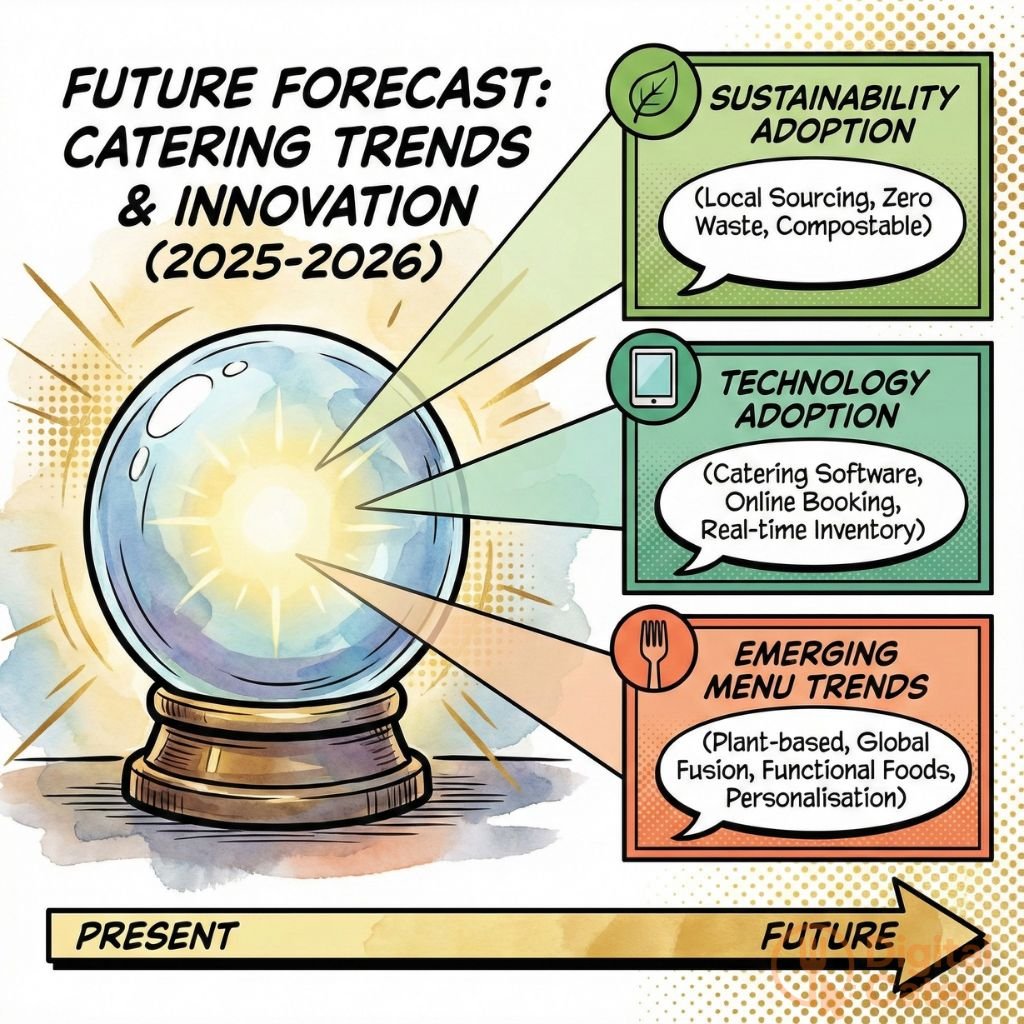
Accurate ordering reduces waste by 15-20%. Compostable serviceware adds $0.50-1.50 per person. Local sourcing supports regional agriculture and provides fresher ingredients. Partner with food rescue organisations for donation programmes.
Technology Adoption for Operational Efficiency
Catering software options: Caterease ($99-199/month), Gather ($89-159/month), Total Party Planner ($79-149/month). Online booking systems accept deposits automatically and provide instant quote generation. Inventory management tracks ingredient costs in real-time.
Emerging Menu Trends for 2025-2026
Plant-based proteins with Beyond Meat and legumes. Global fusion combining Korean-Mexican or Mediterranean-Asian flavours. Interactive stations with build-your-own bowls. Functional foods with probiotic-rich items. Personalisation technology using QR codes for ingredient information.
A diagram below shows catering trends and innovation till end of 2026.
Frequently Asked Questions About Catering
Can you start a catering business from home?
Yes, but regulations vary by state and territory. NSW, Victoria, and Queensland allow home-based catering with proper certifications. Council approval requires kitchen inspections confirming commercial-grade equipment. Transition to commercial space when revenue exceeds $150,000 annually.
What is the difference between catering profit margins across service styles?
Buffet service: 20-25% margins (lower labour needs). Plated service: 25-35% margins (premium pricing justifies higher labour). Cocktail service: 30-40% margins (highest per-person rates).
What types of catering services generate the highest revenue?
Weddings generate highest per-person rates ($75-150). Corporate events provide highest volume with regular repeat bookings ($30-60). Private celebrations deliver highest referral rates (3-5 referrals per event).
What does HACCP compliance mean for catering businesses?
HACCP (Hazard Analysis Critical Control Points) provides systematic framework for food safety. Seven principles include hazard analysis, critical control points, monitoring procedures, corrective actions, verification, and documentation. Certification courses cost $400-600 per person.
How far in advance should catering bookings be accepted?
Weddings: 6-12 months advance. Corporate events: 2-4 weeks minimum. Private celebrations: 4-8 weeks ideal. Accept last-minute bookings (under 2 weeks) with 20-30% premium charges.
What insurance coverage do professional caterers need?
Public liability ($10 million minimum), product liability ($5 million minimum), professional indemnity ($2-5 million), and workers compensation (legally required when employing staff). Annual premiums range $2,000-$8,000.
Common Challenges and Risk Management in Catering
Identifying and Mitigating Common Catering Risks
Food safety risks: implement temperature monitoring, maintain equipment, train staff, document protocols. Financial risks: require deposits, maintain cash reserves, diversify client base. Reputation risks: deliver consistent quality, respond to complaints immediately. Operational risks: maintain backup equipment, develop weather contingency plans.
Managing Difficult Clients and Unrealistic Expectations
Warning signs: excessive price focus, unrealistic demands, last-minute inquiries, disrespectful communication. Decline business professionally when red flags appear. Set clear boundaries in contracts defining revision limits and change order fees.
Navigating Seasonal Business Fluctuations
Develop corporate lunch delivery programmes. Offer cooking classes during slower periods. Set aside 30-40% of peak revenue for off-season expenses. Maintain core staff through reduced but consistent scheduling.
Learning from Mistakes: Continuous Improvement Systems
Conduct post-event debriefs within 48 hours. Maintain confidential log of errors and analyse patterns. Invest 2-3% of revenue in training. Attend industry conferences annually. Network with non-competing caterers for idea sharing.