Understanding Food Cost Percentage: The Key to Restaurant Profitability
Before diving into complex formulas and spreadsheets, it is vital to grasp the core concept of food cost percentage.
Understanding the difference between actual and ideal food cost percentage reveals hidden profit leaks.
What Exactly is Food Cost Percentage?
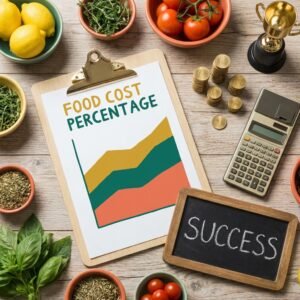
At its core, food cost percentage is the total cost of your ingredients expressed as a proportion of the revenue generated from selling those specific ingredients. It represents how much of every dollar you earn goes directly back into purchasing the raw materials needed to create your menu items. For example, if your food cost is 30%, it means you spend 30 cents on ingredients for every dollar of food sales you generate. This simple ratio is the heartbeat of your restaurant’s financial health, dictating everything from how you price your menu to how much profit you ultimately take home.
Understanding this metric is the first step in unlocking sustainable profitability for your business.
Consider these fundamental components that make up the basic food cost calculation:
- Total cost of raw ingredients purchased during a specific time frame.
- Gross revenue generated specifically from food sales (excluding beverages or merchandise).
- The fluctuating prices of seasonal produce, proteins, and specialty items.
- The inherent cost of food spoilage, waste, and over-portioning in the kitchen.
- Adjustments for staff meals, complimentary dishes, and management allowances.
Why Food Cost Percentage is the Most Critical Metric for Your Restaurant
The restaurant industry is notoriously competitive, with average net profit margins hovering precariously between 3% and 5%. Because you have limited control over fixed expenses like rent, insurance, and base utilities, your cost of goods sold (COGS)—primarily driven by your food cost—is one of the few flexible expenses you can actively manage and optimize. A slight reduction of just 2% or 3% in your food cost percentage will flow directly to your bottom line, dramatically increasing your overall profitability.
Mastering this metric allows you to build a resilient and highly profitable dining establishment.
Here are the primary reasons why tracking this metric is non-negotiable for long-term success:
- It empowers you to make data-driven decisions regarding menu pricing and promotions.
- It highlights operational inefficiencies, such as excessive waste or inconsistent portioning.
- It acts as an early warning system for price inflation from your primary vendors.
- It provides a clear baseline for evaluating the performance of your kitchen management team.
- It is a critical factor when negotiating better rates and bulk discounts with suppliers.
The Difference Between Actual and Ideal Food Cost Percentage
Many operators struggle because they confuse their ideal food cost with their actual food cost. Your ideal food cost percentage is the theoretical cost of your menu if everything runs perfectly—no raw ingredients are wasted, every dish is portioned exactly to spec, and no food is stolen or dropped. Your actual food cost percentage is what happens in the real world over a given accounting period, factoring in the realities of a busy kitchen environment. The gap between these two numbers represents your operational variance, commonly known as your ‘profit leak.’
Closing the gap between ideal and actual costs is the hallmark of professional restaurant management.
To accurately assess your operational efficiency, you must meticulously track both numbers by observing:
- The theoretical cost of every recipe based on current vendor invoices.
- The physical inventory counted consistently at the beginning and end of each period.
- The exact sales data pulled directly from your point-of-sale (POS) system.
- The documented waste logs maintained by the kitchen staff during prep and service.
- The frequency of recipe drift, where cooks deviate from the established standard operating procedures.
How to Calculate Overall Food Cost Percentage (With Formulas)
Calculating your overall food cost percentage requires a systematic approach to tracking inventory and sales over a clearly defined period, typically a week or a month.
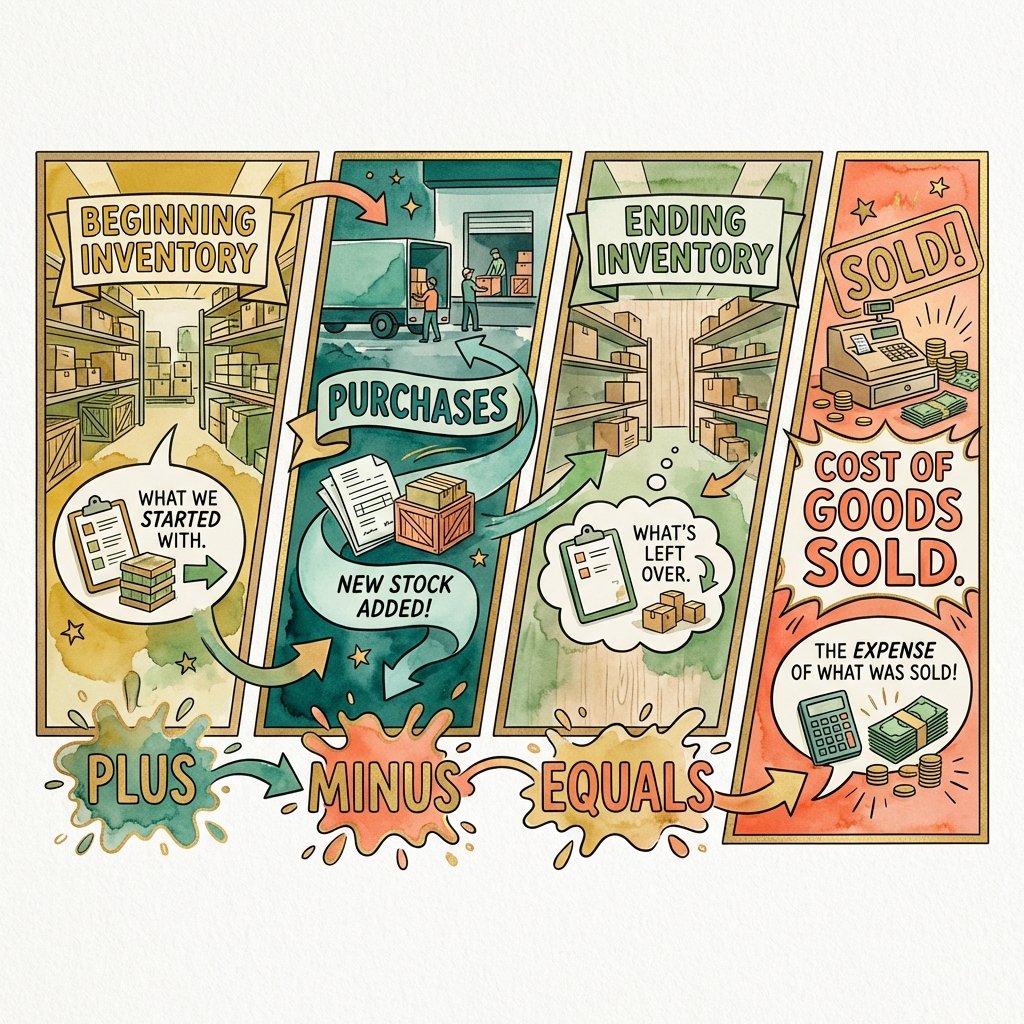
Tracking your beginning inventory, purchases, and ending inventory is essential for accurate food cost calculations.
Step 1: Determine Your Beginning Inventory
Your beginning inventory is the exact monetary value of all the food and beverage ingredients sitting on your shelves, in your walk-in coolers, and in your freezers at the exact start of your accounting period. To get this number, you cannot simply guess or estimate based on visual inspection; you must physically count every item and multiply the quantity by its current unit cost. This establishes the financial baseline for the period.
A precise beginning inventory is the foundation of an accurate food cost calculation.
To ensure accuracy when determining your beginning inventory, follow these procedural guidelines:
- Schedule inventory counts at the exact same time of day and day of the week, preferably when the restaurant is closed.
- Organize your count sheets to match the physical layout of your storage areas (shelf-to-sheet).
- Employ a two-person team for counting: one person calls out the items, and the other records the data.
- Ensure all recent deliveries and invoices are fully processed and entered into your accounting system.
- Use the most up-to-date pricing data from your vendors rather than outdated historical costs.
Step 2: Track All Food Purchases During the Period
Throughout your defined accounting timeframe, you must meticulously track every single food purchase that enters the building. This includes all invoices from your primary broadline distributors, specialty purveyors, local farmers, and even petty cash runs to the local grocery store. It is critical that these purchases are categorized correctly; do not mix non-food items like paper goods, cleaning supplies, or alcohol into your food purchase totals, as this will artificially inflate your food cost percentage.
Accurate purchase tracking requires strong invoice management and vendor relations.
To maintain pristine records of your food purchases, implement the following best practices:
- Establish a strict policy that no goods enter the kitchen without an accompanying invoice or receipt.
- Verify the accuracy of all deliveries against the original purchase orders before signing the invoice.
- Immediately request credit memos for any missing, damaged, or substituted items.
- Separate bar and liquor purchases from kitchen food purchases in your accounting software.
- Digitize your invoices using restaurant management software to eliminate manual data entry errors.
Step 3: Calculate Your Ending Inventory
At the exact end of your accounting period, you must repeat the rigorous physical count process to determine the monetary value of the ingredients remaining in your restaurant. This is your ending inventory. It is paramount that the methodology used for the ending inventory is identical to the beginning inventory. Consistency is key; a single miscounted high-value item, like a case of premium steaks or expensive seafood, can drastically alter your final calculation and lead to incorrect management decisions.
Your ending inventory for one period automatically becomes the beginning inventory for the next.
When calculating your ending inventory, be sure to account for the following variables:
- Prepared or semi-prepared items (batch recipes) that hold inherent labor and ingredient value.
- Items that have been transferred between different departments or multiple restaurant locations.
- Condiments, spices, and baking staples that are often overlooked due to their lower individual cost.
- Seasonal price fluctuations that may have occurred since the beginning inventory was counted.
- The depreciation of items that are nearing their expiration dates and may need to be discarded.
Step 4: Find Your Total Food Sales
The final variable you need before calculating your percentage is your total food sales for the exact same accounting period. This number represents the gross revenue generated exclusively from the sale of food items. You can pull this data directly from your point-of-sale (POS) system. It is vital to ensure that this figure only includes food sales; revenue from alcohol, merchandise, gift cards, or private delivery fees must be excluded to maintain the integrity of the food cost ratio.
Clean sales data is just as critical as accurate inventory counts when determining your cost percentage.
When extracting your total food sales from your POS, verify that you have accounted for:
- All discounts, coupons, and promotional offers applied to customer checks.
- Complimentary meals provided to staff, managers, or dissatisfied guests.
- Any sales tax collected, which must always be excluded from your gross revenue calculation.
- Adjustments for third-party delivery commissions, if they are coded as revenue deductions.
- The accurate separation of non-alcoholic beverage sales and food sales, depending on your internal accounting structure.
The Final Formula: Putting It All Together
Now that you have all four variables, you can calculate your overall food cost percentage. First, determine your Cost of Goods Sold (COGS) by adding your Beginning Inventory and your Purchases, then subtracting your Ending Inventory. Once you have your COGS, divide it by your Total Food Sales, and multiply by 100 to get your percentage.
This formula provides a definitive snapshot of your operational efficiency for the period.
Let us break down the exact mathematical formula in a simple, step-by-step format:
- Formula Step 1: Beginning Inventory + Total Purchases = Total Food Available
- Formula Step 2: Total Food Available – Ending Inventory = Cost of Goods Sold (COGS)
- Formula Step 3: Cost of Goods Sold (COGS) / Total Food Sales = Food Cost Decimal
- Formula Step 4: Food Cost Decimal x 100 = Final Food Cost Percentage
- Example: ($5,000 + $12,000 – $4,000) / $40,000 = 0.325, or 32.5% Food Cost.
How to Calculate Per-Item Food Cost Percentage (Ideal Food Cost)
While your overall percentage tells you how the restaurant is performing as a whole, calculating the per-item food cost—also known as plate cost or ideal food cost—tells you how profitable each specific dish is.
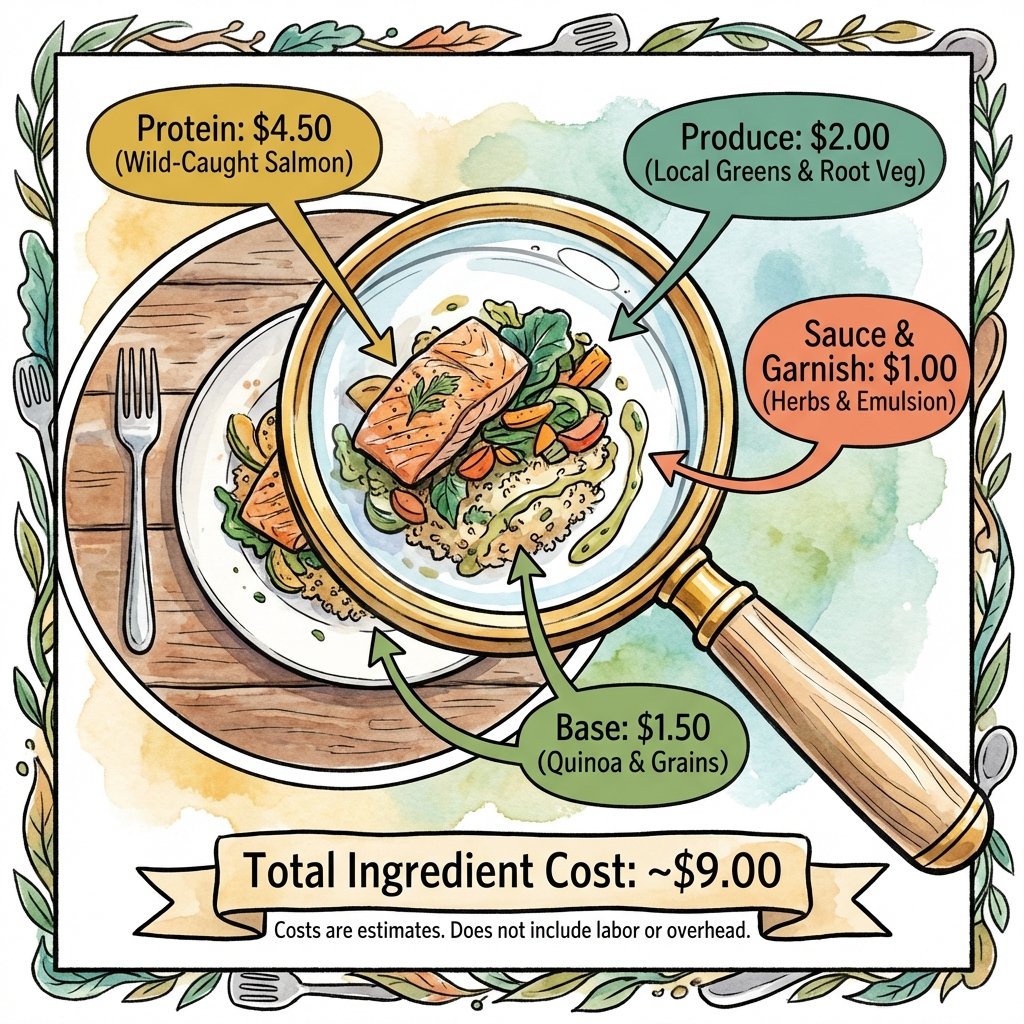
Calculating the per-item food cost percentage helps you engineer a more profitable menu.
Why Per-Item Costing is Essential for Menu Engineering
Per-item costing is the cornerstone of menu engineering, a strategic approach that utilizes psychological principles to optimize your menu layout and pricing. Without knowing the exact cost and profit margin of every single dish, you cannot make informed decisions about which items to promote, which to re-price, and which to eliminate from your menu entirely. This granular level of data allows you to categorize your dishes into ‘Stars’ (high profit, high popularity) and ‘Dogs’ (low profit, low popularity).
Mastering per-item costing directly influences your marketing and promotional strategies.
By understanding the precise profitability of each dish, you are empowered to:
- Strategically place high-margin items in the ‘Golden Triangle’ sweet spots on your physical menu.
- Identify loss leaders that may drive traffic but require strict portion control to remain viable.
- Redesign low-margin dishes by substituting expensive ingredients without compromising quality.
- Confidently build a restaurant marketing plan focused on promoting your most lucrative offerings.
- Set standardized recipe guidelines that ensure consistent profit margins regardless of who is cooking.
Breaking Down the Cost of Ingredients Per Serving
To calculate the cost of a specific dish, you must deconstruct the recipe down to its raw ingredients and determine the exact cost of the amounts used in a single serving. This requires converting bulk purchase prices into smaller units of measure, such as ounces, grams, or fluid ounces. For instance, if you purchase a 50-pound bag of flour for $25, you must calculate the cost per ounce to accurately price the 6 ounces of flour used in your signature pizza dough.
Meticulous recipe costing prevents small, unnoticed ingredient costs from eroding your profit margins.
When breaking down ingredient costs per serving, ensure you rigorously document the following:
- The exact weight, volume, or count of every primary protein, vegetable, and starch.
- The fractional cost of garnishes, cooking oils, butter, and proprietary spice blends.
- The cost of any disposable packaging, ramekins, or branded wrappers used for takeout orders.
- The specific yield percentage of raw ingredients after they have been trimmed and prepped.
- Any batch ingredients, such as house-made sauces, which must be costed out separately first.
The Per-Item Food Cost Formula
Once you have the total cost of all the ingredients for a single serving, you can calculate the per-item food cost percentage. The formula is straightforward: divide the total cost of the dish per serving by the menu price of the dish, and multiply by 100. This calculation provides your ideal food cost for that specific item, assuming zero waste and perfect execution by your kitchen staff.
This formula acts as your compass when setting new menu prices and analyzing profitability.
Apply this simple per-item formula to every dish on your menu to ensure financial viability:
- Determine the Total Ingredient Cost Per Serving (e.g., $4.50 for a burger and fries).
- Identify the current or proposed Menu Price of the dish (e.g., $15.00).
- Divide the Ingredient Cost by the Menu Price ($4.50 / $15.00 = 0.30).
- Multiply by 100 to find the Per-Item Percentage (30%).
- Compare this figure against your restaurant’s overall target food cost percentage.
Factoring in Yield and Waste in Your Calculations
A common mistake operators make when costing recipes is using the ‘As Purchased’ (AP) cost rather than the ‘Edible Portion’ (EP) cost. When you buy a whole fish or a case of untrimmed vegetables, a significant percentage of that weight will be lost to bones, scales, peels, and stems during the prep process. If you calculate your recipe costs based on the AP weight, your food cost percentage will appear artificially low, leading to underpriced menu items and silent profit leaks.
Accounting for yield ensures your menu prices reflect the true cost of bringing food to the plate.
To accurately factor in yield and prep waste, you must continually monitor:
- The average trim loss for all fresh proteins, including steaks, poultry, and whole fish.
- The shrinkage that occurs during the cooking process, particularly with roasts and braised meats.
- The peel and core waste associated with fresh produce like onions, potatoes, and bell peppers.
- The loss of liquids and marinades that are discarded after the prep phase is complete.
- The efficiency of your specific kitchen staff, as yield can vary based on individual knife skills.
What is a “Good” Food Cost Percentage? Industry Benchmarks
It is natural to wonder how your numbers stack up against the competition. While there is no universally perfect number, understanding industry benchmarks provides valuable context for your financial performance.
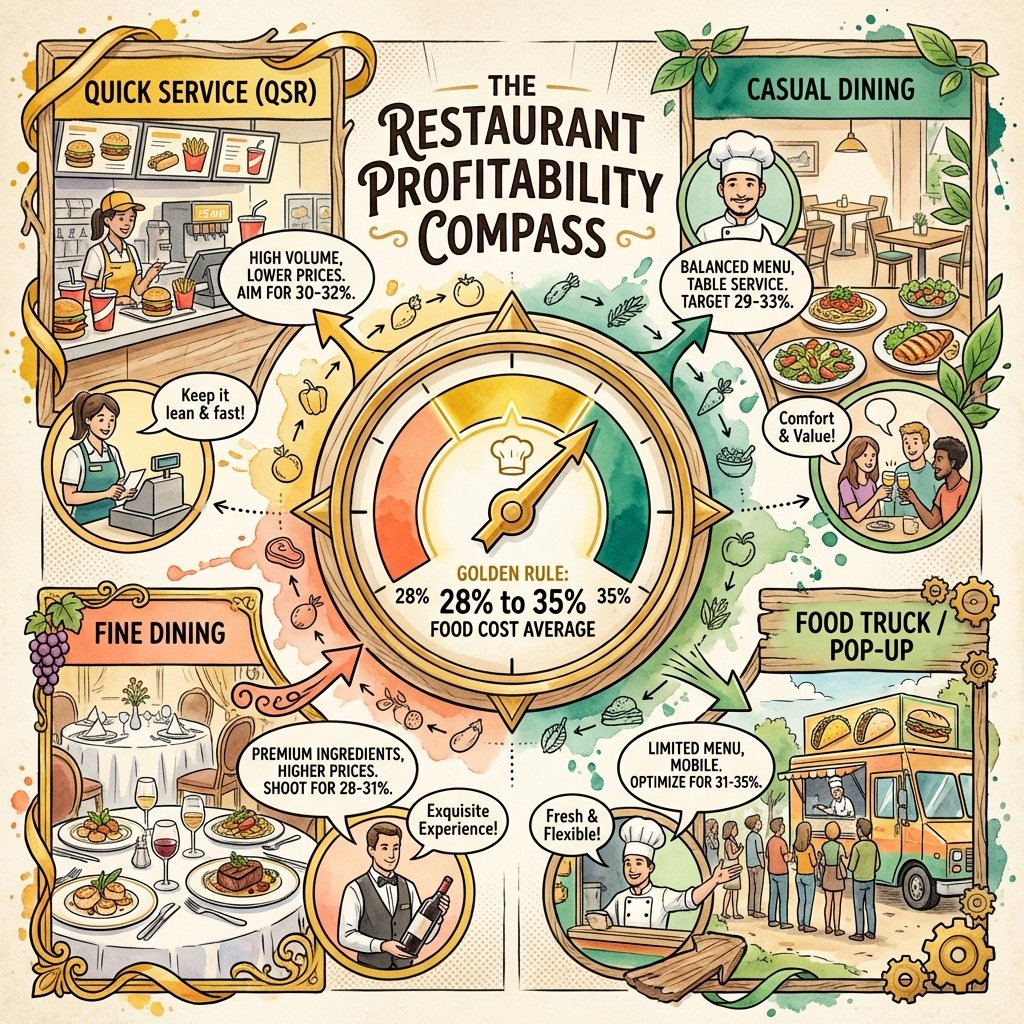
While 28% to 35% is the industry average, your ideal food cost depends heavily on your specific restaurant concept.
The Golden Rule: The 28% to 35% Industry Average
Across the broad spectrum of the culinary industry, the generally accepted benchmark for a healthy food cost percentage falls between 28% and 35%. This “Golden Rule” is a widely recognized standard that allows most traditional full-service restaurants to cover their overhead expenses, pay their labor force, and still generate a respectable net profit. If your overall percentage consistently exceeds 35%, it is generally a red flag indicating systemic issues with pricing, portion control, waste, or supplier negotiations.
Staying within this target range provides a solid foundation for sustainable financial growth.
While 28% to 35% is the standard, remember that this average encompasses a wide variety of operations, including:
- Independent casual dining establishments serving a mix of proteins, pastas, and salads.
- Mid-scale franchise operations with highly optimized supply chains and standardized recipes.
- Family-style restaurants that focus on large portions and value-driven pricing models.
- Gastro-pubs that offset higher food costs with highly profitable craft beer and liquor sales.
- Bistros and cafes that balance high-cost bakery items with low-cost coffee and tea beverages.
How Food Cost Percentage Varies by Restaurant Concept (QSR vs. Fine Dining)
The “ideal” percentage is heavily dependent on your specific restaurant concept and service model. A Quick Service Restaurant (QSR) or pizza parlor relies heavily on low-cost ingredients like flour, cheese, and automated prep, allowing them to achieve food costs as low as 20% to 25%. Conversely, a high-end fine dining steakhouse serving prime cuts of beef, fresh oysters, and imported truffles will naturally have a much higher food cost, often exceeding 35% or even 40%, but they make up for it with higher check averages and substantial gross profit dollars per guest.
You must evaluate your performance based on the specific economic realities of your concept.
Examine how target percentages fluctuate dramatically based on the style of service and cuisine:
- Pizzerias and Pasta Concepts: Typically Target 20% – 25% due to inexpensive staple ingredients.
- Breakfast and Diner Concepts: Typically Target 25% – 28% relying heavily on high-margin eggs and potatoes.
- Casual Dining and Pubs: Typically Target 28% – 32% balancing affordable apps with premium entrees.
- Steakhouses and Seafood: Typically Target 35% – 40% driven by premium, highly perishable proteins.
- Fine Dining Establishments: Typically Target 35%+ focusing on gross profit dollars rather than percentages.
The Impact of High-Cost Ingredients on Your Target Percentage
When evaluating your margins, it is crucial to differentiate between food cost percentage and gross profit dollars. High-cost ingredients, such as a premium Tomahawk Ribeye or freshly caught lobster, may technically run an undesirable 45% food cost. However, because you are selling these items at a premium price point, they contribute significantly more gross profit dollars to the bank account than a bowl of pasta running at a 20% food cost. You deposit dollars in the bank, not percentages.
Focusing solely on percentages without considering gross profit dollars can severely stunt your revenue growth.
When managing a menu featuring high-cost luxury ingredients, you must balance your strategy by:
- Pairing premium proteins with ultra-low-cost starches and seasonal vegetable sides.
- Accepting a higher percentage on signature dishes to drive overall traffic and guest satisfaction.
- Utilizing creative restaurant promotion ideas to cross-sell profitable appetizers and desserts.
- Training your front-of-house staff to confidently upsell high-dollar items to increase the check average.
- Offsetting the high cost of luxury ingredients with exceptionally profitable signature cocktails.
Why Your “Good” Number Might Be Different from Your Competitors
Even if you operate an identical concept next door to a competitor, your target food cost percentage may differ significantly. Your ideal number is inextricably linked to your unique Prime Cost—the combined total of your COGS and your labor expenses. If you operate a scratch kitchen that requires highly skilled, expensive prep cooks, you must run lower food costs to offset your high labor percentage. Conversely, if you purchase pre-portioned, value-added products that require minimal labor, you can afford to run a higher food cost percentage.
Your unique operational structure and business model dictate your personalized target percentage.
Your optimal target percentage will diverge from industry averages based on the following specific factors:
- The total percentage of your revenue generated by highly profitable bar and alcohol sales.
- The burden of your location’s rent and fixed overhead expenses compared to industry norms.
- Your strategic decision to invest heavily in scratch-made prep versus purchasing convenience items.
- The demographic makeup of your customer base and their inherent sensitivity to menu price increases.
- The scale of your operation and your ability to leverage volume discounts from major suppliers.
7 Proven Strategies to Lower Your Food Cost Percentage
If your actual food cost exceeds your ideal targets, you must take decisive action to rein in expenses and protect your margins without sacrificing the quality your guests expect.
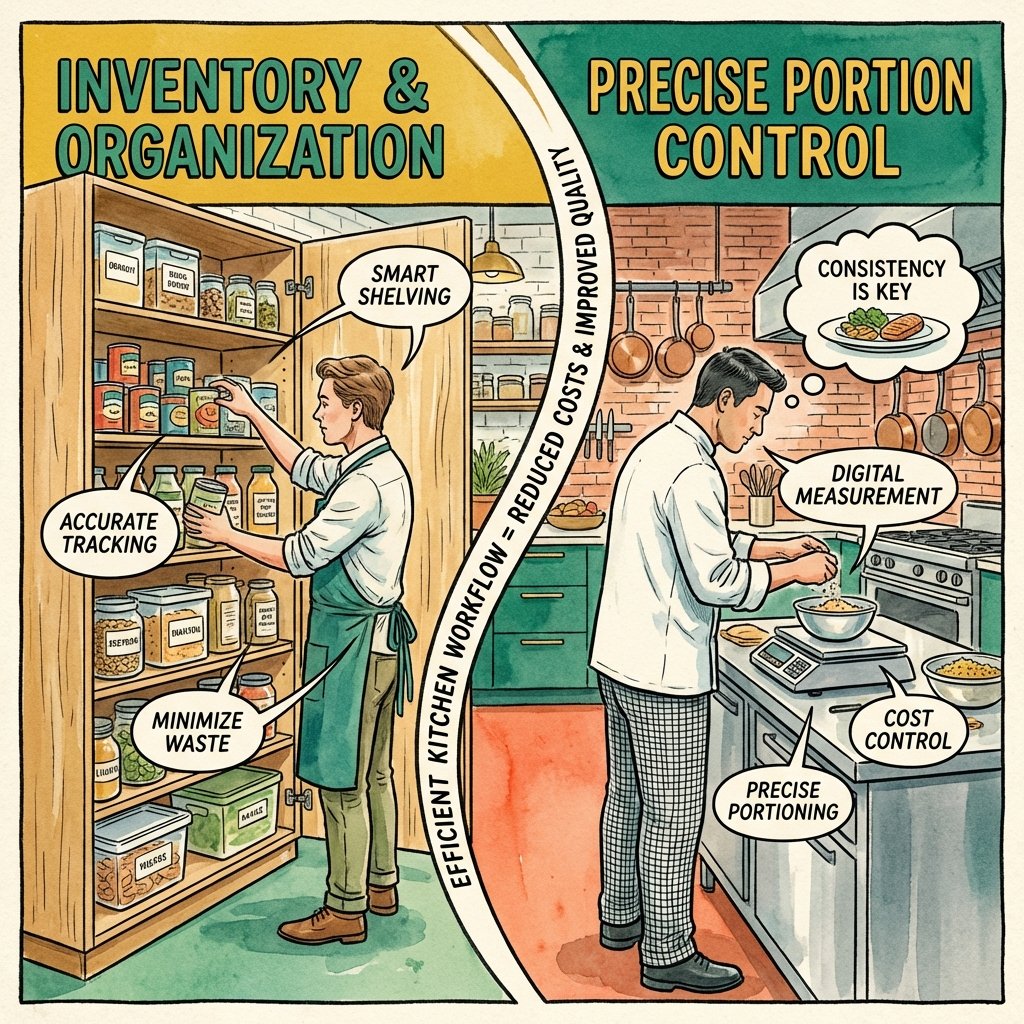
Strict inventory management and portion control are your first lines of defense against rising food costs.
1. Optimize Your Inventory Management and Tracking
Disorganized inventory is the primary cause of inflated food costs. When you do not know exactly what is on your shelves, you invariably over-order, leading to excess stock, increased spoilage, and tied-up capital. Implement a rigid, weekly inventory schedule and utilize modern restaurant management software to track stock levels in real-time. By maintaining a lean inventory—only keeping enough product on hand to survive the next few days—you force your kitchen to be more efficient and sharply reduce the risk of theft and waste.
Strict inventory management directly translates into increased cash flow and robust profit margins.
To gain complete control over your inventory and storage areas, implement these management tactics:
- Transition from error-prone paper spreadsheets to cloud-based inventory tracking software.
- Enforce the First-In, First-Out (FIFO) method rigorously to ensure older products are utilized first.
- Lock valuable items such as premium meats, saffron, and truffles to prevent unauthorized access.
- Establish strict par levels for all critical ingredients and adhere to them during the ordering process.
- Conduct unexpected spot-checks on high-value inventory items between formal counting periods.
2. Implement Strict Portion Control Measures
Over-portioning is a silent epidemic that rapidly destroys profitability. If a line cook serves six ounces of french fries instead of the specified four ounces, your food cost for that side dish instantly skyrockets by 50%. You must engineer your kitchen for precision. Equip every station with digital scales, standardized scoops, and precise ladles, and mandate their use. Consistency in portioning not only protects your financial margins but also ensures that your guests receive the exact same high-quality experience every time they visit.
Precision in portioning is the difference between a struggling kitchen and a highly profitable operation.
Ensure absolute consistency and protect your margins by establishing strict portion control protocols:
- Require the use of digital scales for all expensive proteins, cheeses, and deli meats.
- Pre-portion high-volume ingredients into individual bags or containers during the morning prep shift.
- Train expeditors and kitchen managers to spot-check plate weights before food leaves the kitchen.
- Post highly visible, laminated recipe cards with exact measurements at every single prep station.
- Calibrate your kitchen scales weekly to ensure they provide consistently accurate measurements.
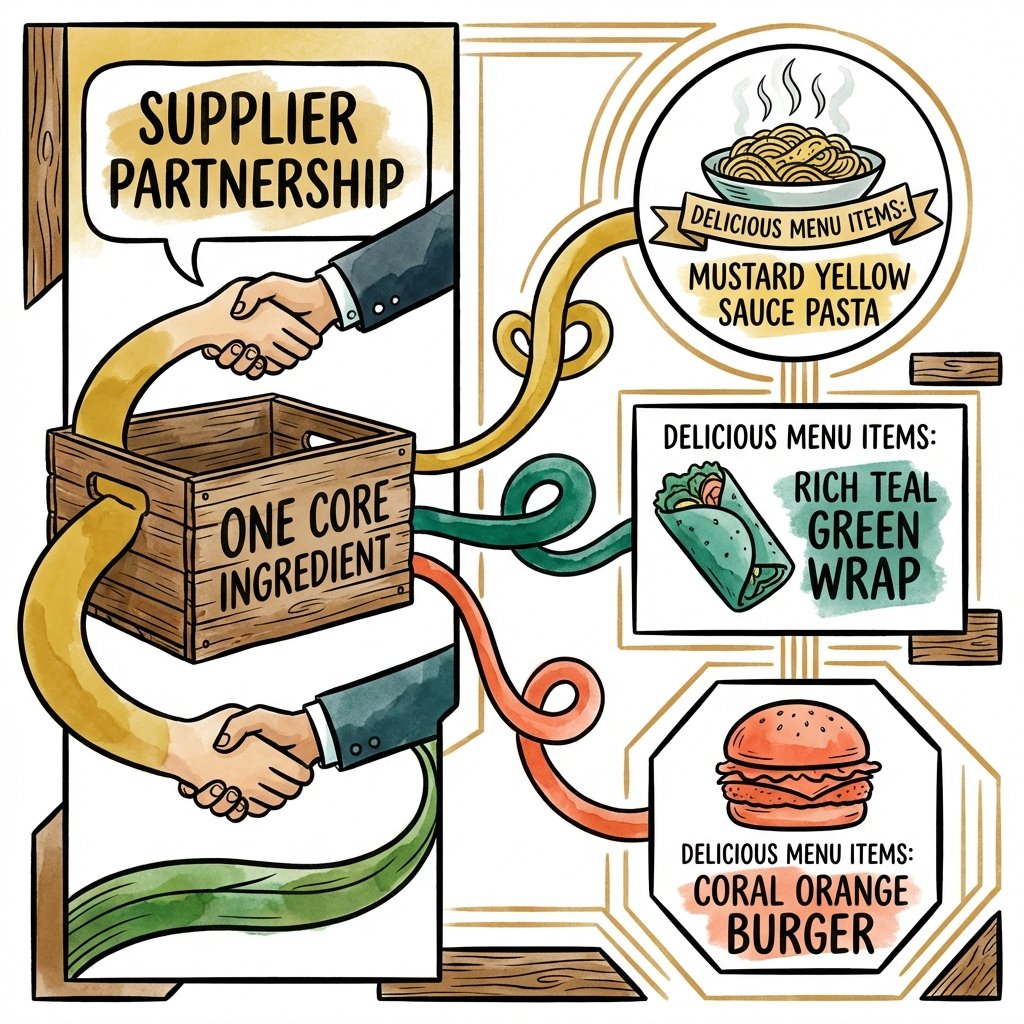
Cross-utilizing ingredients minimizes waste, while negotiating with suppliers immediately reduces purchasing costs.
3. Cross-Utilize Ingredients Across Multiple Menu Items
A massive menu requiring hundreds of unique, single-use ingredients is a logistical nightmare and a recipe for massive food waste. The most profitable restaurants engineer their menus to cross-utilize core ingredients across multiple dishes. For example, roasted chicken can be featured as a standalone entree, shredded for a signature salad, utilized in a hearty soup, and packed into a lunchtime wrap. This strategy increases inventory turnover rates, ensures product freshness, and significantly reduces the amount of expensive food thrown into the dumpster at the end of the week.
Strategic cross-utilization streamlines kitchen prep and dramatically minimizes product spoilage.
To effectively cross-utilize your inventory and streamline your purchasing, focus on these techniques:
- Audit your current menu to identify and eliminate ‘orphan ingredients’ used in only one dish.
- Design daily specials specifically around utilizing excess proteins or produce before they spoil.
- Develop versatile mother sauces that can be easily modified for various specific applications.
- Utilize vegetable trimmings, meat bones, and seafood shells to create rich, house-made stocks.
- Limit your menu size to focus on executing a smaller number of highly profitable dishes exceptionally well.
4. Negotiate Better Pricing with Your Suppliers
Your vendors are business partners, but their primary goal is to maximize their own profit margins, often at your expense. Do not accept their initial pricing as absolute truth. You must actively manage your supplier relationships by routinely auditing your invoices, tracking commodity price fluctuations, and negotiating aggressively. Consolidate your purchasing power by giving the majority of your business to one or two primary broadline distributors in exchange for locked-in contract pricing on your highest-volume items like cooking oil, flour, and poultry.
Proactive vendor management and strategic negotiation are essential skills for controlling your COGS.
Take command of your supply chain and secure the best possible pricing through these negotiation tactics:
- Request competitive bids from at least three different purveyors every six months to keep prices honest.
- Negotiate volume-based discounts and guaranteed drop-sizes in exchange for your loyal commitment.
- Join a Group Purchasing Organization (GPO) to leverage the collective buying power of multiple restaurants.
- Review your invoices weekly to catch unauthorized price hikes or unexpected delivery surcharges.
- Build personal relationships with your vendor representatives to secure access to special closeout deals.
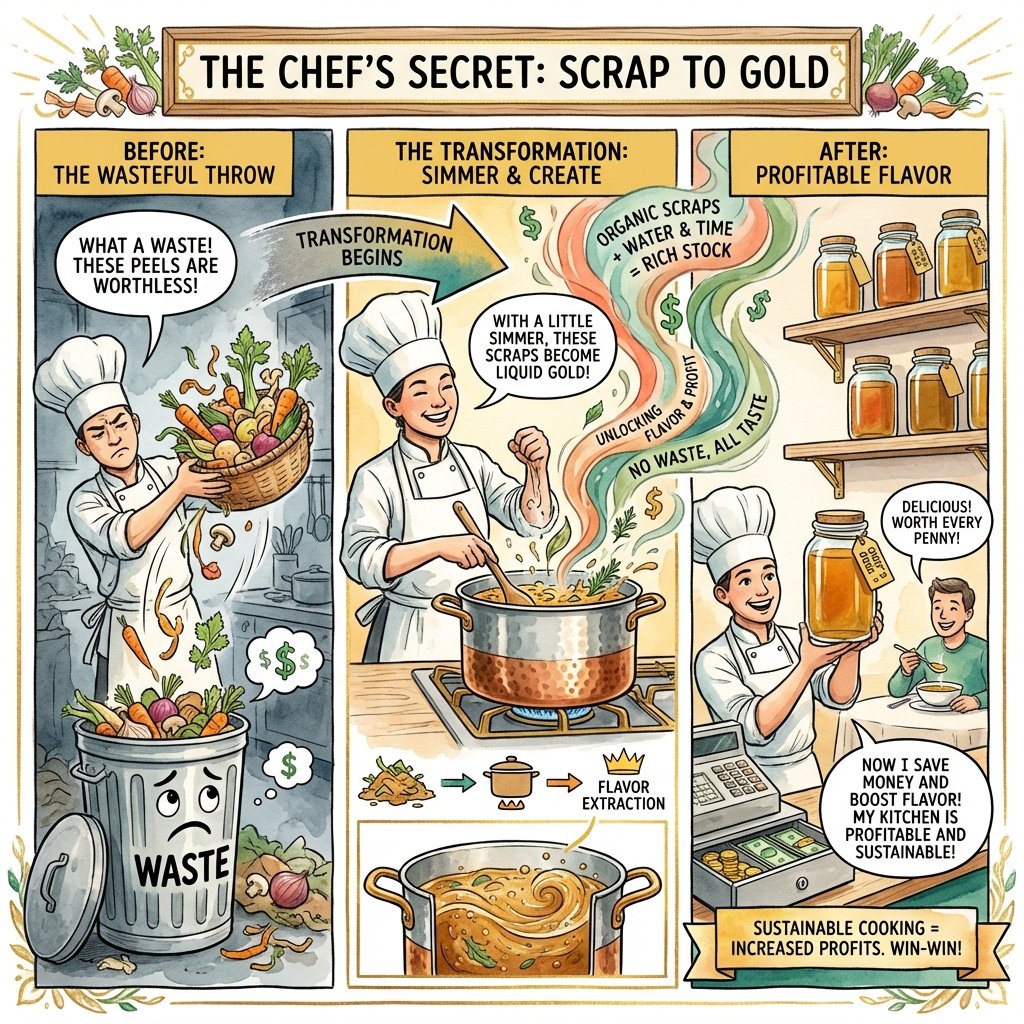
Implementing zero-waste strategies in your kitchen can dramatically lower your overall food cost percentage.
5. Reduce Food Waste and Spoilage in the Kitchen
Every time an employee throws food in the trash, they are literally throwing away your profit. While some waste is inevitable in any culinary environment, excessive spoilage and careless prep practices are entirely preventable. You must establish a culture of conservation within your kitchen team. Implement a daily waste log where employees must record everything they throw away, including dropped items, burned food, and products that spoiled in the walk-in. Tracking this data brings visibility to the problem and creates accountability among the staff.
A culture of accountability regarding waste is one of the most effective ways to lower your food cost.
Dramatically reduce the amount of product hitting the garbage can by instituting these actionable practices:
- Mandate that all staff log all waste, noting the specific item, the quantity, and the reason for disposal.
- Review the waste log weekly during manager meetings to identify patterns and training opportunities.
- Invest in high-quality, airtight storage containers and professional vacuum sealers to extend shelf life.
- Repurpose day-old bread for croutons, breadcrumbs, or signature bread puddings.
- Train your prep cooks extensively on proper knife skills to maximize the edible yield from fresh produce.
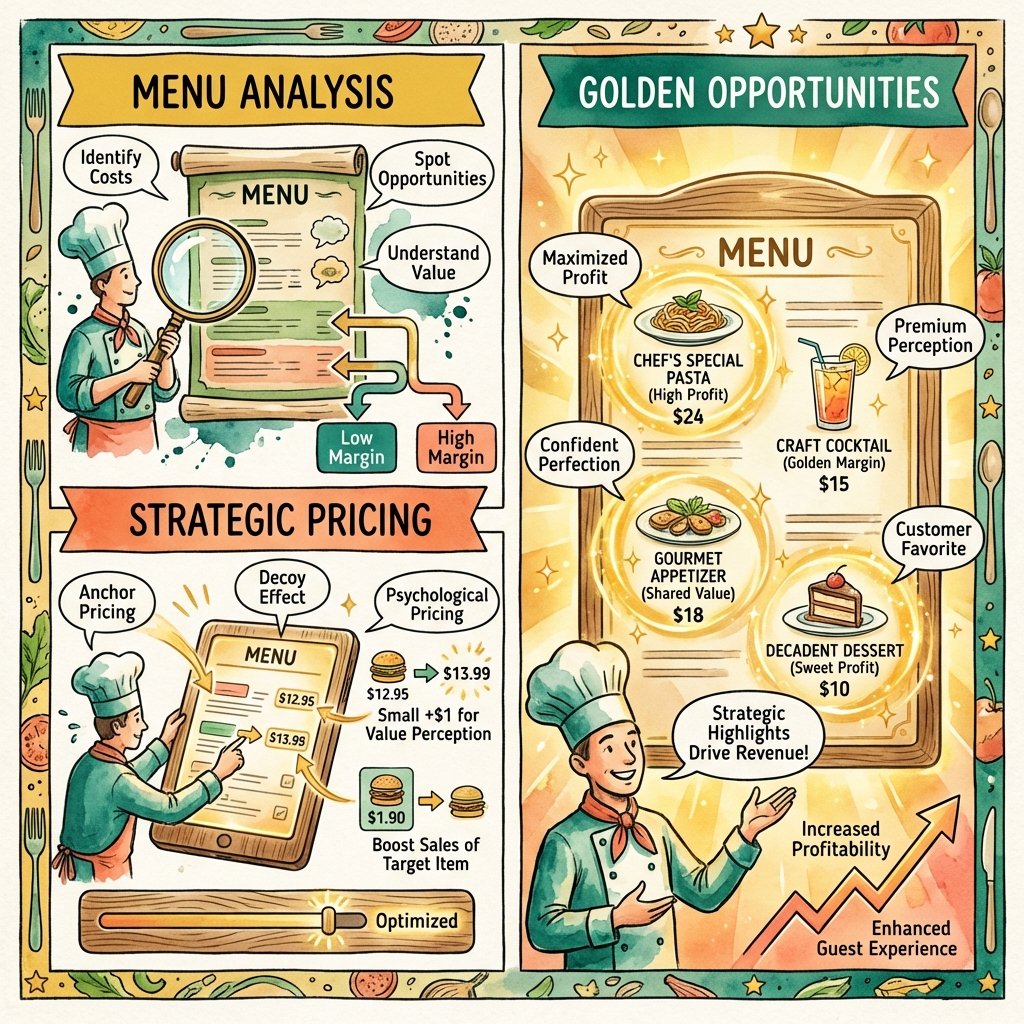
Highlighting high-margin dishes through menu engineering subtly shifts customer order patterns to boost profits.
6. Engineer Your Menu to Highlight High-Margin Dishes
You do not need to change your recipes or lower your food quality to improve your overall percentage; you simply need to change customer ordering behavior. Menu engineering utilizes design strategies to draw the customer’s eye to your most profitable items. By using strategic placement, eye-catching visual boxing, and mouth-watering descriptive language, you can subtly steer guests away from high-cost, low-margin items (like premium steak) and toward low-cost, high-margin items (like gourmet pizza or fresh pasta).
Menu engineering allows you to increase profitability without ever raising your actual prices.
Optimize your physical and digital menus to drive sales of high-margin dishes by employing these tactics:
- Position your most profitable ‘Star’ items in the top right corner of your physical menu layout.
- Use rich, sensory adjectives in descriptions to increase the perceived value of low-cost dishes.
- Remove dollar signs from your menu to reduce price sensitivity and encourage higher spending.
- Place a highly profitable item directly next to a more expensive ‘decoy’ item to make it appear as a value.
- Utilize your server staff to verbally recommend and enthusiastically upsell your targeted, high-margin dishes.
7. Adjust Menu Prices Strategically Without Alienating Customers
If you have optimized your inventory, controlled your waste, and negotiated with vendors, but your food cost percentage remains unsustainably high, you must raise your menu prices. However, sweeping, across-the-board price hikes can alienate your loyal customer base and damage your reputation. Instead, employ strategic, incremental pricing adjustments. Focus on raising prices gradually on your most popular, price-inelastic items, or introduce new, premium variations of existing dishes at a significantly higher price point.
Strategic pricing adjustments protect your margins while minimizing the risk of customer pushback.
Execute necessary price increases safely and intelligently by following these strategic guidelines:
- Analyze your POS data to identify highly popular items where a small price increase will go unnoticed.
- Implement incremental increases of 25 to 50 cents over several months rather than one massive jump.
- Introduce premium add-ons, like truffle oil or thick-cut bacon, to increase check averages organically.
- Bundle low-margin items with high-margin side dishes to create appealing, profitable combo meals.
- Monitor customer feedback and sales velocity closely for several weeks following any price adjustments.
Common Pitfalls and Mistakes in Food Cost Tracking
Even experienced operators can sabotage their own margins by falling victim to common tracking errors and operational oversights that artificially inflate their food cost percentage.
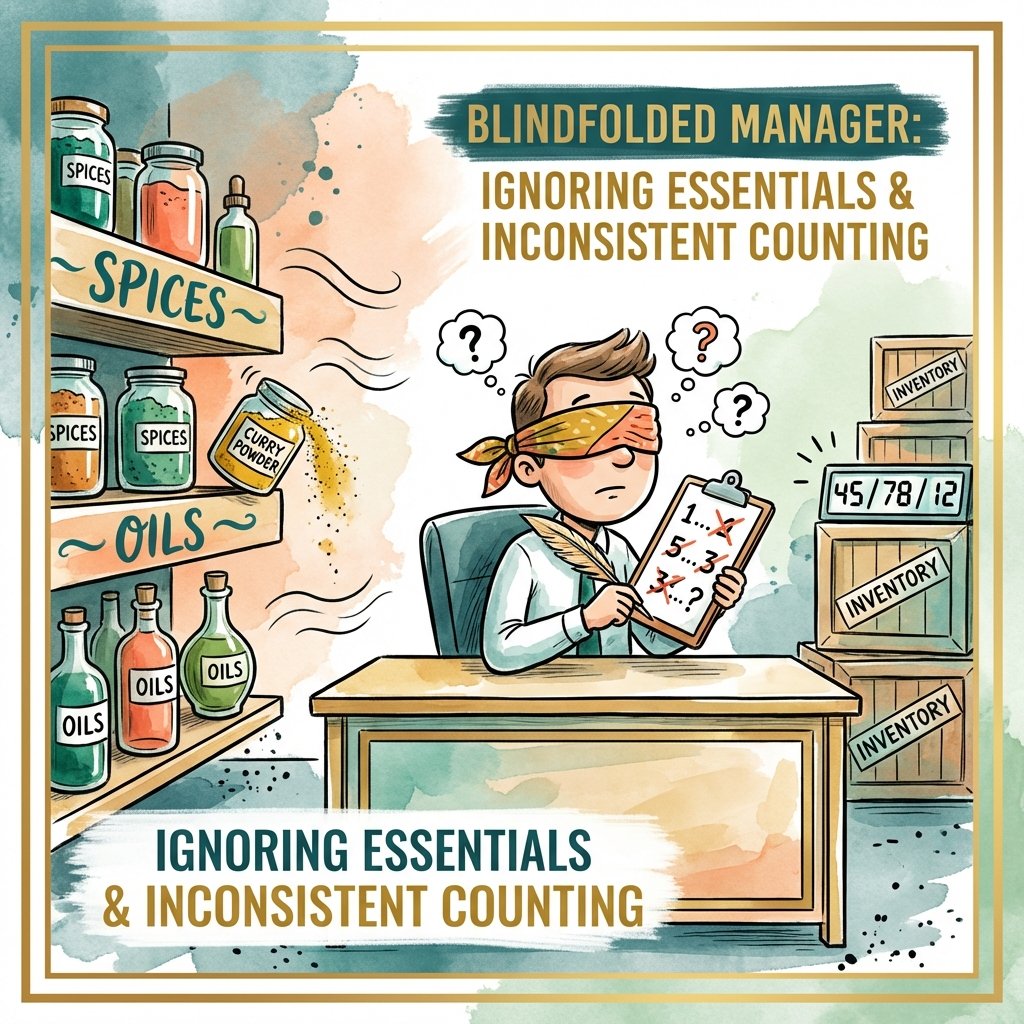
Failing to account for small, high-usage items like cooking oils and spices skews your true food cost percentage.
Failing to Count Inventory Frequently Enough
Counting inventory only once a month is an outdated and dangerous practice. By the time you identify a significant profit leak—such as theft, chronic over-portioning, or massive spoilage—30 days have already passed, and the financial damage is irreparable. To maintain tight control over your margins, you must conduct full physical inventory counts weekly. For highly expensive, vulnerable items like prime proteins and expensive cheeses, you should implement daily tracking protocols to catch discrepancies immediately.
Frequent inventory tracking transforms you from a reactive manager into a proactive operator.
Protect your bottom line by abandoning monthly counts and adopting these rigorous inventory practices:
- Transition to a mandatory weekly inventory schedule, typically conducted late Sunday night or Monday morning.
- Implement daily ‘flash reports’ strictly tracking the movement of your top ten most expensive ingredients.
- Hold kitchen management financially accountable for meeting specific, targeted inventory variance goals.
- Utilize modern mobile inventory apps that sink directly with your POS system to speed up the counting process.
- Never allow the same individual who receives the deliveries to also conduct the final inventory counts.
Ignoring the Cost of Spices, Oils, and Condiments
It is incredibly common for chefs to obsess over the cost of major proteins while completely ignoring the ‘invisible’ cost of fryer oil, expensive spices, butter, and tabletop condiments. While a pinch of salt or a splash of olive oil seems financially insignificant on a per-plate basis, these items are used in massive quantities across your entire menu. When you fail to account for these staples in your recipe costing, your ideal food cost is skewed, leading to tighter margins and unexpected cash flow issues at the end of the month.
Accounting for every single ingredient, regardless of size, is the hallmark of precise recipe costing.
Ensure your calculations reflect reality by properly managing the costs of your pantry staples:
- Add a standard ‘Q factor’ or flat percentage buffer (e.g., 2% to 3%) to every recipe to cover spices and oils.
- Regularly audit the consumption rate of your deep fryer oil and implement filtering protocols to extend its life.
- Monitor the usage of portion-controlled condiment packets, which are significantly more expensive than bulk options.
- Train staff to apply expensive garnishes, like micro-greens and specialty cheeses, with exact precision.
- Include the cost of complimentary bread service and butter in your overall overhead calculations.
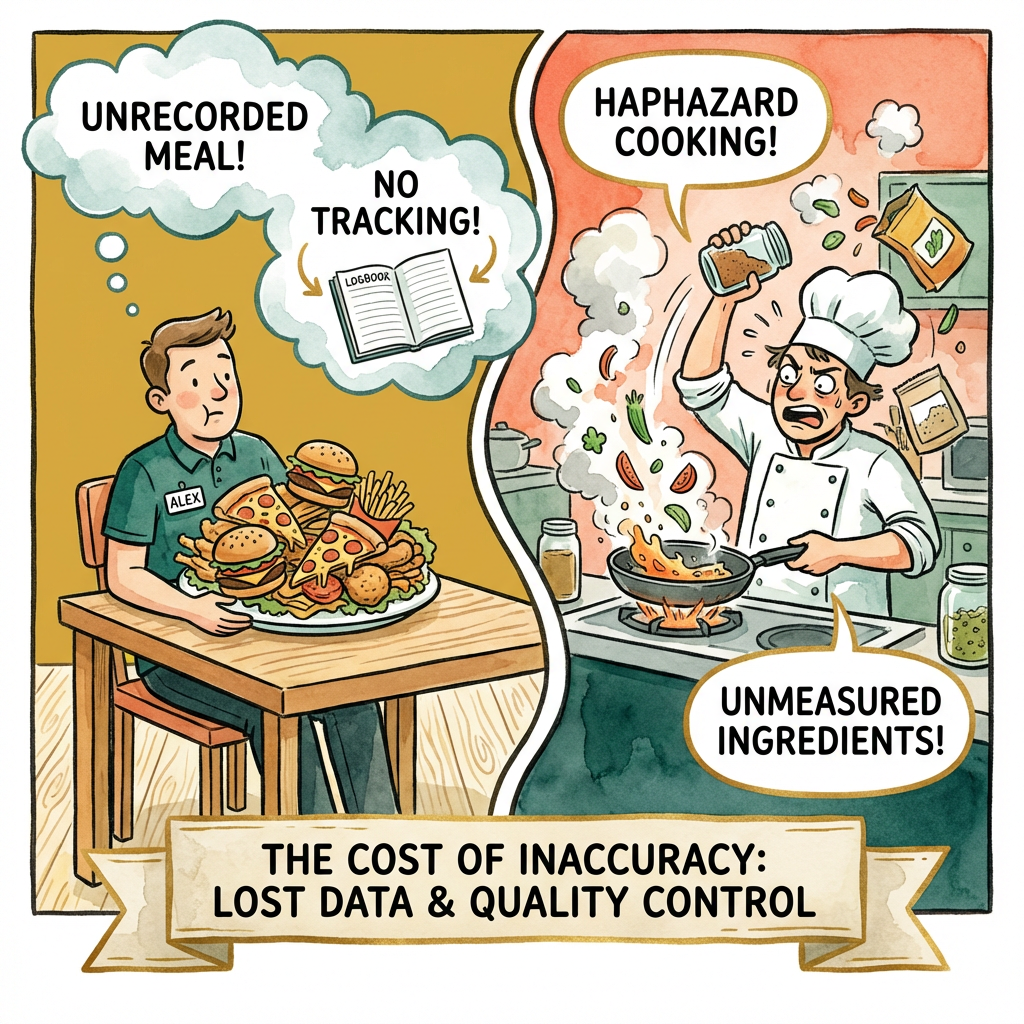
Recipe drift and unrecorded employee meals are silent margin killers that inflate your food cost.
Not Factoring in Employee Meals and Comped Food
Feeding your hardworking staff is a necessary component of restaurant culture, but it must be meticulously accounted for. If a kitchen manager allows staff to cook whatever they want without ringing it into the POS system, your inventory is depleted without any corresponding revenue, mathematically destroying your food cost percentage. The exact same principle applies to food that is comped for dissatisfied guests or promotional influencer visits. These items must be recorded carefully to separate them from actual operational waste.
Unrecorded meals artificially inflate your COGS and mask the true performance of your kitchen.
Control this hidden expense by establishing strict operational protocols for non-revenue food:
- Create a specific, heavily discounted ‘Employee Meal’ button in your POS system and mandate its use.
- Restrict staff meals to lower-cost menu items, expressly forbidding the consumption of premium proteins.
- Track all comped meals and promotional giveaways under a distinct marketing or customer relations code.
- Offer family-style staff meals using cross-utilized ingredients to feed the entire team efficiently and cheaply.
- Review the comp and discount reports daily to identify potential abuse by management or serving staff.
Allowing Recipe Drift and Inconsistent Prep
Recipe drift is the silent killer of restaurant consistency and profitability. It occurs when cooks gradually deviate from the established standard recipe—adding an extra handful of cheese here, pouring a heavier glug of wine there—often because they believe it tastes better or they are rushing during service. Over time, these unauthorized alterations become the new normal. Not only does this destroy the consistency that keeps guests returning, but it also completely invalidates the careful recipe costing you completed, causing your food cost percentage to steadily climb without explanation.
Maintaining strict adherence to standardized recipes is critical for both culinary consistency and financial survival.
Combat recipe drift and enforce absolute consistency by implementing these management strategies:
- Conduct blind tastings with your management team weekly to ensure dishes match the original flavor profile.
- Require cooks to recreate core recipes under direct supervision during their performance reviews.
- Utilize digital recipe viewers in the kitchen rather than paper binders that can become dirty or lost.
- Empower your expediter to aggressively reject and send back any dish that does not meet the visual specifications.
- Foster a culture where precision and consistency are celebrated over unauthorized culinary creativity during service.