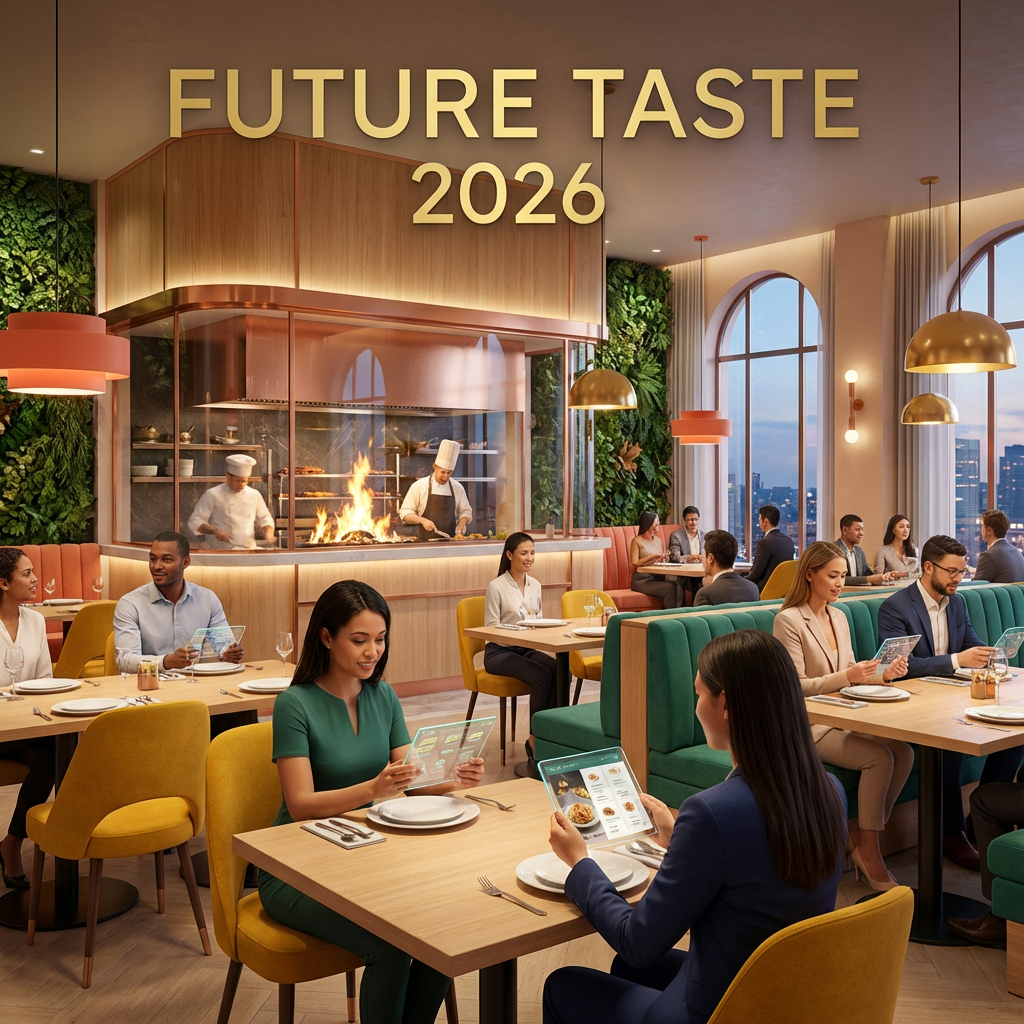
The global restaurant industry is currently undergoing one of the most radical, accelerated transformations in modern culinary history. As we navigate the complex economic and cultural shifts defining the current decade, understanding the definitive top 10 food trends in 2026 is absolutely critical for long-term operational survival.
Consumers are rapidly shifting their dining criteria, aggressively demanding:
- Holistic Sustainability: Verifiable, deep ethical sourcing over performative “green” marketing.
- Hyper-Flavorful Profiles: Bold, complex heat and massive umami extraction.
- Deeply Experiential Moments: Theatrical preparation and primal, analog dining environments.
The most lucrative culinary concepts of 2026 are heavily characterized by a striking paradox: an aggressive return to primal cooking techniques cleanly juxtaposed against highly sophisticated flavor extraction and wellness initiatives. Elite operators who successfully integrate these specific movements into their core DNA will seamlessly capture unprecedented market share.
The Return to Primal and Preserved Elements
Modern diners are actively rejecting heavily processed, artificially engineered ingredients in absolute favor of deep, authentic, and historically rooted culinary techniques.
1. Live-Fire Cooking and Elemental Techniques
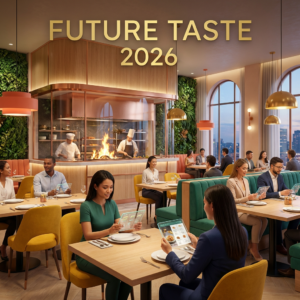
The absolute apex of the top 10 food trends in 2026 is the immense, global resurgence of live-fire cooking. Chefs are enthusiastically abandoning modernized, clinical sous-vide circulators in direct exchange for the unpredictable, visceral brilliance of open embers.
Implementing a live-fire program delivers three massive operational advantages:
- Unreplicable Flavor Profiles: Imparts incredibly rich, complex smoky nuances to proteins and vegetables that cannot be engineered structurally.
- Viral Theatrical Marketing: The visual spectacle of roaring flames provides incredible, highly engaging content perfectly suited for robust digital marketing, turning the kitchen into a high-revenue stage.
- Primal Differentiation: Demands immense technical skill, immediately separating elite kitchens from heavily mechanized competitors.
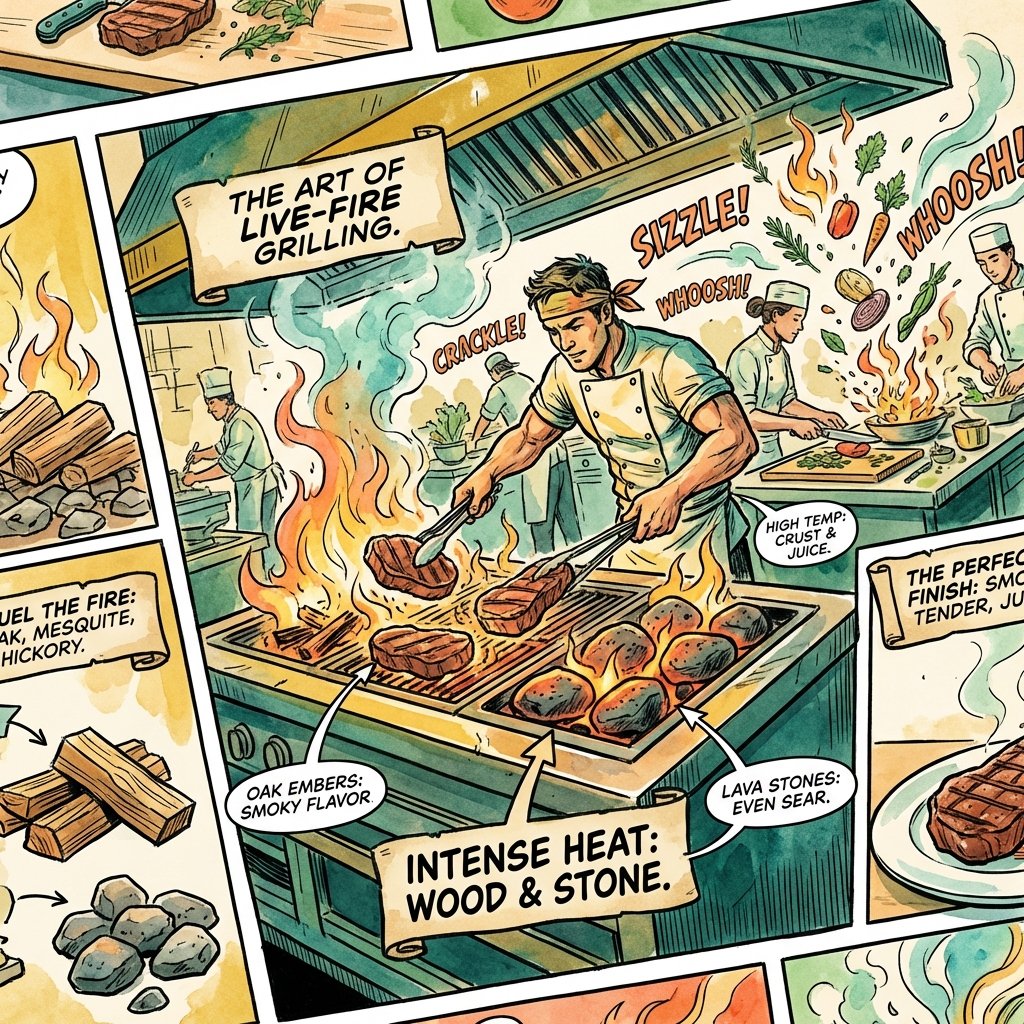
Live-fire cooking strips dishes down to their most primal, elemental flavors.
2. Intentional Fermentation and Preserved Flavors
Fermentation is no longer a niche, experimental hobby; it is perfectly standard operating procedure in 2026. Forward-thinking kitchens are actively dedicating entire back-of-house ecosystems to preservation.
A dedicated localized ‘fermentation lab’ relies heavily on these core building blocks:
- House-Made Koji: Used to accelerate aging and build massive umami profiles rapidly.
- Lacto-Fermented Vegetables: Introduces deep, complex sour notes while radically extending the usable lifespan of highly perishable local produce.
- Bespoke Garums: Replaces heavy, expensive butter and imported creams with intensely concentrated, savory depth.
This strategic preservation powerfully acts as a massive hedge against volatile supply chain costs.
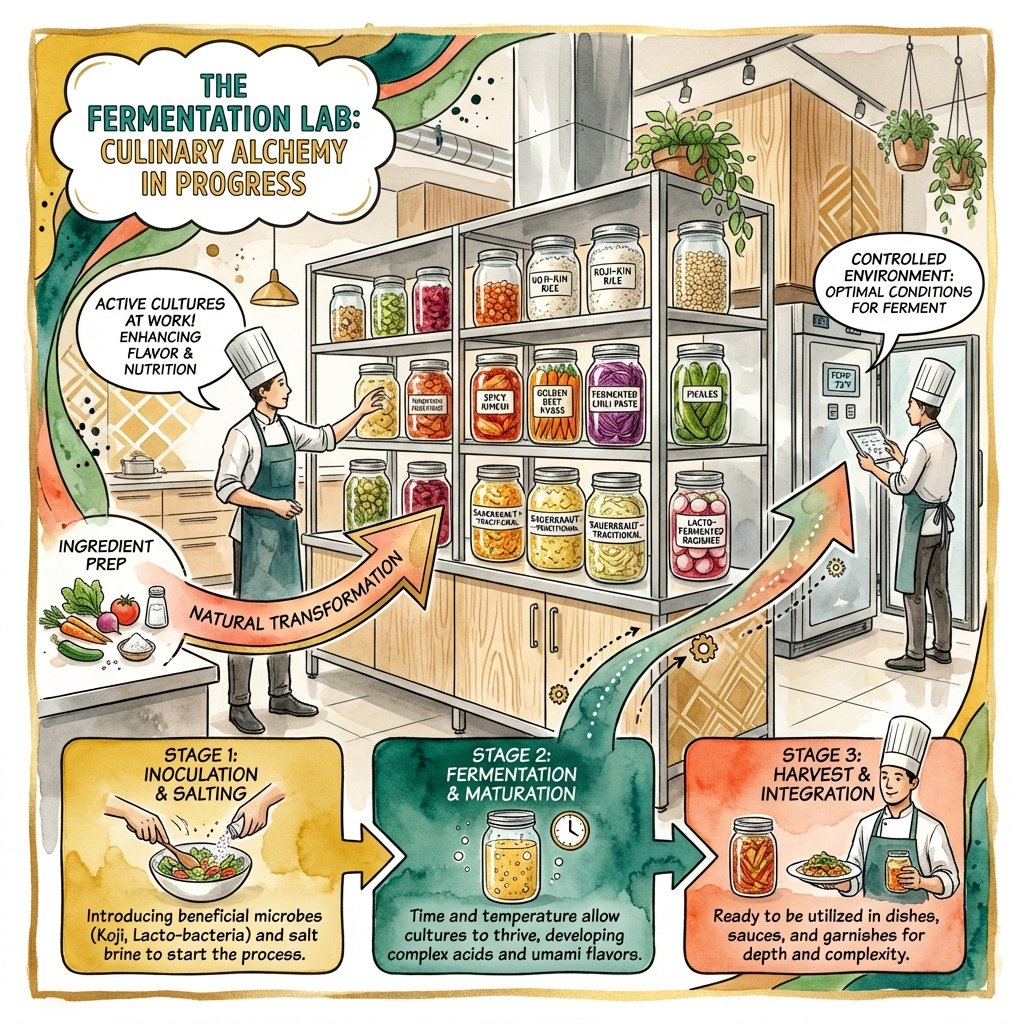
In-house fermentation acts as both a flavor enhancer and a powerful hedge against volatile food costs.
Beverage Innovation Takes Center Stage
The profit margins generated at the bar are frequently what keeps a restaurant financially solvent. In 2026, the traditional beverage program is entirely unrecognizable, driven by complex culinary crossover.
3. The Rise of Savory, Culinary-Driven Cocktails
The era of overly sweet cocktail menus is permanently over. The modern beverage consumer aggressively demands complex, sophisticated flavor profiles beautifully mirroring the kitchen’s output.
Elite bartenders are constructing food-like structures using intense culinary ingredients list:
- Oceanic Elements: Bright sea greens and coastal salinity.
- Roasted Components: Charred citrus and deeply roasted root infusions.
- Earthy Foundations: Aged balsamic, complex hydrosols, and deeply earthy shiitake mushrooms.
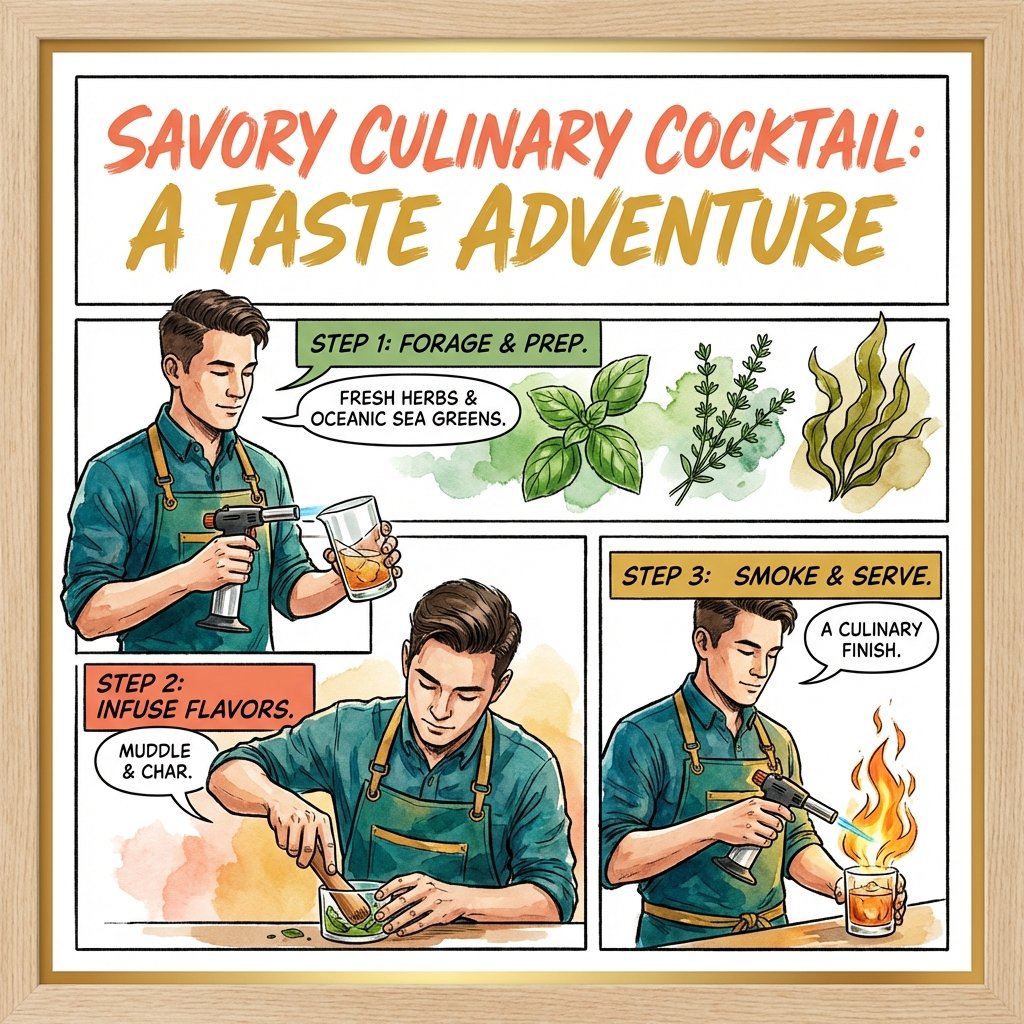
The modern beverage program aggressively borrows savory ingredients directly from the Michelin kitchen.
4. The Golden Age of Zero-Proof and Functional Mixology
Driven heavily by massive generational shifts toward sustained wellness, the meteoric rise of premium zero-proof mixology secures its place among the top 10 food trends.
Profitable operations are abandoning simplistic mocktails and instead building massive ‘Zero-Proof’ menus featuring:
- Premium Distilled Botanicals: Providing complex aromatic structure without the ethanol burn.
- Bittering Agents: Utilizing gentian and cinchona bark to mimic the complex bite of traditional spirits.
- Smoked and Fermented Teas: Offering deep tannins and viscosity comparable to heavy red wines.
Crucially, operators successfully command staggering premium price points for these complex concoctions, protecting overall beverage margins.
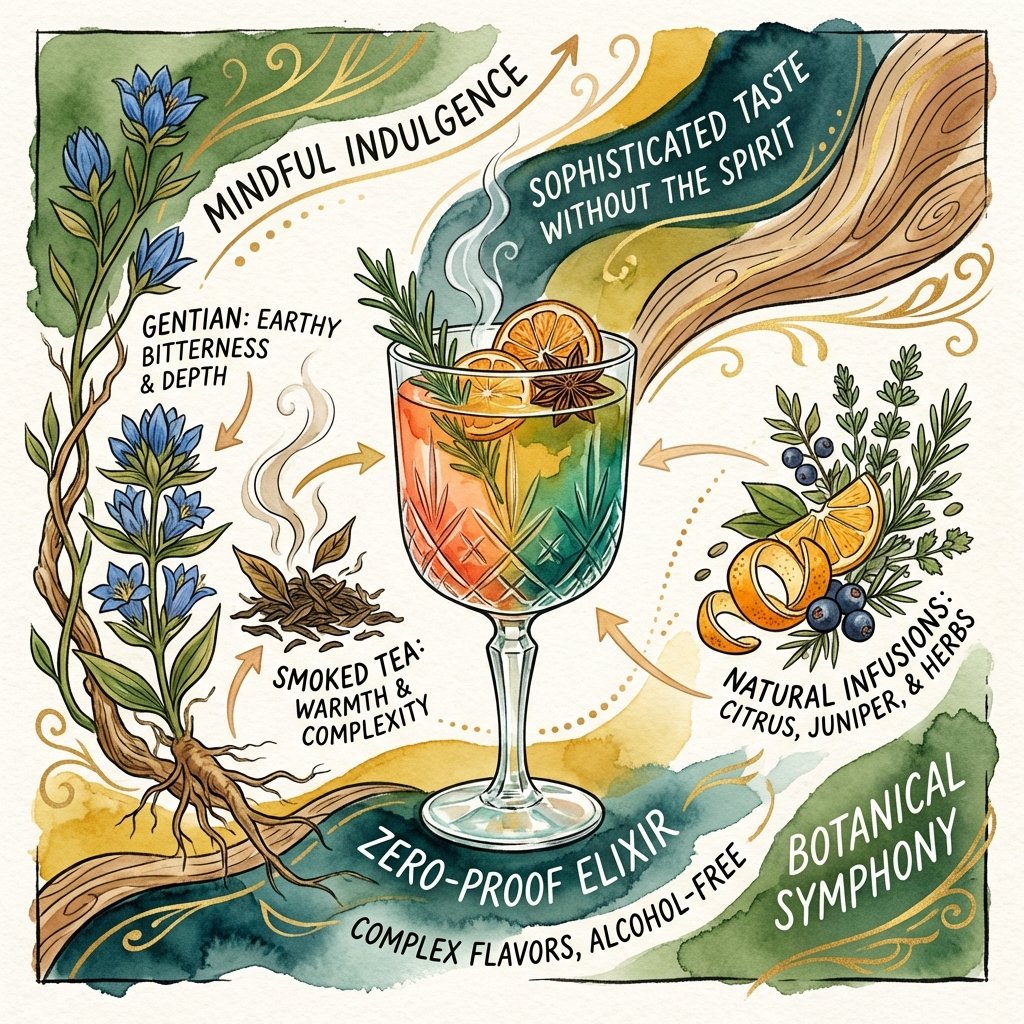
Zero-proof mixology successfully commands premium pricing while catering to a health-conscious demographic.
A Paradigm Shift in Protein
The global conversation surrounding dietary proteins has abruptly shifted away from extensive lab-grown synthetics and aggressively returned to hyper-quality deep sourcing.
5. The Triumphant Return of “Real” Meat and Premium Steaks
Following a sharp retail decline in highly processed plant-based meat substitutes, 2026 witnesses a powerful return to authentic, exceptionally high-quality “real” meat.
Consumers are migrating back to clean, single-ingredient proteins, demanding:
- Visual Authenticity: Massive, visually stunning grass-fed steaks and highly marbled A5 Wagyu.
- Classic Execution: Flawlessly rendered traditional dishes, like an iconic steak frites.
- Transparent Sourcing: Clear justification of premium menu price points through tight, educational marketing narratives.
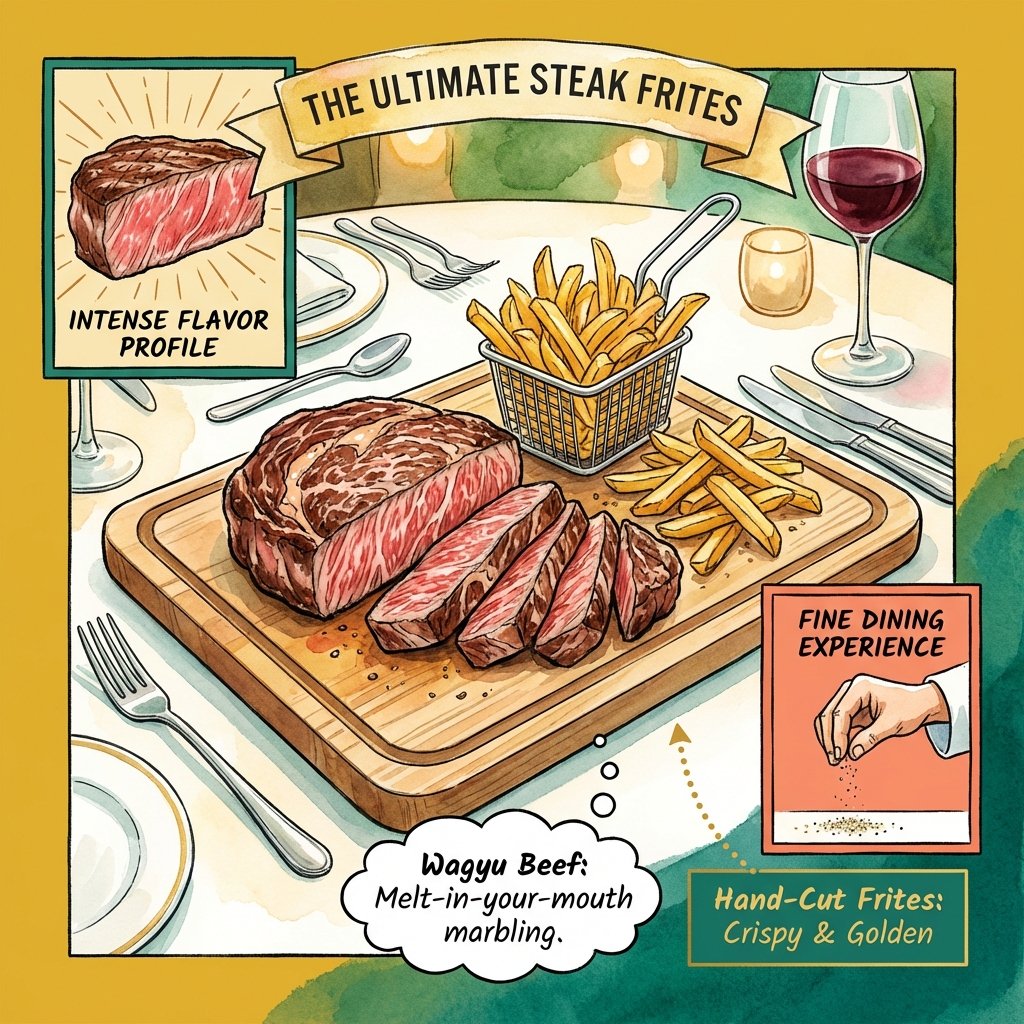
Diners are actively pivoting away from synthetic processing in favor of high-quality, authentic single-ingredient proteins.
6. “Nose-to-Tail” 2.0 and Deep Oceanic Sourcing
To aggressively combat skyrocketing wholesale protein costs, executive chefs are doubling down on a highly modernized “Nose-to-Tail” culinary philosophy.
This economic and sustainable strategy relies on elevating underutilized cuts:
- Complex Offal & Collars: Transforming inexpensive terrestrial scraps into highly profitable luxury items.
- Structural Marrow: Adding intense richness and presentation value at an incredibly low food cost.
- Regenerative Aquatic Flora: Utilizing premium kelp, varied seaweeds, and coastal sea beans as central structural components rather than mere garnishes.
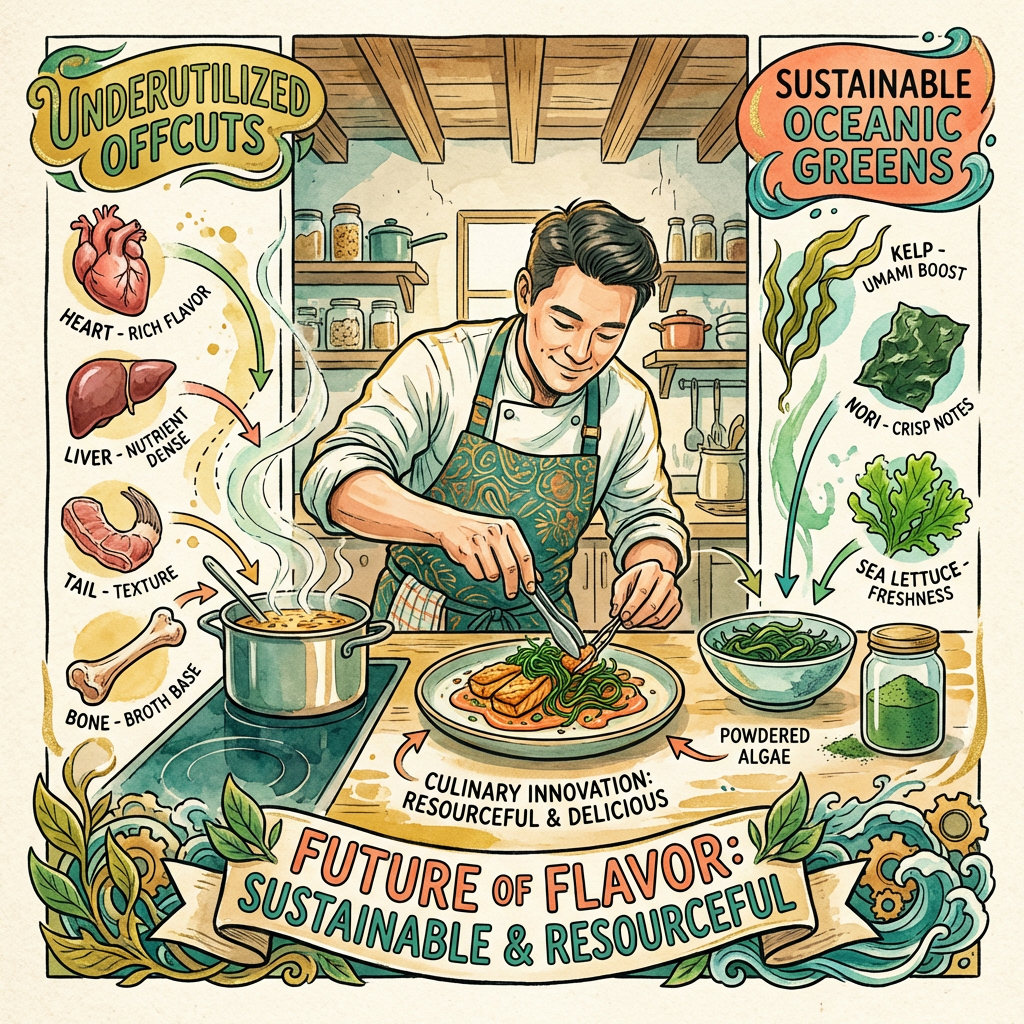
Deep sourcing and nose-to-tail philosophies protect razor-thin profit margins amidst skyrocketing wholesale inflation.
Flavor Profiles and Strategic Menu Structuring
The modern palate is more aggressively educated than ever before. Generic cuisine is entirely obsolete.
7. Hyper-Regional Global Flavors
The vaguely defined “Asian Fusion” or “Latin American” concept is dead in 2026. The highly educated dining public strictly demands intense, hyper-specific regional authenticity.
Wildly successful restaurants are establishing immense culinary authority by focusing narrowly on precise regional profiles natively:
- Sichuan & Guizhou: Highlighting intensely numbing peppercorns and complexly sour ferments.
- Northern Thai: Utilizing uniquely pungent, highly herbaceous salad preparations.
- Coastal Oaxaca: Featuring incredibly rich, deeply structured regional moles.
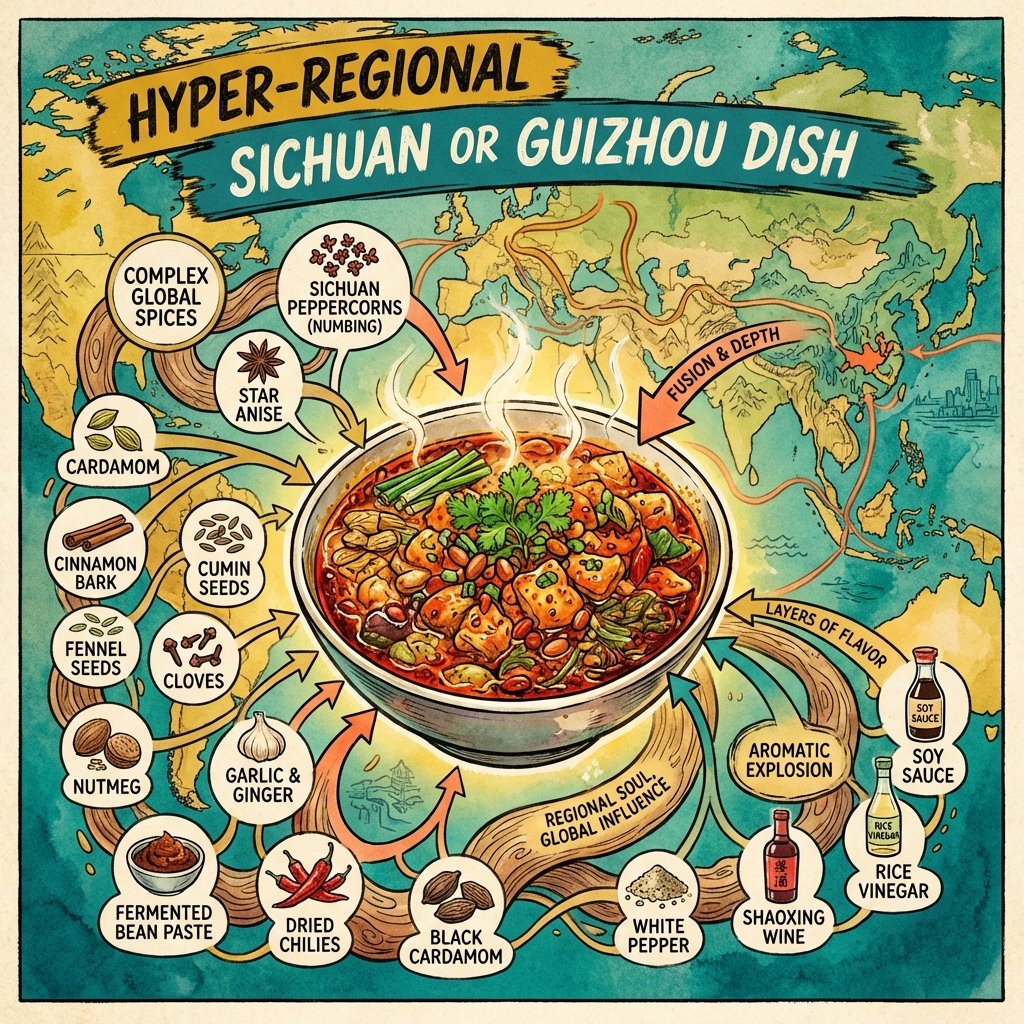
Generic fusion is obsolete; precise, hyper-regional cooking establishes deep culinary authority and commands premium prices.
8. Bold “Complex Heat” and Endless Sauce Innovation
The obsession with basic “sweet-and-spicy” has dramatically evolved into a refined demand for “Complex Heat.” Diners crave deeply layered heat natively balanced perfectly by intense sweetness or deep umami.
Operators are achieving this proprietary layering through specific condiment innovation:
- Slow-Fermented Chili Pastes: Building deep, funky foundations rather than relying solely on raw capsaicin.
- Infused Chili Oils: Utilizing massive arrays of rare global spices perfectly to create signature aromatics.
- Customizable Tableside Sauces: Allowing operators to instantly transform fundamentally cheap base proteins into highly craveable, lucrative signature dishes.
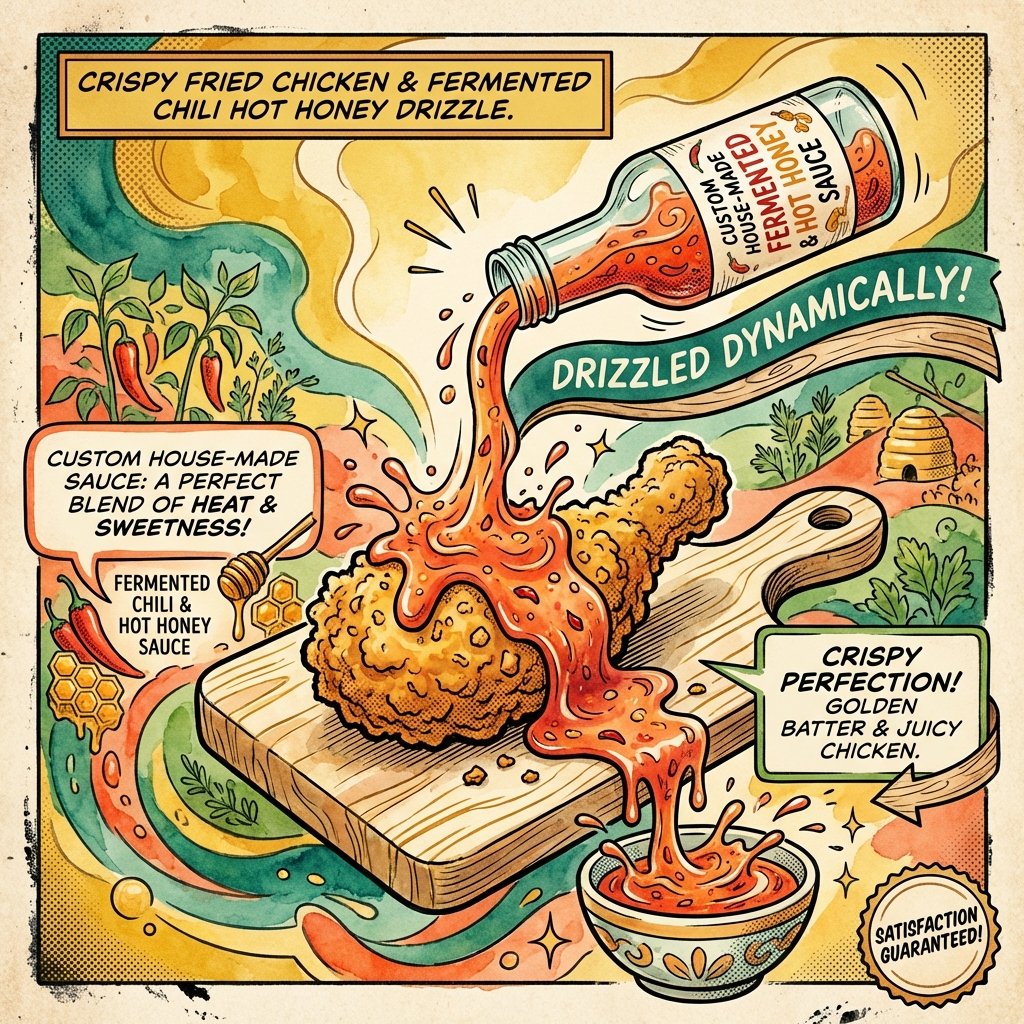
Bold, complex heat profiles powered by custom fermentation allow operators to elevate fundamentally inexpensive proteins.
The Intersection of Economics and Wellness
Restaurant operators mathematically must heavily balance the immense consumer desire specifically for robust holistic health against the relentless economic reality of high supply chain costs.
9. Fiber-Rich, Functional Wellness Foods
While protein heavily dominated the wellness conversation historically, 2026 marks the absolute definitive Year of Fiber. The modern diner is intensely focused on deep gut health microbiomes.
Chefs are transitioning these low-cost ingredients heavily from obligatory side dishes cleanly to the highly lucrative center of the plate:
- Cruciferous & Root Foundations: Beautifully charred massive brassicas and deeply roasted root vegetables.
- Ancient Carbohydrates: Complexly sprouted whole grains engineered for deep texture.
- Hearty Local Legumes: Prepared to feel completely indulgent, deeply savory, and highly luxurious.
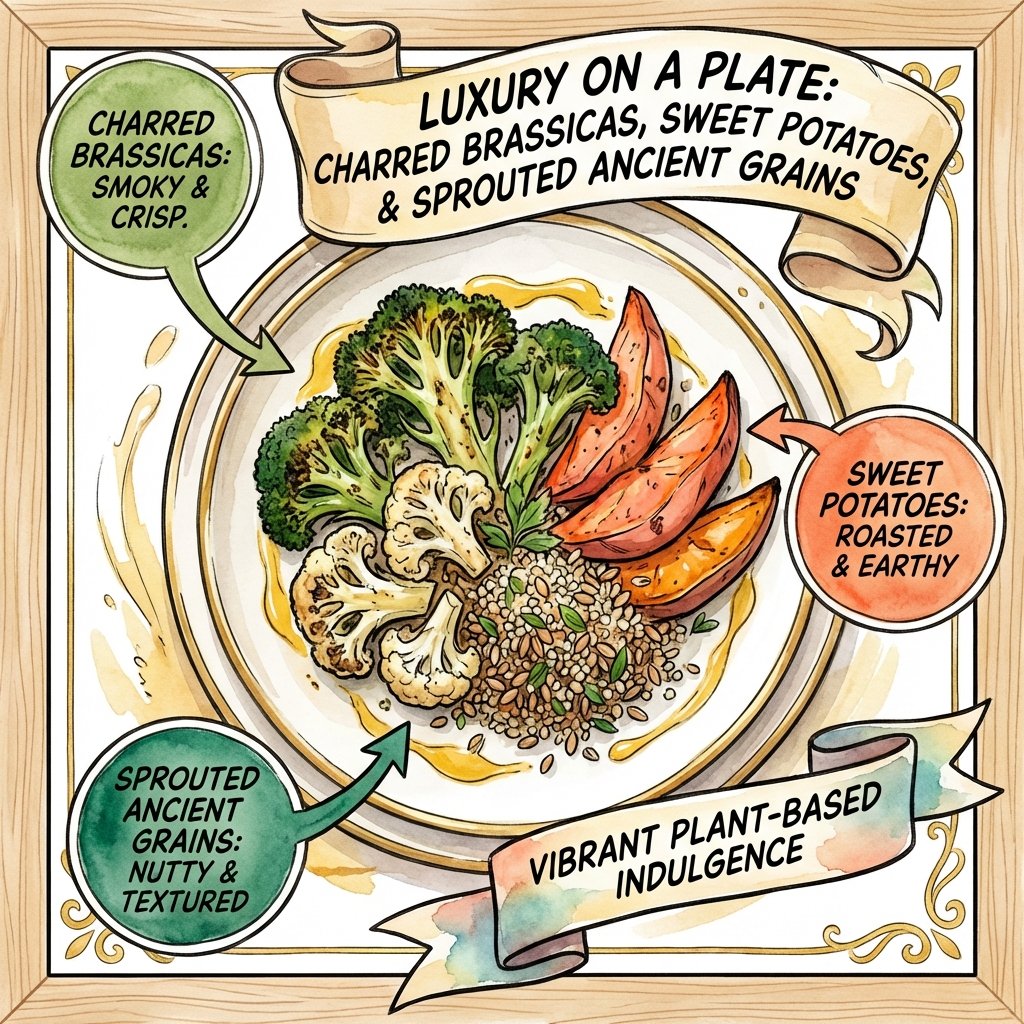
Fiber-rich, gut-health-forward ingredients are transitioning from simple side dishes to highly lucrative, luxurious primary entrees.
10. Value-Driven, Soul-Satisfying Large Format Plates
Rounding out the food trends in 2026 is a massive, highly strategic shift heavily toward “value-driven” large format dining. As macroeconomic inflation continually pressures discretionary income locally, diners fiercely seek massive perceived financial value.
Instead of ordering five expensive separate plates, consumers are aggressively pivoting toward large-format options:
- Gigantic Whole Preparations: A perfectly executed whole roasted chicken visually meant entirely for two.
- Dramatic Braised Platters: Massive displays of incredibly slow-braised short ribs.
- Psychological Satisfaction: Delivering intense visual impact and clear economic value, reliably driving consistent high-margin volume.
Conclusion: Capitalizing on the Top 10 Food Trends in 2026
Navigating the culinary industry successfully in 2026 demands complete operational agility. Understanding these profound massive shifts is merely the first step; highly profitable execution is where local empires are definitively built.
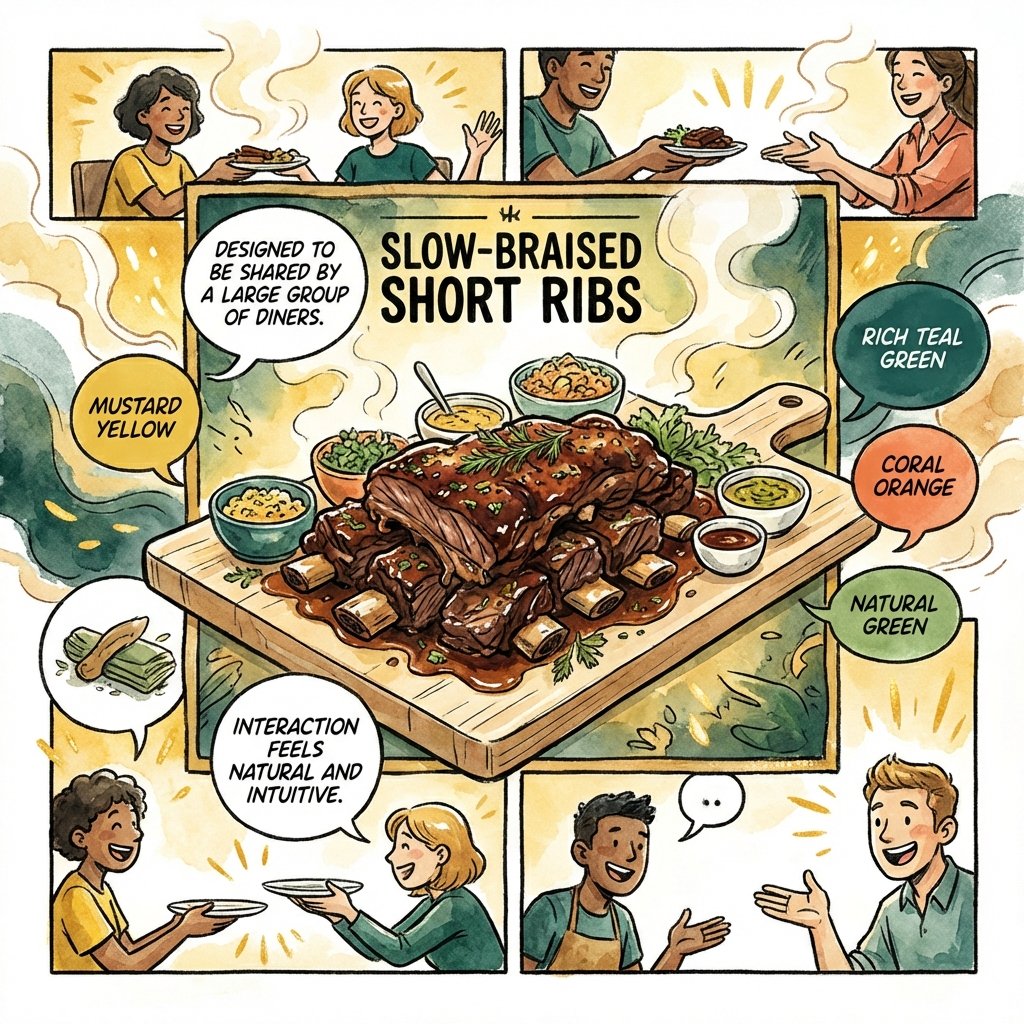
Massive large-format entrees deliver profound psychological satisfaction and immense perceived economic value for middle-class diners.
Evolving Your Menu for Maximum Viability
You absolutely must immediately audit your current menu and radically restructure its components:
- Identify critically underperforming, outdated “dinosaur” dishes explicitly and delete them.
- Incorporate wildly bold, hyper-regional flavor profiles.
- Deploy massive-margin, deeply complex zero-proof cocktails.
- Add profoundly soul-satisfying, visibly value-driven large format entrees entirely.
The Financial Imperative
The ultimate goal of monitoring the top food trends is never strictly chasing fleeting aesthetics completely. The primary imperative is leveraging these massive movements to defensively protect and aggressively grow your restaurant’s ultimate net profit margin safely.