The restaurant industry is experiencing a profound shift. For decades, the primary operational focus was relentlessly directed toward customer acquisition—driving foot traffic through promotions, localized advertising, and aggressive expansion. Today, however, the economic calculus has fundamentally changed. With rising operational costs and intense digital competition, customer retention has emerged as the definitive driver of sustainable profitability, making restaurant loyalty programs an absolute necessity.
A properly engineered loyalty program is significantly more than a modern iteration of the traditional paper punch card. It is a strategic mechanism for behavior modification, data collection, and relationship building. By structuring incentives that align with your guests’ desires, you can transform casual, infrequent diners into passionate brand advocates. This comprehensive guide details the precise strategies, real-world examples, and underlying economics required to build a loyalty program that dramatically scales local market share.
Why Your Restaurant Needs a Customer Loyalty Program
Implementing a structured rewards ecosystem is no longer experimental; it is a defensive and offensive requirement in modern food service marketing.
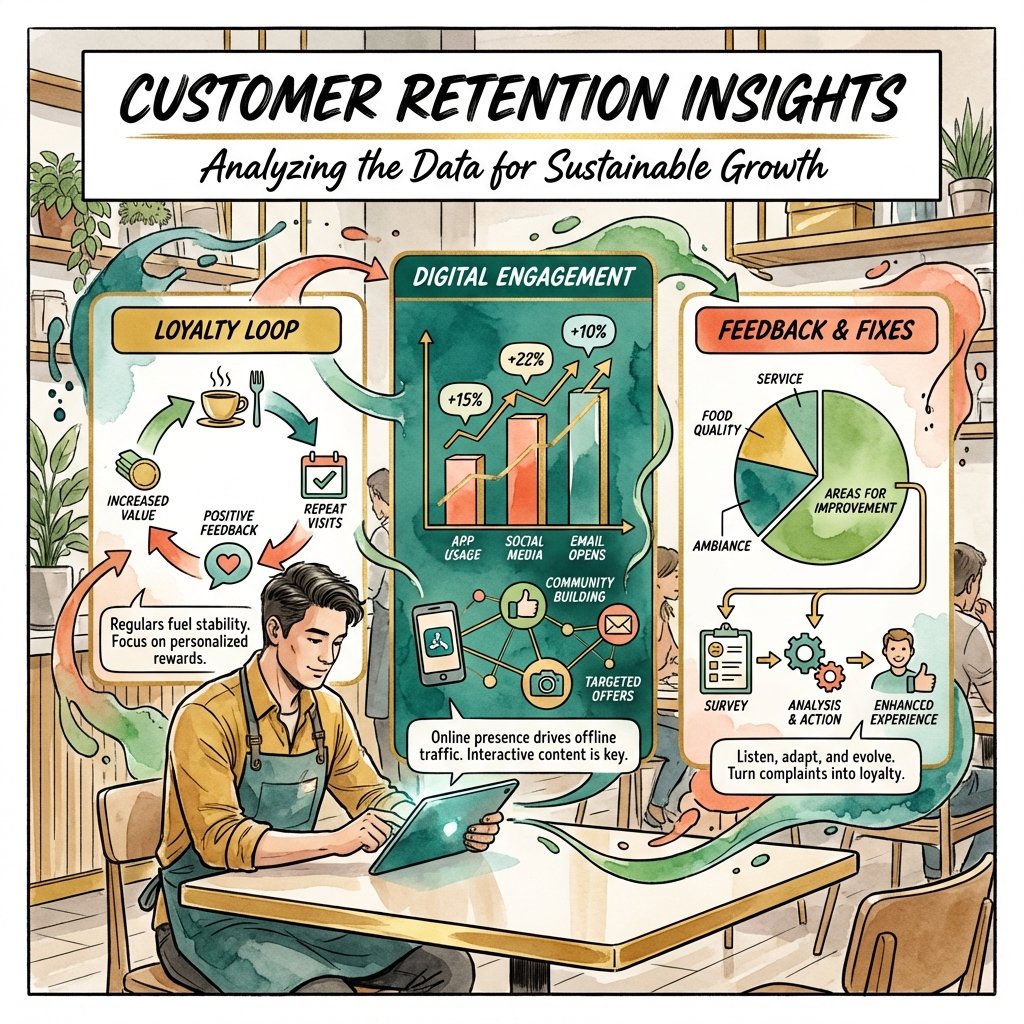
Monitoring customer retention data is critical for scaling any food business.
Boosting Customer Retention and Repeat Visits
The fundamental premise of any loyalty initiative rests on basic economics: acquiring a new guest costs five to twenty-five times more than retaining an existing one. A restaurant loyalty program specifically targets the “leaky bucket” syndrome, where high volume top-of-funnel acquisition masks poor underlying retention metrics.
When a diner knows they are actively working toward a tangible reward, their decision-making process fundamentally shifts. If forced to choose between your establishment and a competitor offering similar fare at a similar price point, the psychological friction of “wasting” potential points almost always tips the scale in your favor. This psychological lock-in is what drives increased visit frequency, stabilizing revenue streams against seasonal fluctuations.
Increasing Average Check Size
Beyond frequency, structured programs organically engineer larger transactions.
When utilizing tiered reward thresholds—such as requiring a guest to reach a $50 spend to unlock a specific perk—consumers routinely alter their purchasing behavior. A diner sitting at a $42 check is highly likely to add a dessert or an extra beverage simply to cross the psychological threshold. This phenomenon, known as the “endowed progress effect,” demonstrates that as individuals move closer to a goal, they accelerate their efforts to reach it, resulting in higher average order values across your entire participating customer base.
Gathering Actionable Guest Data
Data is the invisible currency of the modern hospitality sector. Without a loyalty program, transactions are largely anonymous; you know what was sold, but rarely who bought it.
A digital loyalty platform captures granular first-party data. You acquire:
- Direct contact information for personalized outreach
- Precise dietary preferences and restrictions
- Favorite menu items and typical ordering patterns
- Average spend and comprehensive lifetime value
Armed with this intelligence, generic email blasts are replaced by highly segmented, hyper-personalized campaigns. If a customer consistently orders vegetarian items, your marketing automation can specifically highlight your new plant-based menu to them, dramatically increasing conversion rates.
The 5 Most Effective Types of Restaurant Loyalty Programs
There is no universal architecture for loyalty. The optimal model depends entirely on your segment, operational capacity, and target demographic.
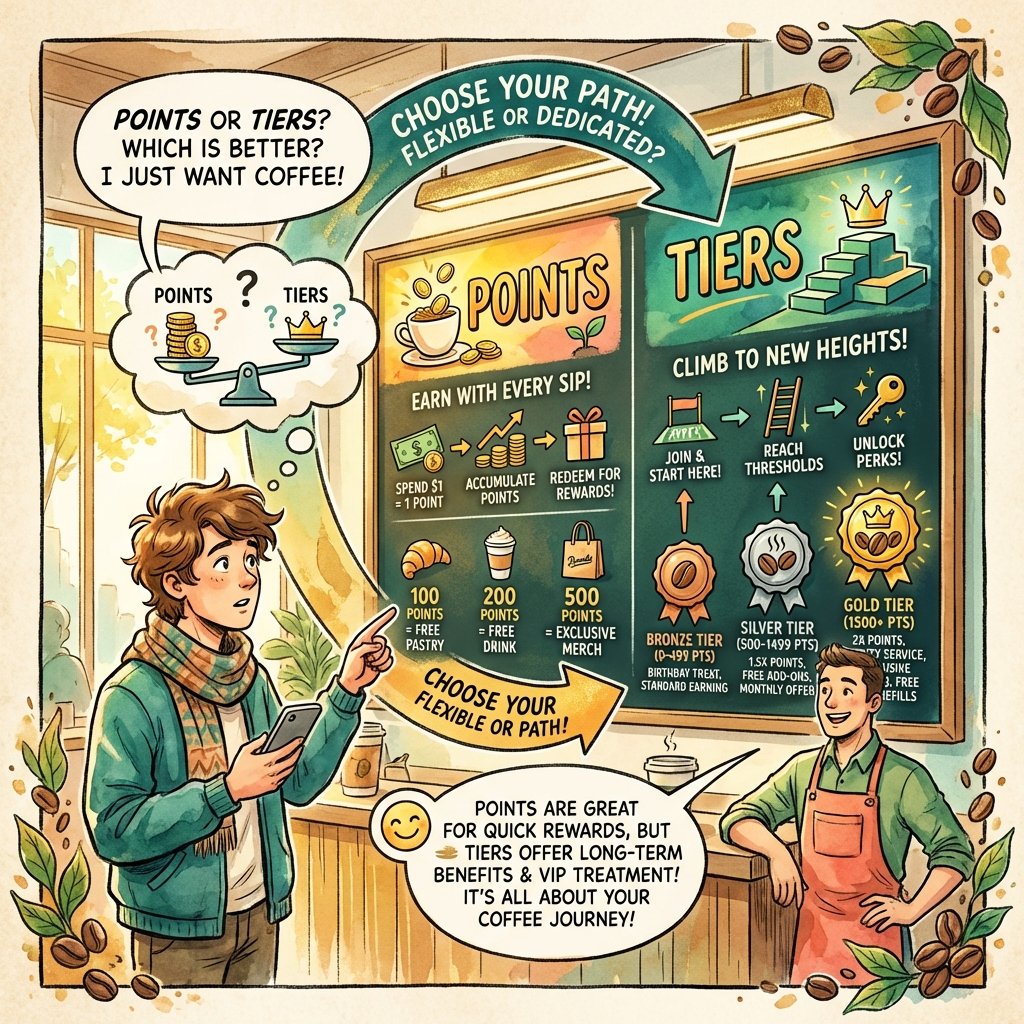
Different models like points and tiers influence spending behavior uniquely.
Point-Based Reward Systems
The point-based model remains the industry standard due to its inherent simplicity and universal consumer understanding.
In this architecture, diners earn a specific number of points for every dollar spent (e.g., $1 = 10 points). These points calculate in a central digital wallet, eventually redeemable against a standardized catalog of rewards. The strength of this model lies in its straightforward nature. Customers do not have to calculate complex formulas; their progress is transparent, linear, and easily trackable via your integrated app or POS system.
Tiered Loyalty Programs
Tiered programs introduce powerful gamification elements designed directly to foster aspirational spending and long-term commitment.
By segmenting users into varying statuses—such as Bronze, Silver, and Gold—you tap into competitive psychology. A customer in the Silver tier recognizes they are only a few hundred points away from unlocking Gold-level perks, such as complimentary priority delivery or exclusive menu tastings. This structure is particularly effective because it rewards your most profitable diners disproportionately, ensuring your top 20% of spenders (who generally drive 80% of revenue) feel uniquely valued.
Subscription-Based Loyalty Models
Entering mainstream adoption, subscription architectures guarantee recurring monthly revenue streams.
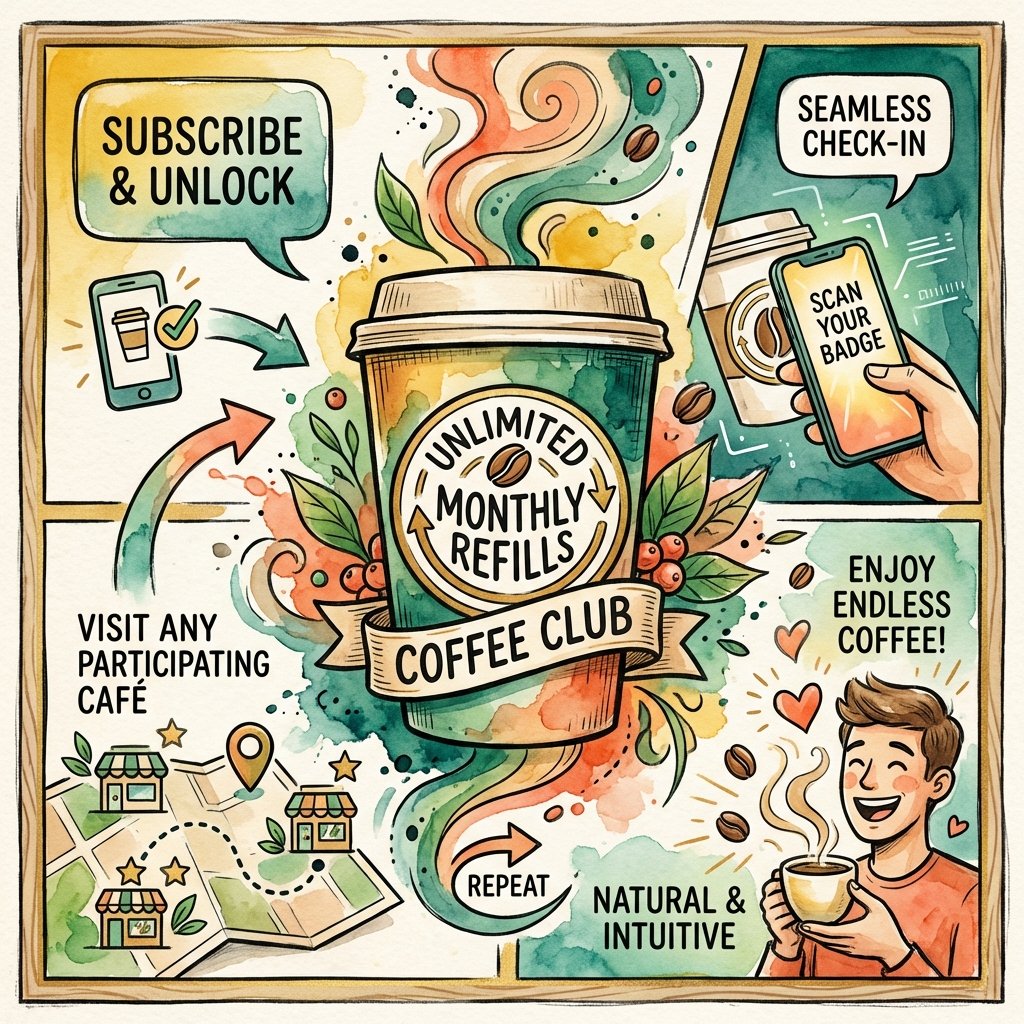
Subscription models provide predictable, recurring revenue streams.
Under a subscription model, customers pay a flat monthly or annual fee to unlock persistent benefits, such as daily free coffee, waived delivery fees, or a flat 15% discount on all orders. This model flips traditional loyalty on its head: instead of rewarding past behavior, the customer pays upfront for future privileges. Once the subscription fee is paid, the customer feels compelled to visit your establishment to maximize the value of their investment, effectively eliminating competitor consideration.
Visit-Based and Item-Based Punch Cards
The modern, digitized iteration of the classic paper punch card focuses on visit frequency rather than gross transaction value.
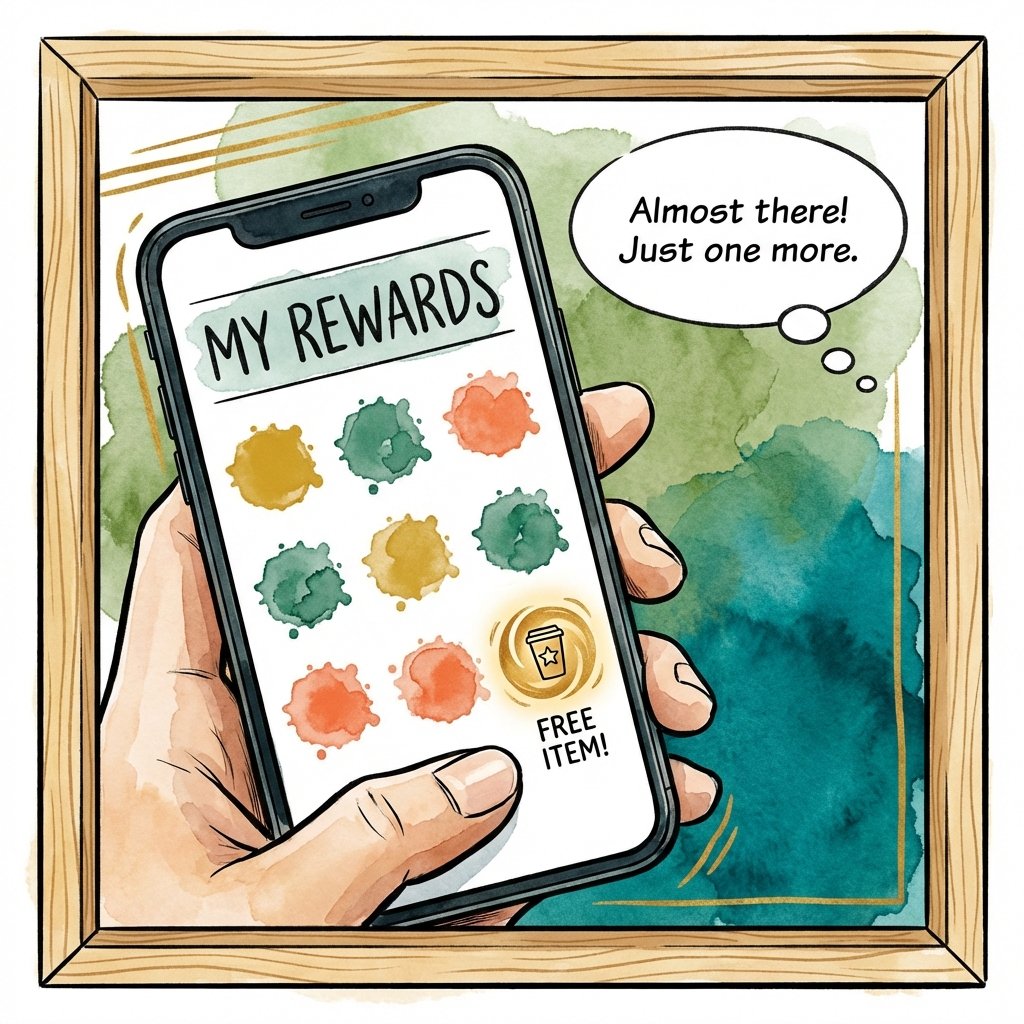
Digital punch cards modernize historical buy-ten-get-one structures.
“Buy nine coffees, get the tenth free” is universally understood. By migrating this to a digital platform integrated directly with your POS, you remove the friction of lost paper cards while simultaneously tracking user behavior. This model is ideal for fast-casual operations, coffee shops, and quick-service restaurants where transactions are highly frequent but maintain relatively low average-order-values.
Surprise and Delight (Gamified Rewards)
Transaction-based rewards appeal to logic, but surprise rewards appeal to deep emotional connection.
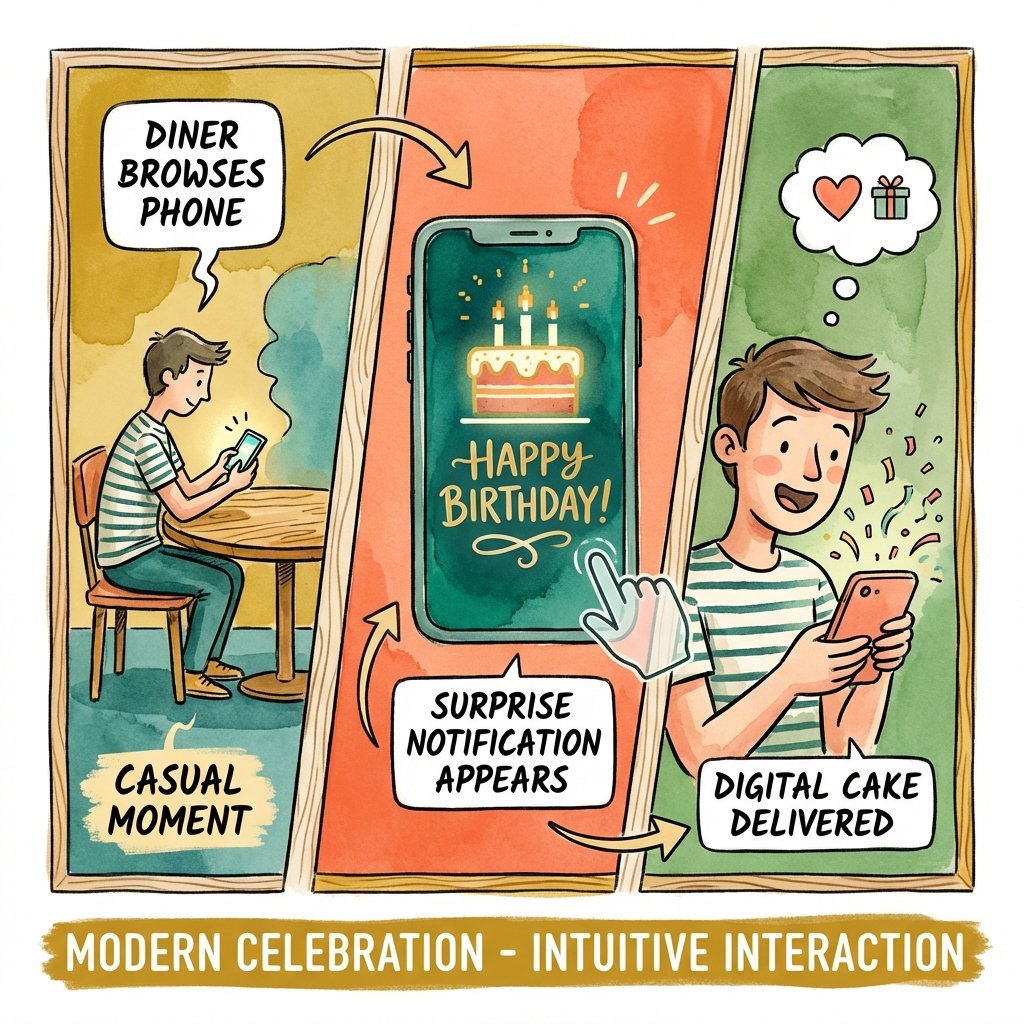
Surprise rewards forge deep emotional connections with your diners.
The surprise and delight methodology utilizes the data you’ve gathered to send entirely unexpected perks. A free dessert on a customer’s half-birthday, a complimentary appetizer randomly dropped into their app wallet, or entry into an exclusive VIP event based on sheer randomness creates a profound sense of goodwill. These unpredictable rewards trigger dopamine spikes, transforming satisfied diners into loud, vocal brand ambassadors.
7 Steps to Create a Profitable Restaurant Loyalty Strategy
Building the technology is only half the battle. Strategic implementation dictates the long-term viability of the ecosystem.
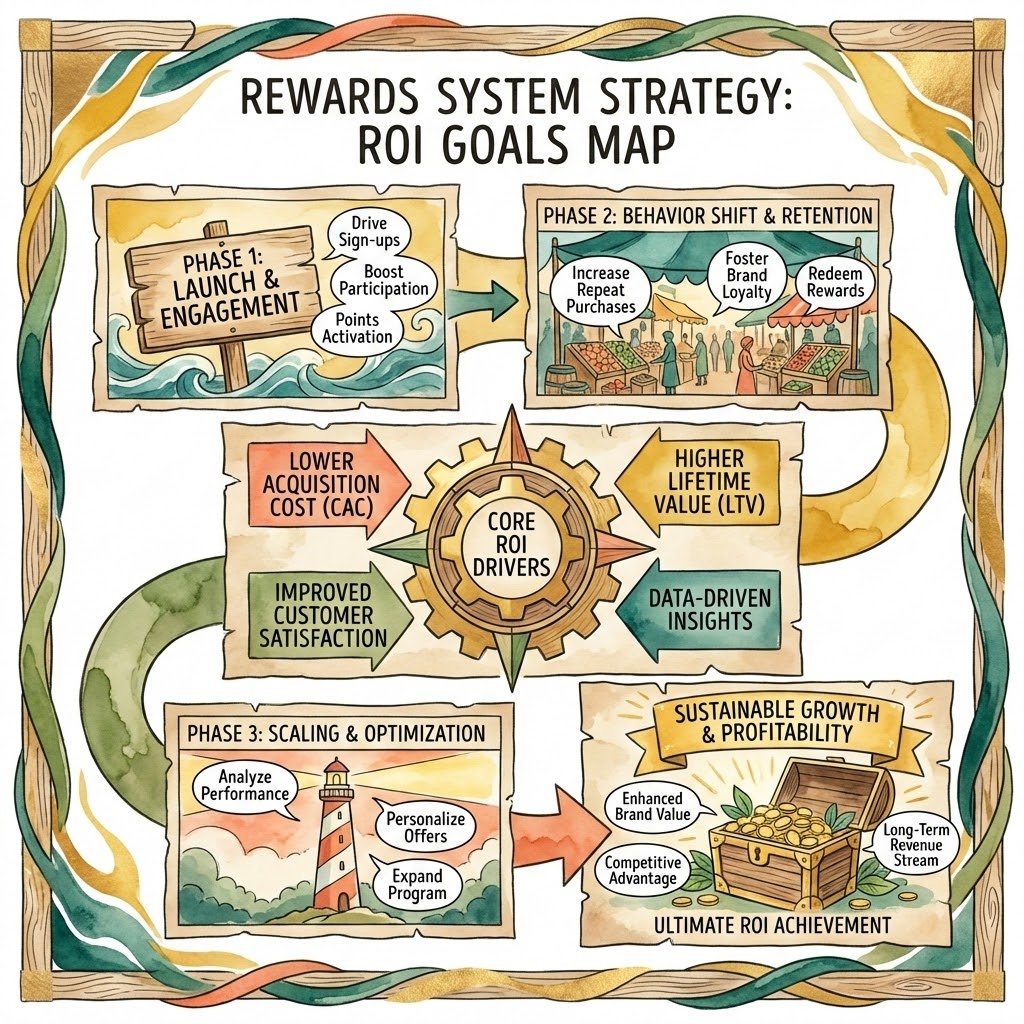
Programs must be designed around strict mathematical ROI targets.
1. Define Clear ROI Goals
Without strict underlying mathematics, a reward system can rapidly degrade into an expensive discount program.
Before launching, you must define the exact KPI you intend to shift. Are you attempting to increase overall visit frequency by 15%? Are you trying to raise the average check size from $22 to $28? Or is the primary objective to shift third-party delivery orders to direct, first-party native ordering? Establishing baseline metrics and clear ROI targets ensures that the cost of your rewards is entirely subsidized by the incremental revenue generated.
2. Understand Your Target Audience’s Motivations
Your reward structure must meticulously align with your brand positioning.
A fast-food customer heavily values speed, convenience, and flat monetary discounts. Conversely, a patron at a fine dining experiential establishment is far less motivated by a “$5 off” coupon. They are seeking exclusivity—priority reservations, off-menu chef tastings, or intimate wine pairing events. Tailor your reward catalog strictly to the psychological profile of the consumer you serve.
3. Choose the Right Loyalty Technology Stack
Operational friction is the death knell of any loyalty initiative.
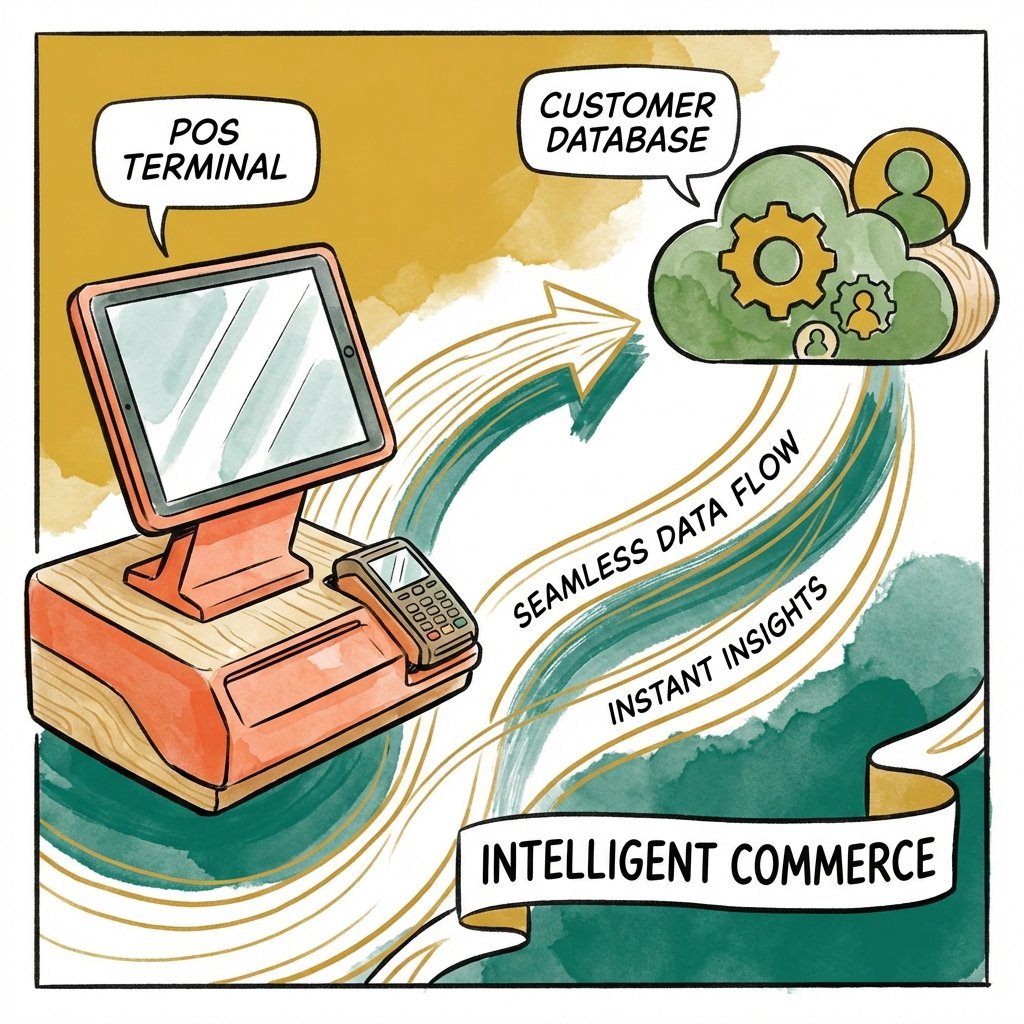
Frictionless POS integration prevents data silos and bottlenecks at checkout.
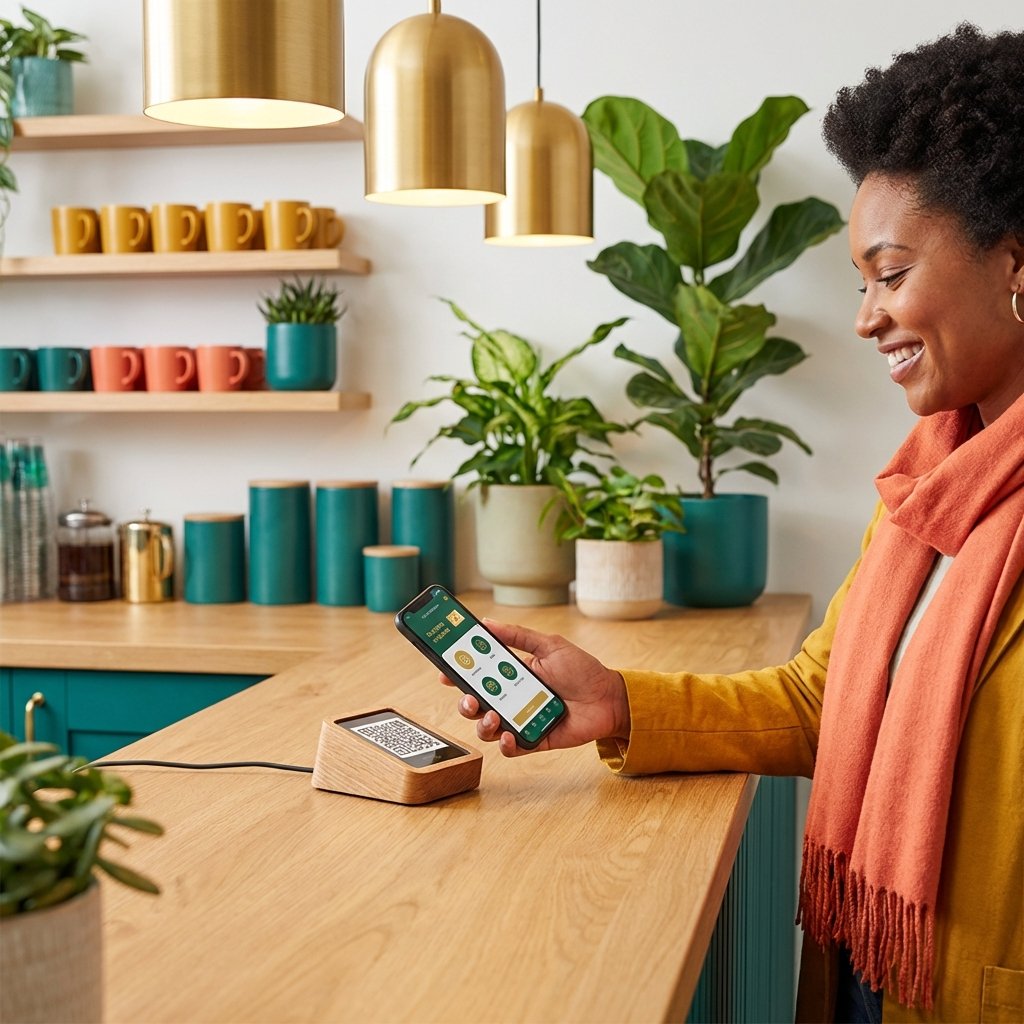
Your chosen software platform must integrate seamlessly with your existing Point-Of-Sale system and online ordering infrastructure. If cashiers are forced to manually enter points or if customers cannot redeem rewards via their mobile device, adoption rates will plummet. The goal is automatic tracking based on phone numbers, payment cards, or simple QR code scans directly at the register.
4. Keep the Point Structure Simple
Cognitive overload leads directly to program abandonment.
If a customer requires a calculator to understand how many points they earn on a Tuesday before 4 PM, your program has failed. The earning math must be highly transparent and universally accessible. “One point per dollar, 100 points gets you $10 off.” The faster a customer understands the path to value, the faster they will alter their spending behavior to achieve it.
5. Offer High-Margin, High-Value Rewards
Never give away the core of your menu unless absolutely necessary. Protect your margins.
Instead of discounting high-cost proteins, construct rewards around items with incredibly high margins but high perceived consumer value. Beverages, specialized sides, desserts, and branded merchandise are phenomenal candidates. A complimentary fountain drink costs the restaurant pennies, but the customer perceives a multi-dollar value, creating a win-win economic scenario.
6. Train Your Staff to Drive Sign-Ups
Technology facilitates the transaction, but human interaction drives the acquisition.
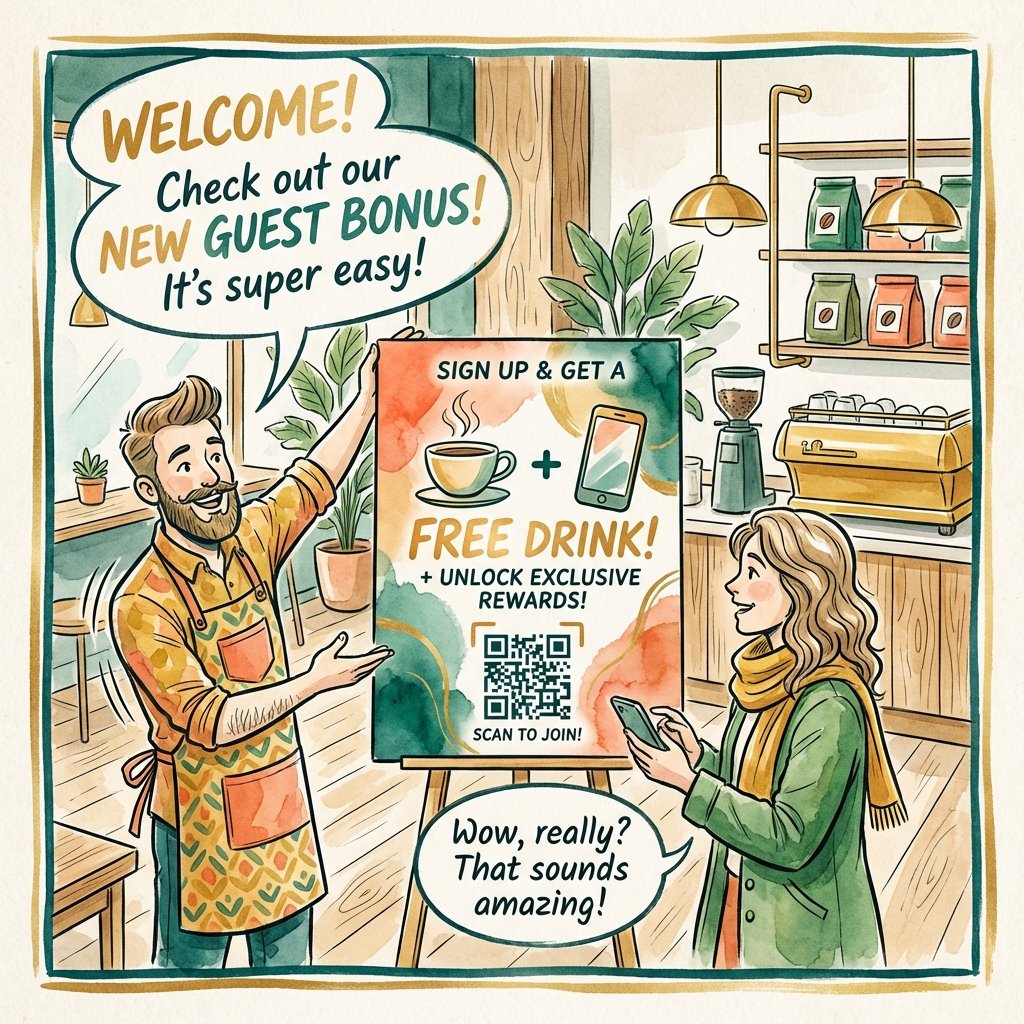
Front-of-house staff remain the strongest acquisition channel.
Your front-of-house staff are the most critical element of your loyalty program deployment. They must be thoroughly educated on the benefits and positioned to pitch the program at the exact point of transaction. Transition from asking “Are you a rewards member?” to a more proactive strategy: “If you enter your phone number right now, I can take $5 off today’s check.”
7. Launch with a Compelling Sign-Up Bonus
You must immediately overcome the friction of data exchange.
Consumers are hesitant to download another app or provide their personal email address without immediate justification. Offer a remarkably compelling, upfront sign-up bonus to bridge this gap. Whether it is a free appetizer on the spot, instant bonus points, or exclusive access to a new menu item, instant gratification ensures robust initial database growth.
Real-World Restaurant Loyalty Program Examples to Inspire You
The world’s largest food chains view loyalty not as marketing, but as core infrastructure.
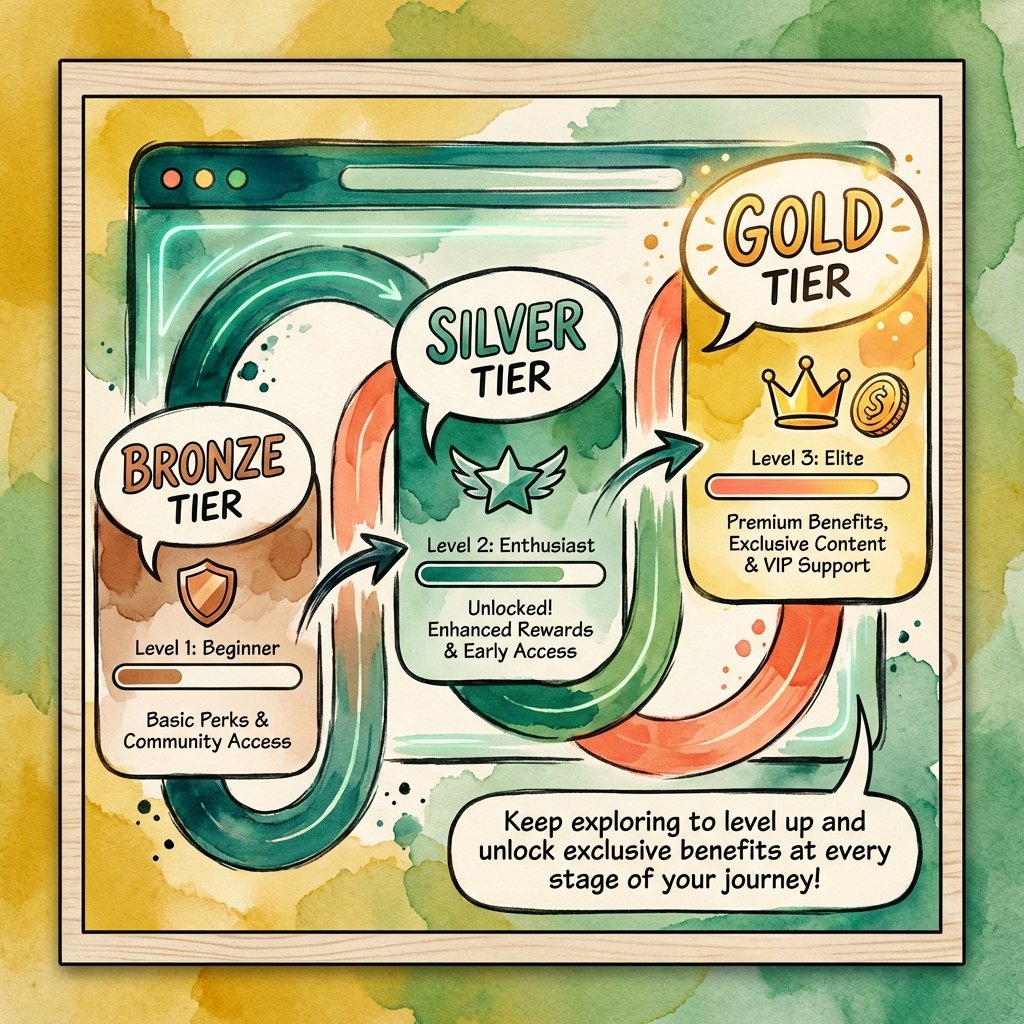
Gamified elements encourage higher visit frequency.
Starbucks Rewards: The Gold Standard of Gamification
Starbucks definitively transformed the digital reward landscape. By utilizing a “Stars” based system seamlessly integrated into mobile payments, they crafted a frictionless transactional loop. Furthermore, their strategic use of “Double Star Days” and highly personalized, time-sensitive challenges effectively dictates consumer traffic patterns, funneling volume into historically slow dayparts.
Chick-fil-A One: Mastering the Tiered System
Chick-fil-A perfectly exemplifies the psychological power of tiered progression. Their program escalates through Member, Silver, Red, and Signature statuses. As users advance, they unlock compounding point multipliers and highly exclusive event experiences. This structure fiercely protects profit margins on casual users while lavishly rewarding extreme heavy-users.
Chipotle Rewards: Fast Earning and Targeted Offers
Chipotle leverages high-velocity point accumulation combined with deep data science. Their system routinely offers targeted point multipliers on specific menu items—such as testing a new protein or pushing a seasonal bowl variant. This mechanism allows Chipotle to effectively use their loyalty base as a rapid testing ground for widespread product launches.
Domino’s Piece of the Pie Rewards: Keep It Simple
In stark contrast to complex gamification, Domino’s thrives on absolute, brutal simplicity. Order a pizza, earn 10 points. Reach 60 points, get a free medium pizza. There is zero ambiguity. This transparent, accessible framework has allowed Domino’s to build one of the largest direct-to-consumer digital ecosystems in the worldwide restaurant industry.
Measuring the Success of Your Loyalty Program
A program that cannot be mathematically measured is merely a guess disguised as a strategy.
Monitor redemption rates closely to protect underlying profit margins.
Key Metrics to Track (Participation Rate, Redemption Rate, LTV)
To guarantee a positive return on investment, you must vigilantly monitor specific behavioral shifts within your software dashboard:
- Participation Rate: Track this to ensure your staff is effectively pitching the system to guests at the point of sale.
- Redemption Rate: Extremely low redemption indicates your rewards are perceived as unattainable, while extremely high redemption might indicate excessive generosity.
- Lifetime Value (LTV): Consistently calculate the precise differential between active members and non-members to validate your strategic expenditure.
Conclusion: Turning Diners into Brand Advocates
In the hyper-competitive battle for consumer attention, convenience, and culinary preference, generic marketing relies on luck while intelligent platforms rely on data. Developing and launching a structured, data-driven restaurant loyalty program ensures that you are no longer passively waiting for diners to return. By implementing these technological and psychological frameworks, you actively secure long-term revenue, deepen community relationships, and systematically transform casual diners into uncompromising advocates for your brand.